Anker SOLIX C2000 Gen 2 vs BLUETTI Elite 200 V2

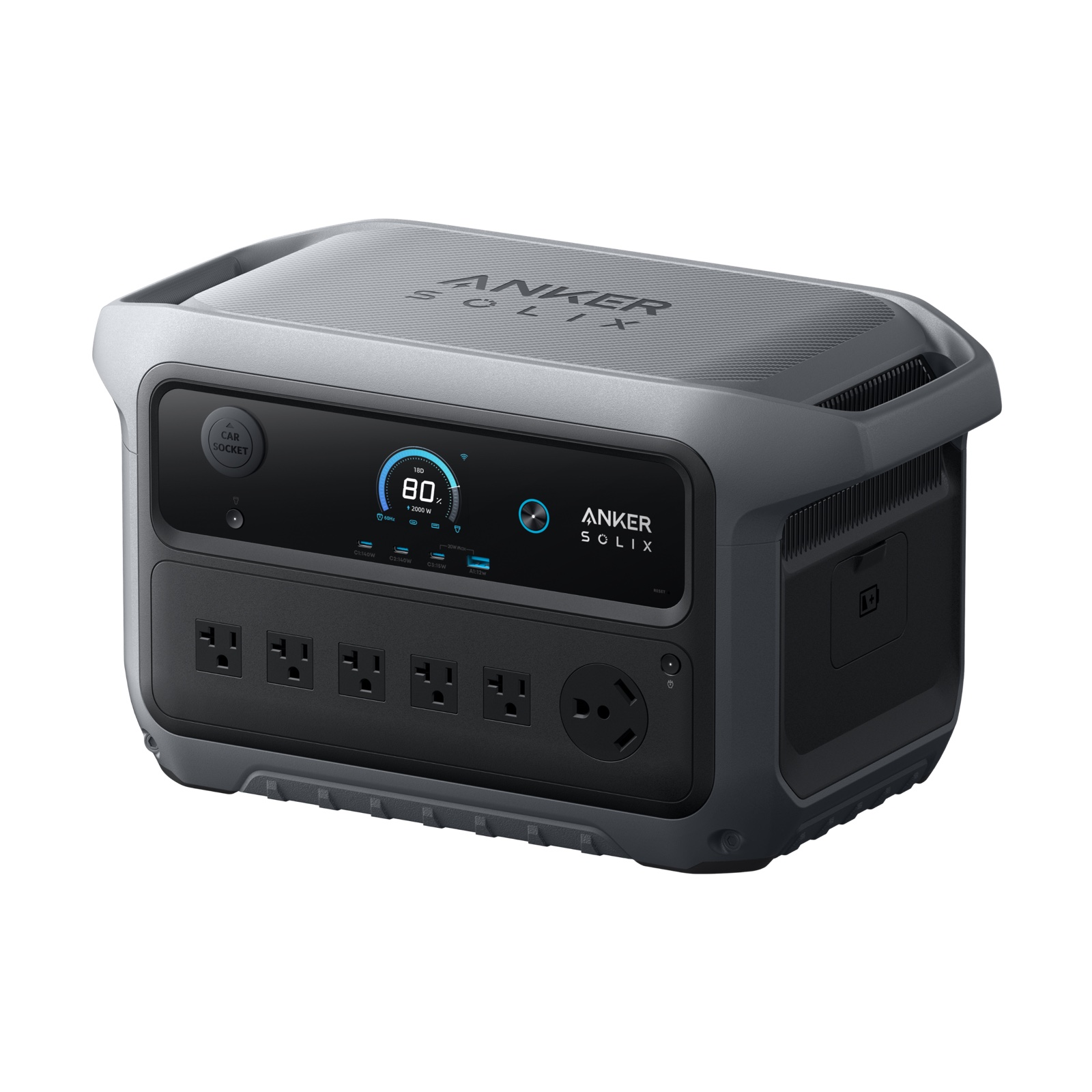 Anker SOLIX C2000 Gen 2
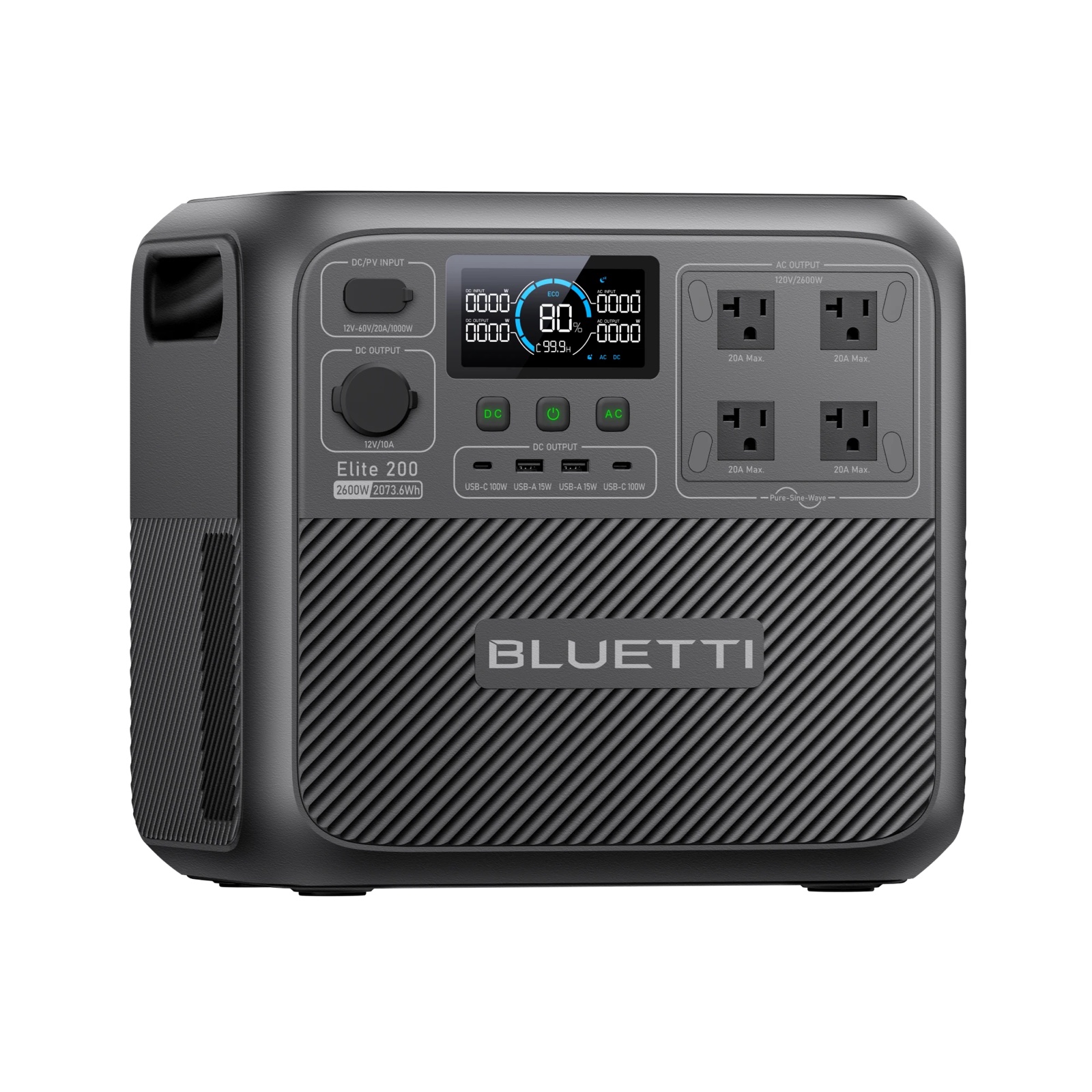 BLUETTI Elite 200 V2
Capacity and recharge time are close enough to be a coin toss, and the headline charging figures are not comparable as published. The real separations are weight and expansion: the Anker is lighter by close to twelve pounds and takes a second battery, the BLUETTI does neither. The BLUETTI answers with half as many rated cycles again, and more solar input.
PowerStationFacts takes part in the Amazon Services LLC Associates Program. When you buy through a link on this page we may earn a commission, and the price you pay does not change.
Anker SOLIX C2000 Gen 2Two structural advantages, not marginal ones. It is lighter by close to twelve pounds, which is the difference between a unit you move between rooms and one that stays put. And it accepts an expansion battery, so a purchase that turns out to be too small can be doubled later instead of replaced.
Check price on AmazonBLUETTI Elite 200 V2It lives in one place and gets cycled hard. Half as many rated cycles again is a real difference over a van or off-grid life, the higher continuous output gives more headroom, and it accepts a larger solar array. None of that helps if you have to carry it upstairs.
Check price on AmazonThe specifications side by side
| Specification | C2000 Gen 2 | Elite 200 V2 |
|---|---|---|
| Score | 7.8/10 | 7.7/10 |
| Capacity | 2,048 Wh | 2,073.6 Wh |
| AC output | 2,400 W | 2,600 W |
| Surge | 4,000 W | 3,900 W (Lifting Power) |
| Cell chemistry | LiFePO4 | LiFePO4 |
| Cycle life | 4,000 cycles to 80% | 6,000 cycles to 80% |
| Wall recharge | 1.5 hours | 1.4 hours |
| Max solar input | 800 W | 1,000 W |
| UPS switchover | 10 ms | 15 ms |
| Weight | 41.7 lb (18.9 kg) | 53.4 lb (24.2 kg) |
| Extra batteries | Expandable to 4,096 Wh | Not expandable |
Three rows in that table look like ties and are not, and two rows that look unremarkable are where the decision actually sits. Taking them in turn.
The recharge figures are not comparable as published
You will see the Anker advertised as reaching a full charge in 58 minutes. That figure is real, but it is measured with the wall socket and solar panels feeding the unit at the same time, drawing 2,600 W between them. On mains power alone, which is how most people will charge it, the honest number is 1.5 hours. The BLUETTI takes 1.4 hours.
So the two units recharge at effectively the same speed, and the gap most comparisons report between them does not exist. This site quotes the mains-only figure for both, because charging from a wall socket is the case that applies when the power has just come back on and you want to be ready for the next cut.
It is worth knowing that neither unit has to charge that fast. High-rate charging generates heat, and heat is what ages cells. If the unit lives plugged in as standby backup, use the slower charging mode and keep the fast one for when it matters.
Weight: the difference you will notice every time you move it
The Anker weighs 41.7 lb (18.9 kg). The BLUETTI weighs 53.4 lb (24.2 kg). That is a gap of close to twelve pounds on units of the same capacity, and it is the single most tangible difference between them.
Both are two-handed lifts. But there is a real threshold between a unit one adult can carry up a flight of stairs without planning it, and one that becomes a two-person job or a thing you simply leave where it is. Anyone intending to move a power station between a garage, a car and a campsite should weigh this more heavily than any specification on the sheet, because it is the one that decides whether the unit gets used.
If the unit is destined to sit in a utility room and never move, ignore this section entirely.
Expansion: one of these can grow, the other cannot
The Anker accepts an expansion battery, taking it to Expandable to 4,096 Wh. The BLUETTI's own specification table lists it as not expandable, and that is a harder limit than it first appears.
Sizing a power station is genuinely difficult before you have lived with one. Most people underestimate, because a fridge behaves differently from how they imagined and an outage lasts longer than expected. With an expandable unit, that mistake costs an expansion battery. With a fixed one, it costs the whole unit, and you are left selling a perfectly good machine at a loss.
This cuts the other way too. If two kilowatt hours is comfortably more than you need, expansion is a feature you will never use, and paying anything for it is waste. The question is not whether expansion is good, it is whether you are confident about your own sizing.
Cycle life, and whether you will ever reach it
The BLUETTI is rated for 6,000 cycles to 80%. The Anker is rated for 4,000 cycles to 80%. Both quote the same endpoint, which makes this one of the uncommon cases where two cycle ratings can be compared directly. Half as many cycles again is a genuine advantage, on paper.
Whether it reaches you depends entirely on how you use the unit. A full cycle is a complete drain and refill. A machine kept as standby backup, discharged properly a handful of times a year, will not come close to either rating in a human lifetime, and the cells will age on the shelf regardless of how little you cycle them. Somebody living in a van and running the pack flat most days is in a different world, and there the extra cycles are worth real money.
Both use lithium iron phosphate, which is why these figures are in the thousands rather than the hundreds. It is the right chemistry for the job: tolerant of sitting at full charge, far more stable thermally than the alternative, and heavier for it. That weight is not a design failure, it is the trade you accepted when you chose the safer cell.
Two surge figures that measure different things
The table shows 4,000 W against 3,900 W (Lifting Power), which reads like a near tie. It is not a tie, because the two numbers are not the same kind of measurement.
The Anker's is a conventional surge rating: a brief tolerance for the current spike drawn when a motor starts. Lifting Power is something else. It runs appliances above the unit's rated output by reducing voltage.
That distinction decides what you can safely plug in. Lowering voltage works for resistive loads, where less voltage simply means heat arrives more slowly: a kettle, a heater, a hotplate. It does not work for motors or electronics. An undervolted compressor draws more current, runs hotter and can stall, and undervolting a computer or a medical device is not an experiment worth running. The Anker's figure tells you it can absorb a start-up spike; the BLUETTI's tells you it can run a heater larger than its rating. Neither substitutes for the other.
Solar, and working out whether either is enough
The BLUETTI accepts up to 1,000 W, the Anker up to 800 W. For anyone planning to recharge off-grid rather than from a socket, that is a meaningful gap: it sets how fast the unit refills on a good day, and the voltage window decides which panels can be wired to it at all.
Both units sit around two kilowatt hours, which in practice covers a fridge through a long outage alongside phones, lights and a router, with room to spare. Both will run a microwave or a kettle in bursts. Neither will run an electric heater through the night, and nothing this size will.
Rather than trust a rule of thumb, put your own appliance and its actual wattage into the run time calculator, which shows the inverter losses and the compressor duty cycle it assumes instead of hiding them. On fridge estimates, that duty cycle moves the answer more than anything else.
Common questions
Is the capacity difference between them worth anything?
No. The gap is under one and a half percent. Ambient temperature, the age of the cells and how efficiently your particular load draws power all move real runtime further than that. Treat them as the same size and decide on something else.
Why does the Anker's charging time differ from what I read elsewhere?
Because the widely quoted figure combines mains and solar input at the same time. On mains alone the two units are within a few minutes of each other. This site quotes the mains-only figure for both, since that is the situation most owners are actually in.
Can I add a battery to the BLUETTI later?
Its own specification table lists the unit as not expandable. If there is any chance you will want more capacity later, that is an argument for the Anker, or for buying a larger unit outright rather than planning to grow into one.
Which one switches over faster when the power cuts?
Both switch in well under a tenth of a second, and the published figures put them within a few milliseconds of each other. Either will keep a desktop computer, a router or a CPAP machine running through a cut. The exact figures are in the table above.
Can I run a fridge and a heater at the same time?
Add the running wattages and compare against the continuous output, not the surge figure. A fridge and a small heater will usually fit; a fridge and a full-size heater will not. Remember the fridge compressor draws a spike when it starts, while the heater is already pulling its full load.