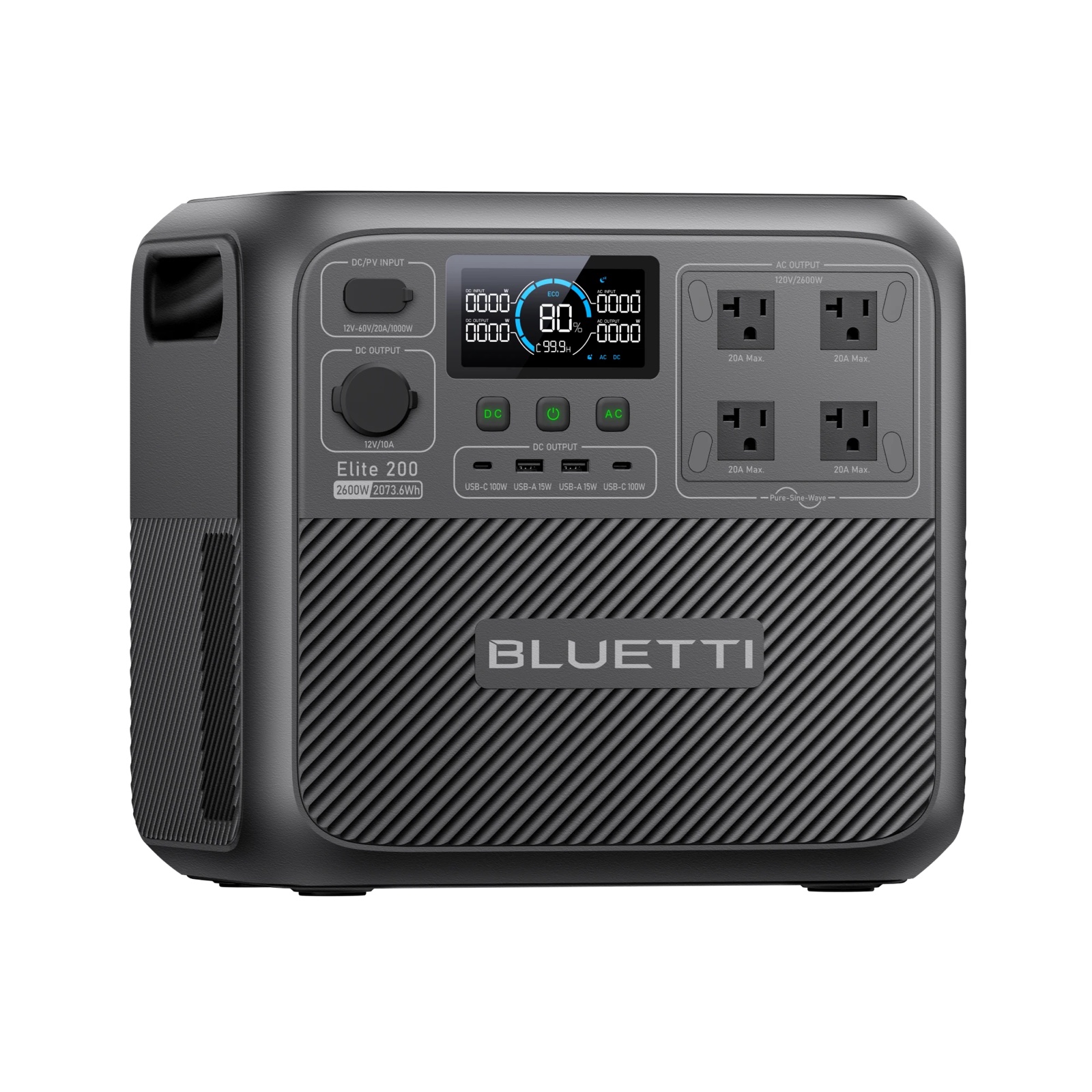

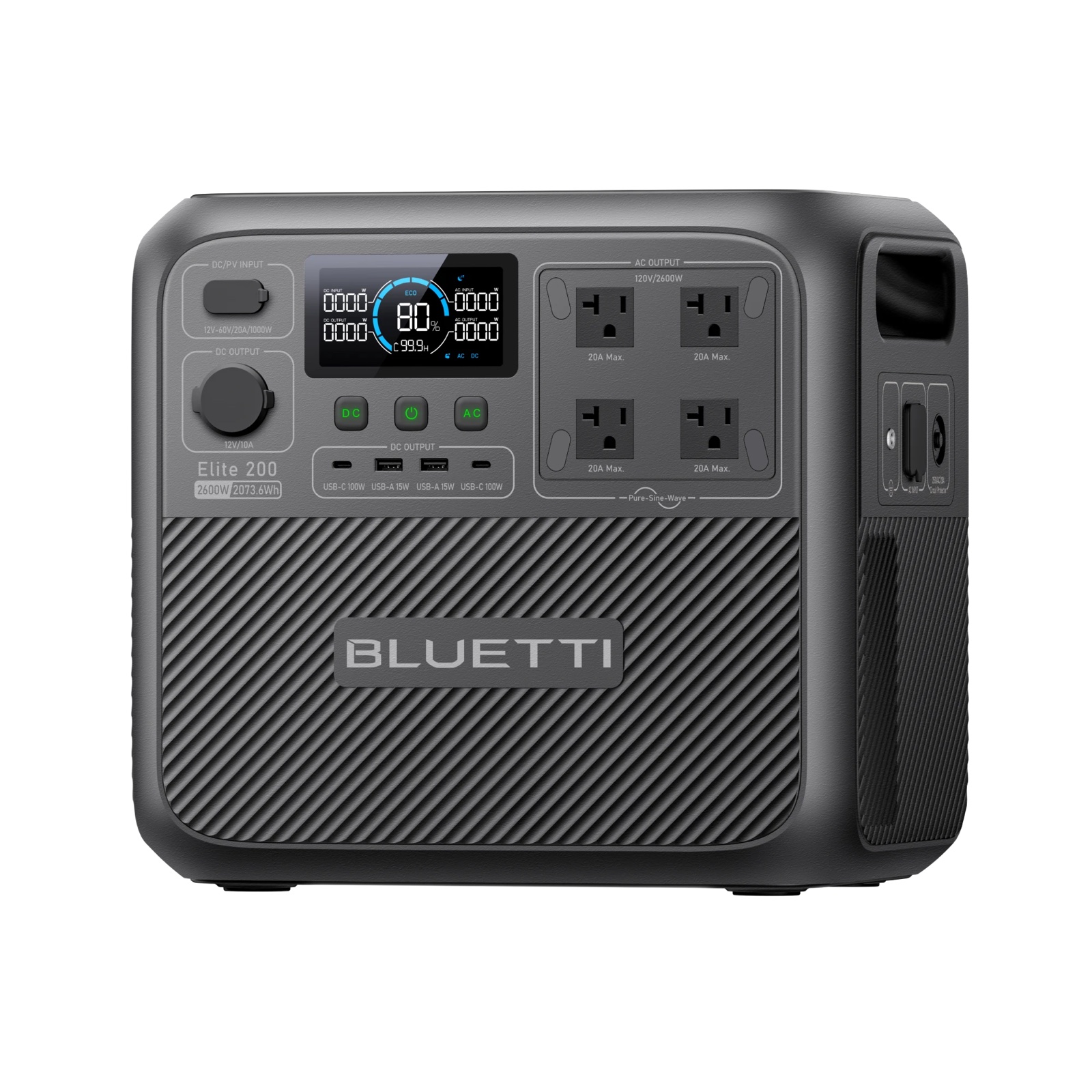
BLUETTI Elite 200 V2
A two kilowatt hour unit rated for 6,000 cycles to 80%, which is unusually high for the class, with 2,600 W of continuous output and up to 1,000 W of solar input. Two things to know before buying: it is not expandable, and at 53.4 lb (24.2 kg) it is heavy for its size.
PowerStationFacts takes part in the Amazon Services LLC Associates Program. When you buy through a link on this page we may earn a commission, and the price you pay does not change.
Our score
Ranked 3 of 9 among units from 1,500 to 3,000 Wh
Scores are calculated from published specifications, not opinion. How the score is built
Buy it for this
- Cycle life. 6,000 cycles to 80% is well above what most units in this class are rated for, and the endpoint is stated properly. If the unit gets drained and refilled most days, this is the specification that decides how long you keep it.
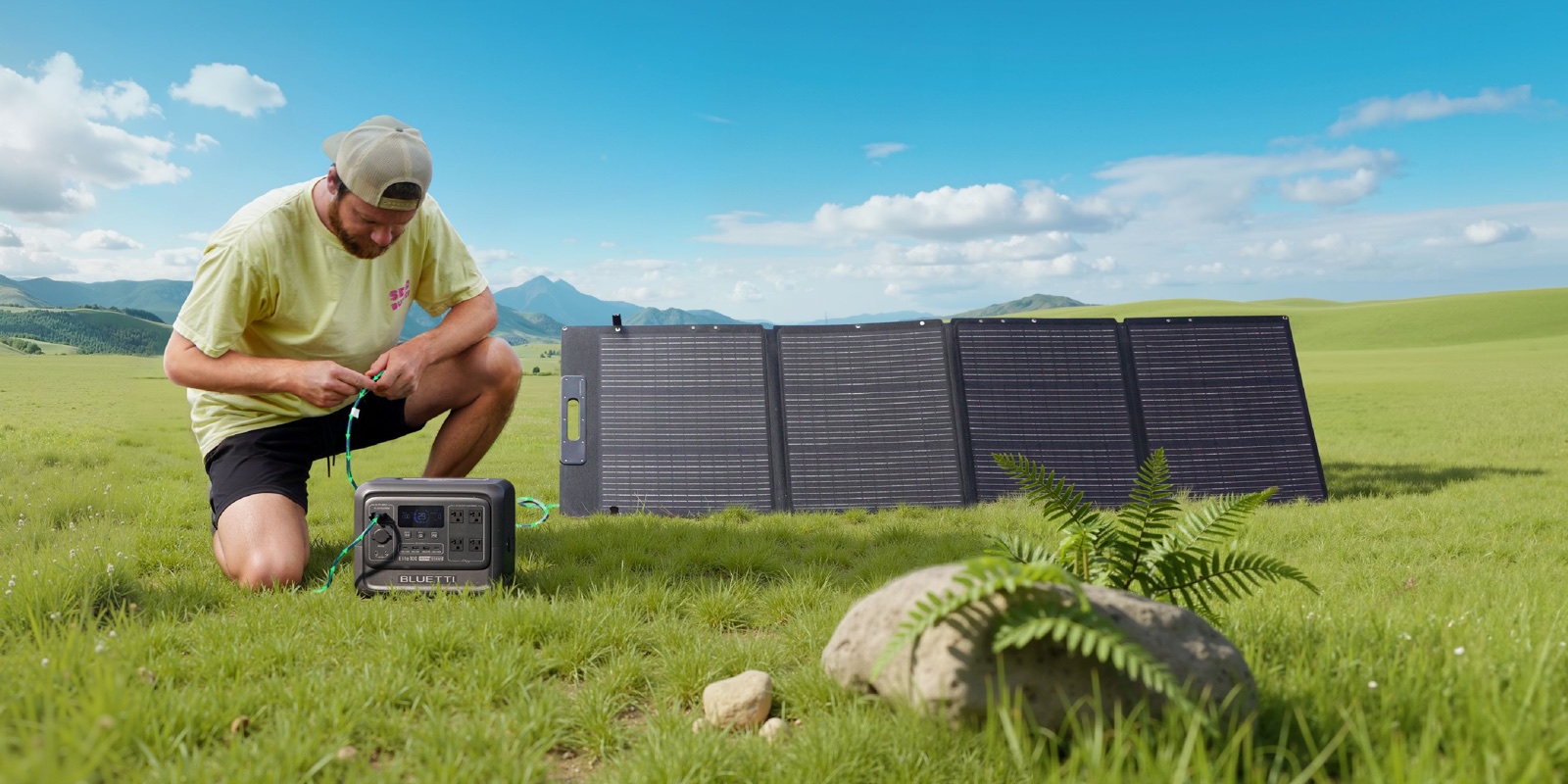
- Solar input. Up to 1,000 W. For anyone recharging off-grid rather than from a socket, that headroom sets how fast the unit refills on a good day.
- Continuous output. 2,600 W covers most single household appliances outright, including the ones with motors that make smaller units hesitate.
- Switchover. 15 ms is fast enough to carry a desktop computer, a router or a CPAP machine through a cut without them noticing.
Walk away if
- You are unsure about the size you need. This unit is not expandable. Whatever capacity it has on the day you buy it is the capacity it will have for its whole life. If there is a realistic chance you will want more later, that alone should send you to a unit that accepts a second battery.
- You will be carrying it regularly. At 53.4 lb (24.2 kg) this is a two-handed lift and, for many people, a two-person job up stairs. Comparable units are meaningfully lighter.
- You wanted a heater running all night. No unit at this capacity will do that, and no specification on this page changes it. Work the arithmetic through before assuming otherwise.
Reading the surge figure correctly
BLUETTI quotes 3,900 W (Lifting Power) for this unit. Lifting Power is not a conventional surge rating. It runs appliances above the unit's rated output by reducing the voltage supplied to them.
That works for resistive loads, where lower voltage simply means heat arrives more slowly: a kettle, a hotplate, a space heater. It does not work for motors or electronics. An undervolted compressor draws more current, runs hotter and can stall, and undervolting a computer or a medical device is not worth the risk. So the figure genuinely extends what this unit can do, but only across one category of appliance. For a motor's start-up spike, the number that matters is the continuous output.
What the cells are, and what that means for you
The pack is LiFePO4. That choice is why the cycle rating runs into the thousands and why the unit weighs what it does. Lithium iron phosphate is markedly more stable thermally than the alternative and tolerates being left at full charge, which matters for something that spends most of its life sitting in a cupboard waiting for an outage.
The price of that is density. A lighter chemistry would have made a lighter unit with a shorter, more fragile life. For standby backup this is the right trade, and the weight is the bill for it.
One practical consequence worth knowing: these cells do not like the cold. Capacity falls in low temperatures, and most units refuse to charge at all below freezing. A power station kept in an unheated garage for winter outages is being stored in the worst place for exactly the situation you bought it for.
Charging it
From a wall socket the unit reaches a full charge in 1.4 hours. Solar input tops out at 1,000 W, and the voltage window in that figure matters as much as the wattage: it decides which panels can be wired to the unit at all, so check it against any array you already own before assuming compatibility.
If the unit lives plugged in as standby backup, there is no reason to charge it at full rate. Heat is what ages cells, and fast charging makes heat. Save it for the times you need to be ready again quickly.
Will it run what you need?
Two kilowatt hours covers a fridge through a long outage alongside phones, lights and a router, with room left over. It will run a microwave or a kettle in bursts. It will not run an electric heater through the night.
For your own appliances, the run time calculator shows its working: the inverter losses it assumes and the share of time your appliance actually draws power. On anything with a compressor, that second assumption changes the answer more than the capacity does. It is also the assumption most runtime claims quietly leave out.
Common questions
Can I add an expansion battery to it?
No. BLUETTI's own specification table lists this unit as not expandable. If you might need more capacity later, buy larger now or choose a model designed to take a second battery.
Will it keep a desktop computer alive through a power cut?
Yes. The published switchover time of 15 ms is comfortably inside what a desktop power supply rides through. The same applies to a router, a games console or a CPAP machine.
What does the cycle rating actually promise?
That after 6,000 cycles to 80%, the pack still holds the stated share of the capacity it had when new. It is not a failure point, it is a degradation threshold. Note the endpoint whenever you compare this figure against another maker's, because they do not all use the same one.
Is it quiet enough to sleep near?
Its fan runs when the unit is working hard or charging fast, and stays off at low load. Anyone planning to run a CPAP machine overnight from it is drawing a small load, which is the quietest thing you can ask of it. Charging it beside the bed is a different matter.