 7.5/10
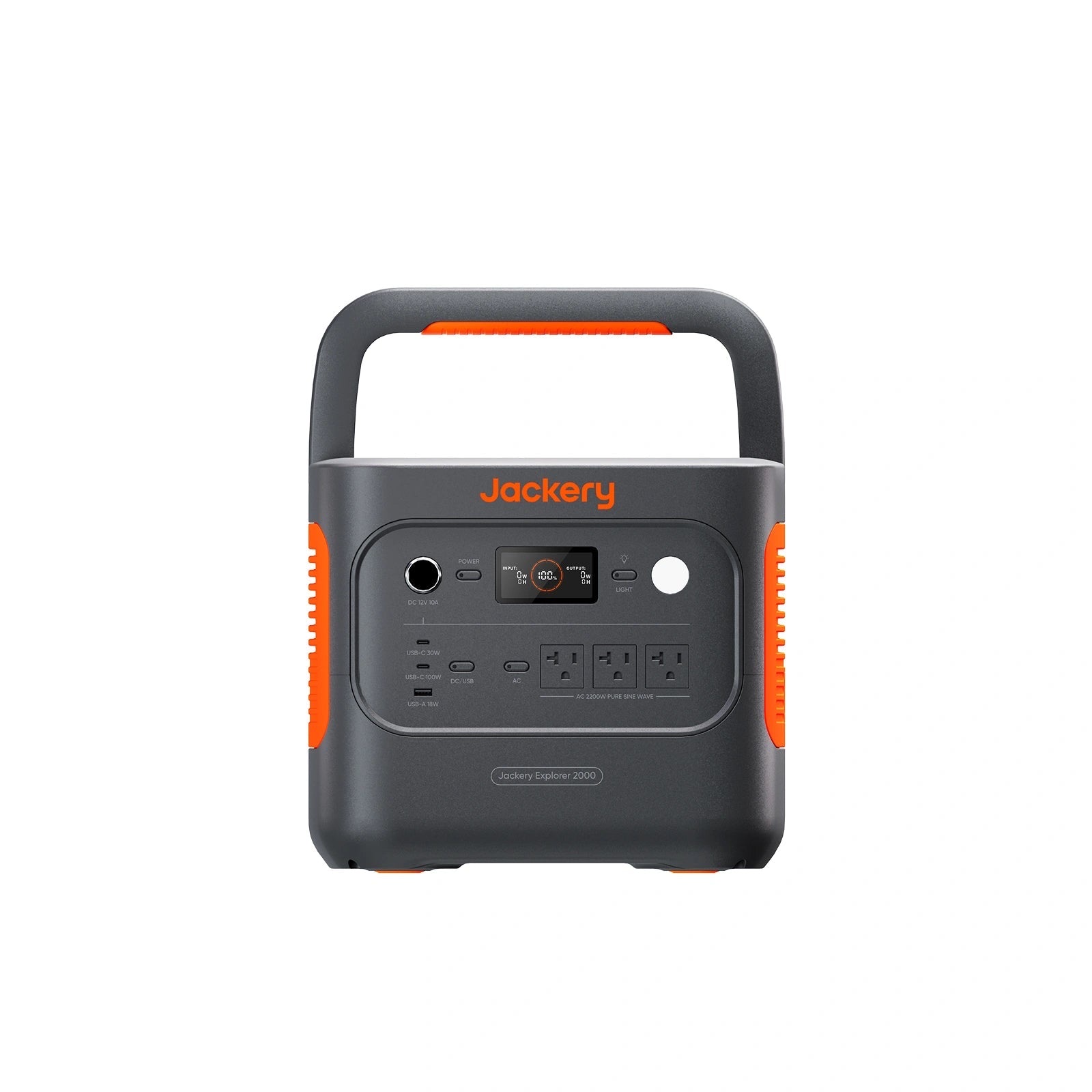
Explorer 2000 v2 Jackery Explorer 2000 v2
2,042 WhCapacity2,200 WAC output39.5 lb (17.9 kg)Weight20 msUPS switchover
Across the 16 units covered here, Jackery spans 293 to 2,042 Wh and EcoFlow spans 245 to 4,096 Wh. Their endurance claims are not directly comparable: Jackery quotes cycles down to 70% or 80% depending on the model of original capacity, EcoFlow to 80%. Median score: 5.8 against 6.6.
PowerStationFacts takes part in the Amazon Services LLC Associates Program. When you buy through a link on this page we may earn a commission, and the price you pay does not change.
| Measure | Jackery | EcoFlow |
|---|---|---|
| Units covered here | 4 | 12 |
| Capacity range (Wh) | 293 / 2,042 | 245 / 4,096 |
| Median rated cycles | 2,400 | 3,000 |
| Quoted down to | 70% or 80% depending on the model | 80% |
| Median watt hours per kilo | 99 | 83 |
| Publishes a switchover time | 2/4 | 9/12 |
| Median switchover | 20 ms | 10 ms |
| Units taking a second battery | 0 | 8 |
| Median score out of 10 | 5.8 | 6.6 |
These are aggregates of what each maker publishes for the units covered on this site, not a survey of everything they have ever sold. They describe where each range sits, not which individual unit is right for you.
Jackery quotes cycle life down to 70% or 80% depending on the model of original capacity and EcoFlow to 80%. A rating quoted to a lower threshold flatters the headline number, because the pack is allowed to degrade further before the count stops. Comparing the two figures as if they meant the same thing is the most common mistake in this category.
Whether any of it reaches you depends on use. A unit kept as standby backup and discharged a few times a year will not approach either figure in a lifetime, and the cells age on the shelf regardless. Daily cycling in a van is the case where the gap becomes real money. The reasoning is set out on the method page.
Jackery publishes a switchover time for 2/4 of the units here, EcoFlow for 9/12. Where a maker does not publish one, do not assume the unit will carry a desktop or a CPAP machine through a cut.
Where both publish, the figures are close enough to matter less than they appear. Anything comfortably under twenty milliseconds rides through what a computer power supply tolerates, and being faster than that wins nothing you will notice.
By the score calculated across this catalogue, the leading unit is Jackery Explorer 2000 v2 for Jackery and EcoFlow DELTA Pro 3 for EcoFlow.
7.5/10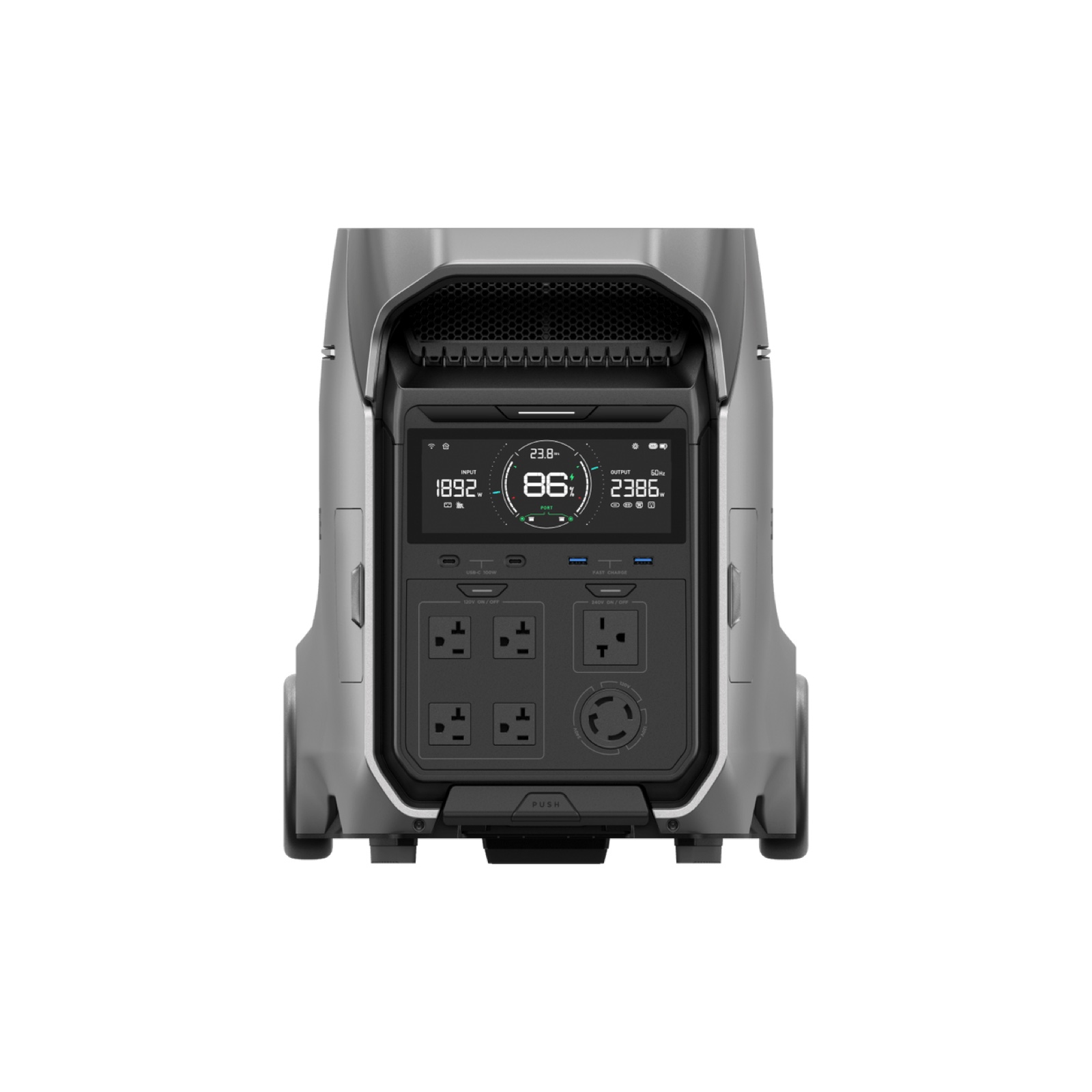
 8.8/10
| # | Brand | Model | Score | Capacity | AC output | Weight | Actions |
|---|---|---|---|---|---|---|---|
| 1 | | EcoFlow DELTA Pro 3 | 8.8/10 | 4,096 Wh | 4,000 W | 113.5 lb (51.5 kg) | Check price |
| 2 |  | BLUETTI Apex 300 | 8.4/10 | 2,764.8 Wh | 3,840 W | 83.8 lb (38.0 kg) | Check price |
| 3 |  | Anker SOLIX F3800 | 8.1/10 | 3,840 Wh | 6,000 W | 132.3 lb (60.0 kg) | Check price |
| 4 | | Anker SOLIX C2000 Gen 2 | 7.8/10 | 2,048 Wh | 2,400 W | 41.7 lb (18.9 kg) | Check price |
| 5 | | BLUETTI Elite 200 V2 | 7.7/10 | 2,073.6 Wh | 2,600 W | 53.4 lb (24.2 kg) | Check price |
| 6 | | EcoFlow DELTA 3 Max | 7.7/10 | 2,048 Wh | 2,400 W | 44.8 lb (20.3 kg) | Check price |
| 7 | | EcoFlow DELTA 3 Max Plus | 7.7/10 | 2,048 Wh | 3,000 W | 48.7 lb (22.1 kg) | Check price |
| 8 | | Jackery Explorer 2000 v2 | 7.5/10 | 2,042 Wh | 2,200 W | 39.5 lb (17.9 kg) | Check price |
| 9 | | EcoFlow DELTA 2 Max | 7.2/10 | 2,048 Wh | 2,400 W | 50.0 lb (23.0 kg) | Check price |
| 10 | | Anker SOLIX C1000 Gen 2 | 7.0/10 | 1,024 Wh | 2,000 W | 24.9 lb (11.3 kg) | Check price |
| 11 | | Anker SOLIX F2000 (PowerHouse 767) | 6.9/10 | 2,048 Wh | 2,400 W | 67.2 lb (30.5 kg) | Check price |
| 12 | | BLUETTI AC180P | 6.9/10 | 1,440 Wh | 1,800 W | 35.3 lb (16.0 kg) | Check price |
| 13 | | BLUETTI Elite 100 V2 | 6.8/10 | 1,024 Wh | 1,800 W | 25.0 lb (11.5 kg) | Check price |
| 14 | | BLUETTI AC200L | 6.8/10 | 2,048 Wh | 2,400 W | 62.4 lb (28.3 kg) | Check price |
| 15 | | EcoFlow DELTA 3 | 6.7/10 | 1,024 Wh | 1,800 W | 27.6 lb (12.5 kg) | Check price |
| 16 | | EcoFlow DELTA 3 Plus | 6.7/10 | 1,024 Wh | 1,800 W | 27.6 lb (12.5 kg) | Check price |
| 17 | | Jackery Explorer 1000 v2 | 6.6/10 | 1,070 Wh | 1,500 W | 23.8 lb (10.8 kg) | Check price |
| 18 | | Anker SOLIX C1000 | 6.5/10 | 1,056 Wh | 1,800 W | 28.4 lb (12.9 kg) | Check price |
| 19 | | BLUETTI AC180 | 6.5/10 | 1,152 Wh | 1,800 W | 35.3 lb (16.0 kg) | Check price |
| 20 | | EcoFlow DELTA 3 Classic | 6.5/10 | 1,024 Wh | 1,800 W | 26.6 lb (12.1 kg) | Check price |
| 21 | | EcoFlow DELTA 2 | 6.4/10 | 1,024 Wh | 1,800 W | 27.0 lb (12.0 kg) | Check price |
| 22 | | BLUETTI AC70P | 6.2/10 | 864 Wh | 1,000 W | 22.5 lb (10.2 kg) | Check price |
| 23 | | Anker SOLIX C300 DC | 5.9/10 | 288 Wh | Not published | 6.2 lb (2.8 kg) | Check price |
| 24 | | BLUETTI AC70 | 5.9/10 | 768 Wh | 1,000 W | 22.5 lb (10.2 kg) | Check price |
| 25 | | Anker SOLIX C200 DC | 5.3/10 | 192 Wh | Not published | 4.2 lb (1.9 kg) | Check price |
| 26 | | EcoFlow RIVER 2 Max | 5.3/10 | 512 Wh | 500 W | 13.4 lb (6.1 kg) | Check price |
| 27 | | BLUETTI AC50P | 5.2/10 | 504 Wh | 700 W | 15.1 lb (6.9 kg) | Check price |
| 28 | | BLUETTI AC50B | 5.0/10 | 448 Wh | 700 W | 14.8 lb (6.7 kg) | Check price |
| 29 | | Jackery Explorer 1000 | 4.9/10 | 1,002 Wh | 1,000 W | 22.0 lb (10.0 kg) | Check price |
| 30 | | Anker SOLIX C300 | 4.7/10 | 288 Wh | 300 W | 9.1 lb (4.1 kg) | Check price |
| 31 | | EcoFlow RIVER 3 Plus | 4.4/10 | 286 Wh | 600 W | 10.4 lb (4.7 kg) | Check price |
| 32 | | EcoFlow RIVER 2 | 4.3/10 | 256 Wh | 300 W | 7.8 lb (3.5 kg) | Check price |
| 33 | | EcoFlow RIVER 3 | 3.9/10 | 245 Wh | 300 W | 7.7 lb (3.5 kg) | Check price |
| 34 | | Jackery Explorer 300 | 3.4/10 | 293 Wh | 300 W | 7.1 lb (3.2 kg) | Check price |
Filter by what you actually need: capacity sets how long a unit runs something, continuous output sets what it can start at all. The run time calculator turns those two into hours for your own appliance.
No. The median score across the units here runs 6.6 against 5.8, which is a difference in range positioning, not a verdict on any single unit. Both makers have units that top their capacity class. Choose on the size you need first, then compare the two candidates directly.
Read the threshold, not the headline. A cycle rating quoted down to 70% of original capacity is a weaker promise than the same number quoted to 80%, and the makers here do not all use the same threshold. The table above states each one.
Lithium iron phosphate dominates both current ranges: 2 of 4 units for Jackery and 12 of 12 for EcoFlow where the chemistry is published. It is the reason cycle ratings run into the thousands, and the reason these units are heavy.
No. Expansion batteries are proprietary, and a unit only accepts the packs its own maker designed for it. If expansion matters to you, it locks you into one ecosystem, which is worth weighing before the first purchase rather than after.