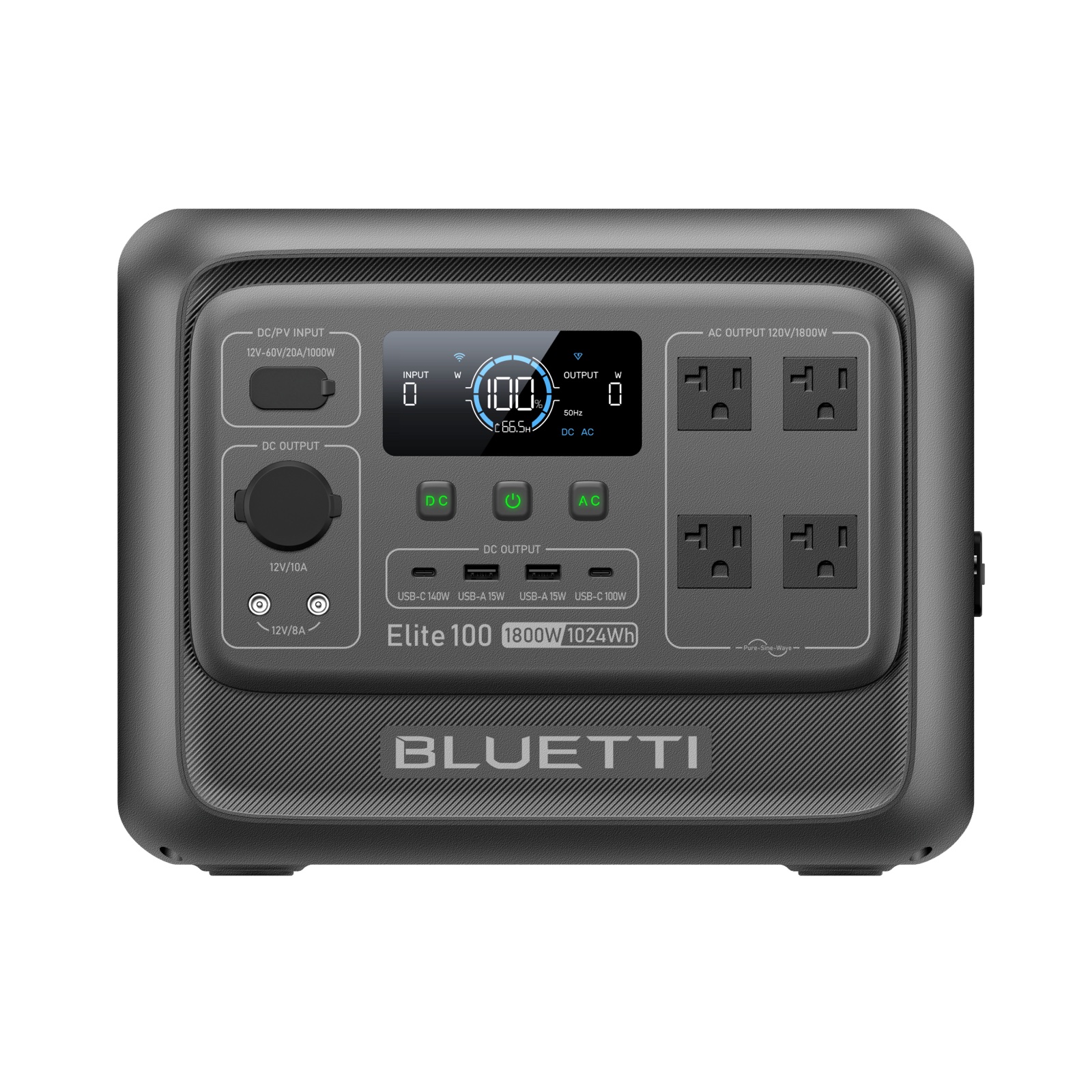
 6.8/10
Elite 100 V2 BLUETTI Elite 100 V2
1,024 WhCapacity1,800 WAC output25.0 lb (11.5 kg)Weight10 msUPS switchover
With no socket to fall back on, the pack is only ever as good as what refills it. Solar input ceiling, the voltage window that decides which panels can be wired in, and rated cycle life matter more here than capacity does. Size for the worst week of the year, not the average one.
PowerStationFacts takes part in the Amazon Services LLC Associates Program. When you buy through a link on this page we may earn a commission, and the price you pay does not change.
Every other use in this catalogue has a socket somewhere in the background. Camping has a hookup post, a van has an alternator, a house has the grid coming back on. A cabin has none of that, and the consequence is that the specification which usually gets skimmed becomes the one that decides the purchase.
Two numbers do the work. The maximum solar input tells you the ceiling on what the unit can absorb on a good day. The input voltage window, which sits inside that same specification line, decides which panels can be wired to the unit at all. Buying an array first and a power station second is the classic way to end up with hardware that cannot be connected, so read the window before ordering panels.
The third number is rated cycle life. A cabin pack is drained and refilled constantly, so it works far harder than a standby unit at home. Read the endpoint the maker quotes it to, because they differ: Jackery states its figures to seventy percent of original capacity remaining, the others to eighty, and two ratings that look alike are therefore not comparable at face value.
Averages are useless here. A cabin system either survives the darkest, stillest, coldest week of its year or it does not, and the rest of the year takes care of itself.
That week has three things happening at once. Daylight is short, so the array has few hours to work in. Cloud cuts what those hours produce. And cold reduces the capacity the pack can actually deliver, temporarily but exactly when you need it. Meanwhile the loads go up, because the lights are on longer and anything with a heating element runs more.
The consequence is a sizing rule that feels extravagant in summer: a pack that carries several days of load with no meaningful input at all, and an array sized well above the daily average. A system that balances perfectly in good conditions is a system that fails every winter.
The other half of the answer is not electrical. Gas for cooking, a wood stove for heat and a well-insulated cabin remove the loads that no battery of this size can carry. Electricity in an off-grid cabin should be doing the jobs only electricity can do.
Here are the calculated run times for the EcoFlow DELTA Pro 3, the largest single unit in this catalogue, across the standard appliance set.
| Appliance | Typical draw | Estimated run time |
|---|---|---|
| Fridge | 120 W | 82 h 54 min |
| CPAP machine | 45 W | 77 h 22 min |
| Router and modem | 15 W | 232 h 6 min |
| Television | 90 W | 38 h 41 min |
| Microwave | 1200 W | 2 h 54 min |
Read the fridge row first, since a cabin fridge is usually the one load that never switches off, and its compressor draws for roughly a third of each hour rather than continuously. Read the router row as a stand-in for lighting and small electronics, which is where most cabin days actually sit. Read the microwave row as the warning: high-draw appliances are affordable in minutes per day and ruinous in hours.
The figures assume an inverter efficiency, because no maker publishes one, and the assumption is stated openly on the method page rather than hidden inside a single number.
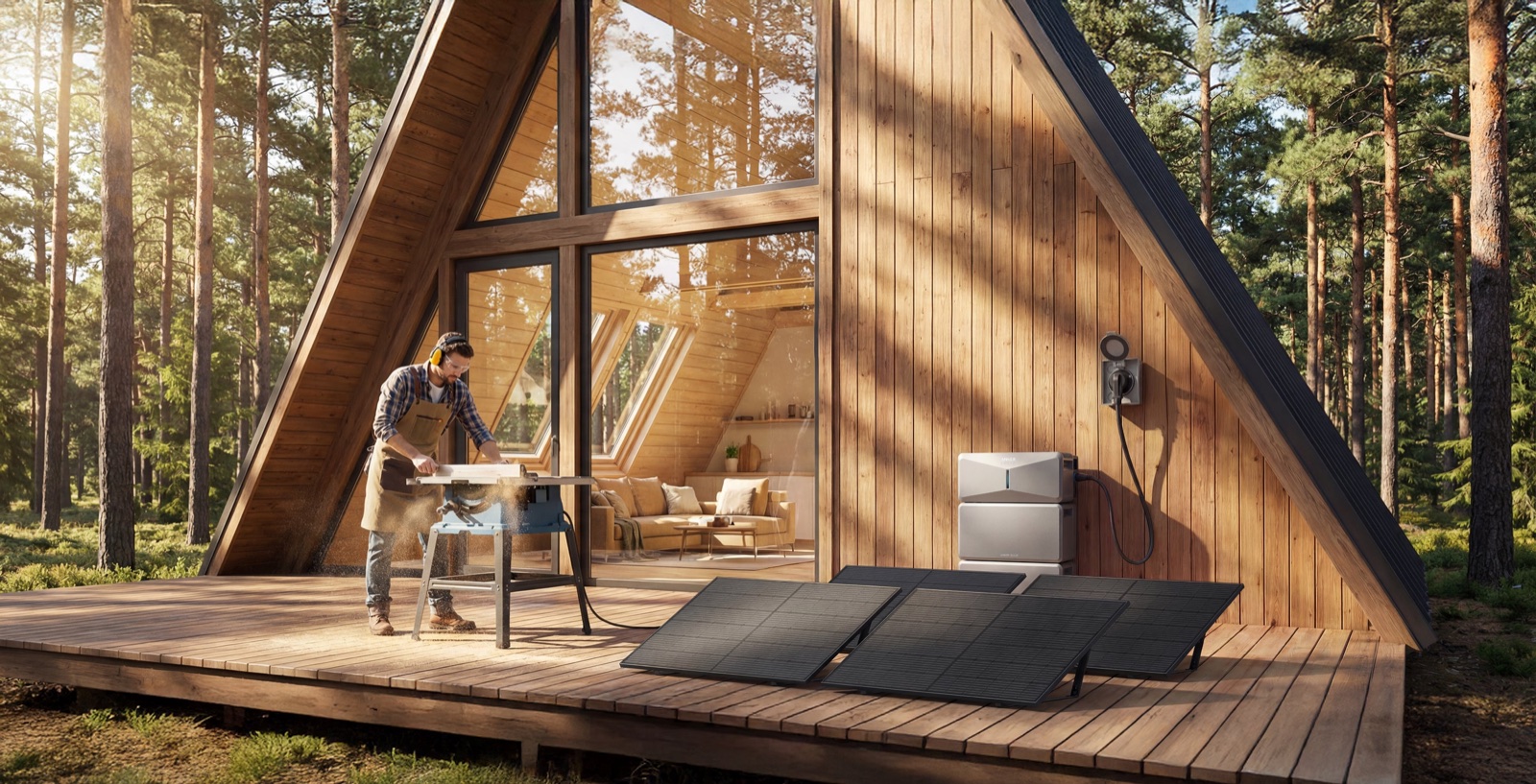
An array's rating is measured under conditions your cabin will rarely see. Real output falls with haze, with the angle between panel and sun, with temperature, and with any shading at all. A single branch across one corner costs far more than its area suggests, because of how panels are wired internally.
Two practical consequences. First, size the array generously against the daily need rather than exactly, and accept that it will be oversized in June. Second, angle matters more than most people expect at higher latitudes in winter, where a steeply tilted panel catches a low sun that a flat one misses entirely. A cabin roof pitched for snow often happens to be right for this.
Then check the array against the unit's ceiling. Feeding more than the unit accepts is wasted, and the excess is simply not harvested. That is the number that caps the whole system, and it is why a unit with a high input ceiling costs what it does.
Nobody sizes a cabin system correctly from a spreadsheet. The first winter teaches you what the loads really are, how much the cold takes, and which habits turn out to be expensive. The design question is therefore not how big to buy, but how wrong you can afford to be.
An expandable unit answers that cheaply. Start with a pack sized for a realistic estimate, live a winter, and add a battery to the same unit if the estimate was short. A fixed unit makes the same mistake cost the whole machine, and leaves you selling a perfectly good one.
There is a second argument for expansion in a cabin specifically. Capacity added later can be added as money allows, which suits a building that tends to be improved in stages rather than finished at once.
A weekend cabin with light loads. The BLUETTI Elite 100 V2 holds 1,024 Wh and delivers 1,800 W continuous, but the reason it belongs here is solar: it accepts up to 1,000 W, which is a high ceiling for its size, and its cells are rated for 4,000 cycles to 80%. At 25.0 lb (11.5 kg) it can also come home with you.
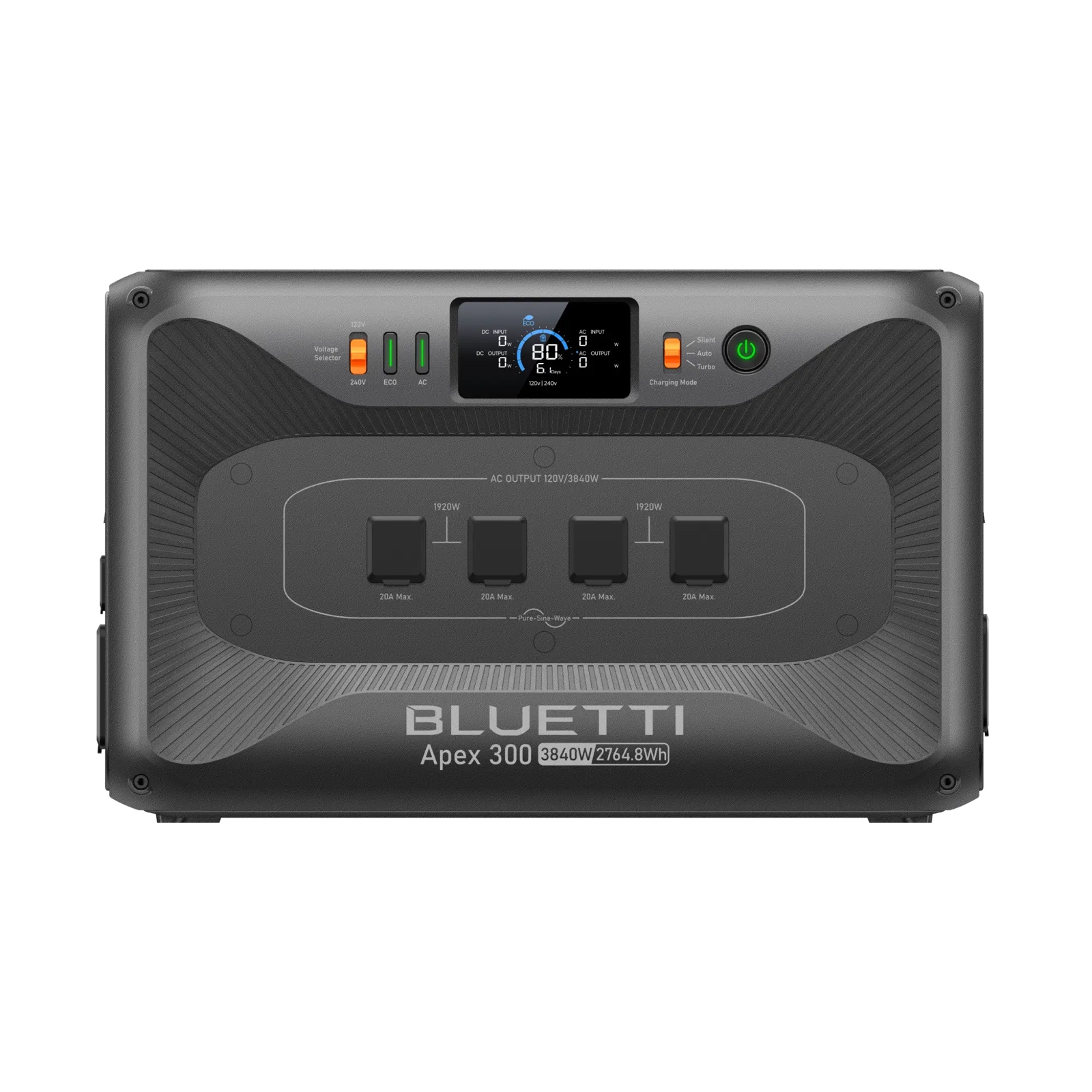
6.8/10A cabin lived in for weeks at a time. The BLUETTI Apex 300 holds 2,764.8 Wh, delivers 3,840 W continuous and accepts up to 2,400 W of solar. It is rated for 6,000 cycles to 80%, the highest figure in this catalogue, which is exactly the specification a hard-cycled cabin pack should be chosen on, and it is Expandable.
 8.4/10
A cabin that runs a household. The EcoFlow DELTA Pro 3 holds 4,096 Wh and accepts up to 2,600 W of solar, the widest input ceiling here, with 4,000 W of continuous output and cells rated for 4,000 cycles to 80%. It is Expandable to 12,000 Wh. At 113.5 lb (51.5 kg) it is installed once and never moved.
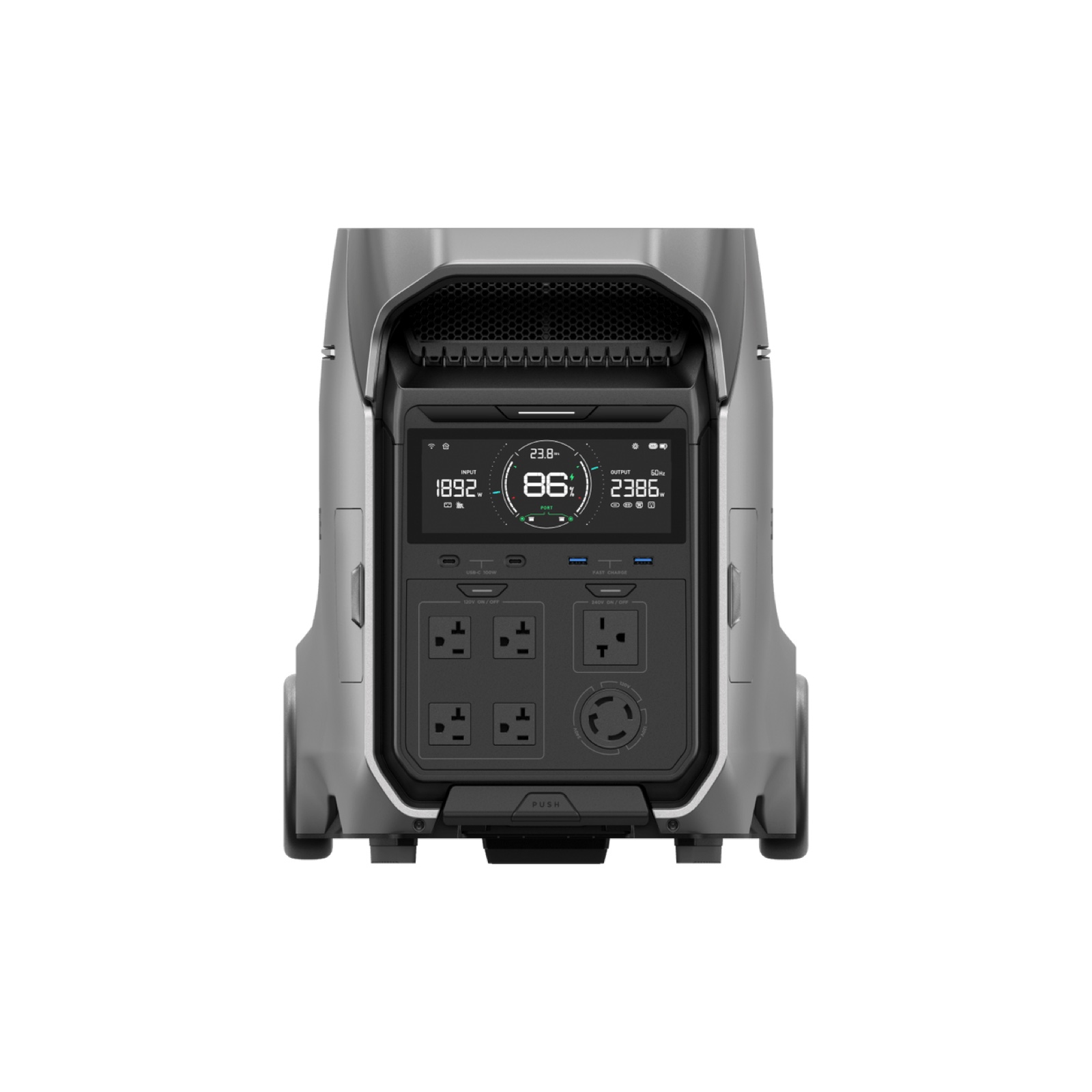
 8.8/10
List every load the cabin actually has, with the rating from its own plate, then put them through the run time calculator twice: once for a summer day and once for a December one with the lights on all evening. The gap between the two answers is the system you have to buy.
If the cabin is really a vehicle, the alternator charging section of the van and motorhome guide changes the maths substantially in your favour. If the cabin also needs to carry a power cut at a main residence, the standby storage advice in the power cut guide applies to the same unit.
For a small cabin, often yes. It arrives with the inverter, the charge controller, the battery management and the protection already matched to each other, which removes most of the ways a self-built system goes wrong. What it gives up is the ability to size each component separately and to expand without limit.
It will charge from whatever the panels produce, which in deep winter at higher latitudes can be very little for weeks. The harder limit is temperature: most units refuse to charge below freezing, by design, so the pack needs to live inside the heated part of the cabin rather than in a store or a porch.
A unit powering a fridge or a security camera while nobody is there will cycle continuously, which counts against the rated cycle life and should be planned for. Check also that the array alone can carry that standing load through the darkest month, because there is nobody there to notice when it cannot.
Work backwards from the daily energy your loads consume, then allow generously for cloud, angle and short winter days. Check the total against the unit's maximum solar input, because anything above that ceiling is simply not harvested, and check the input voltage window before ordering, since it decides what can be wired in at all.
A pump runs in short bursts, so the energy is modest, but it draws a significant spike when the motor starts. Compare the running figure against continuous output and the start-up spike against a conventional surge rating, not against a boost mode that works by lowering voltage. Voltage-lowering modes suit heaters, not motors.