 6.7/10
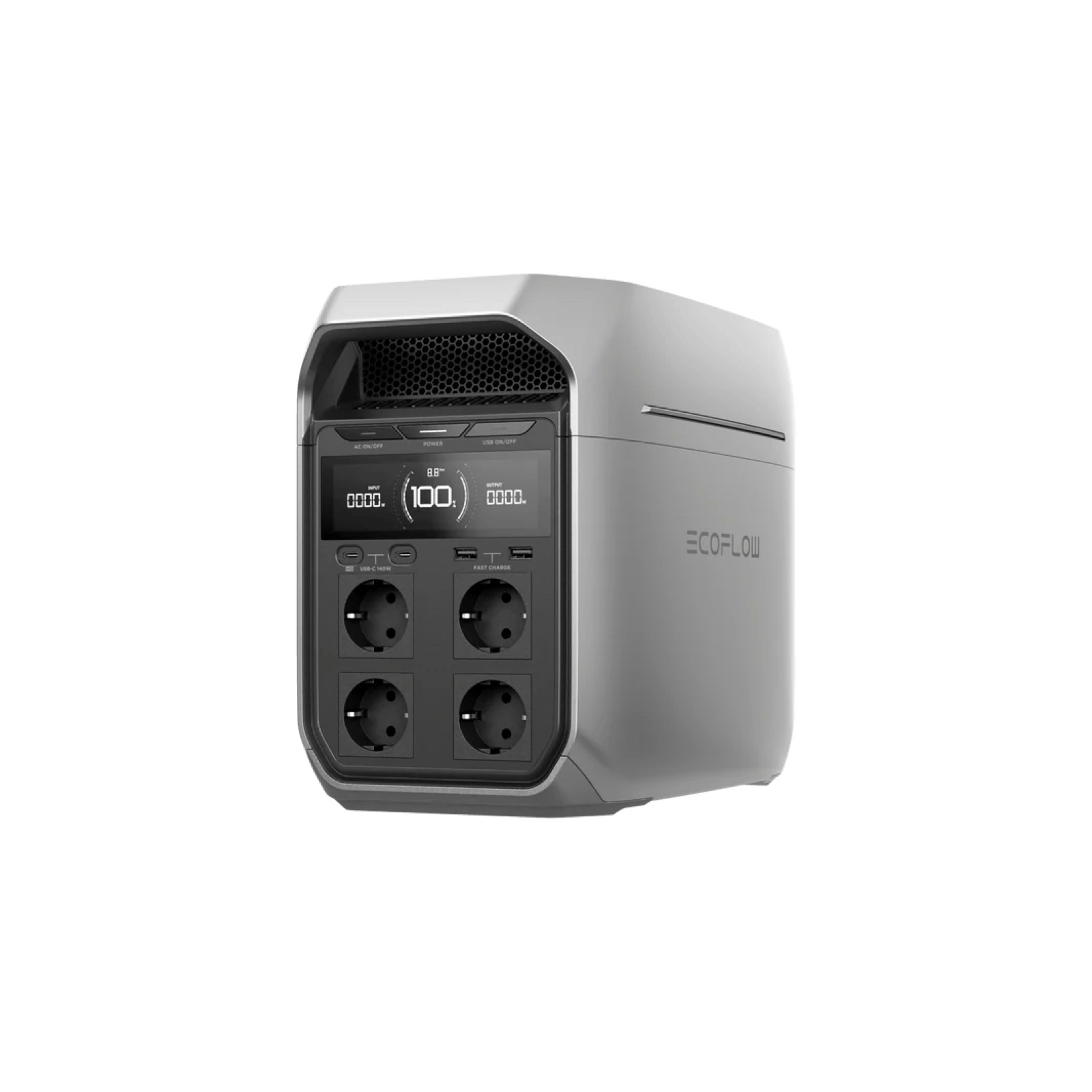
DELTA 3 Plus EcoFlow DELTA 3 Plus
1,024 WhCapacity1,800 WAC output27.6 lb (12.5 kg)Weight10 msUPS switchover
Van living cycles a battery almost every day, so the two figures that decide this purchase are rated cycle life and whether the unit takes a second battery later. Size around a fridge that never switches off, plan how the pack refills while you drive, and check the physical footprint against the cupboard it has to live in.
PowerStationFacts takes part in the Amazon Services LLC Associates Program. When you buy through a link on this page we may earn a commission, and the price you pay does not change.
A power station bought for power cuts might be drained and refilled a handful of times a year. In a van it is drained and refilled most days. That single difference reorders the whole specification sheet.
Rated cycle life stops being a footnote and becomes the figure that decides how many years you keep the unit. Read it carefully, because it is a promise about degradation rather than failure: after the stated number of cycles, the pack still holds a stated share of its original capacity. The catch is that makers do not all use the same share. Jackery states its figures to seventy percent remaining, the others to eighty, so two ratings that look comparable are not. This site prints the endpoint alongside every cycle figure for that reason, and the method page explains the rest of the scoring.
The second figure that matters is expansion. Almost nobody sizes a van system correctly on the first attempt, because a fridge behaves differently from how it was imagined and the days without sun last longer than expected. On an expandable unit that mistake costs an extra battery. On a fixed one it costs the whole machine.
In a van the fridge is not a weekend load, it is a permanent one. It runs in summer when you want it to and in winter when you have forgotten it exists. Its compressor draws for roughly a third of the time, more in heat, less in cold, and that duty cycle is the assumption that moves a run time estimate further than any other.
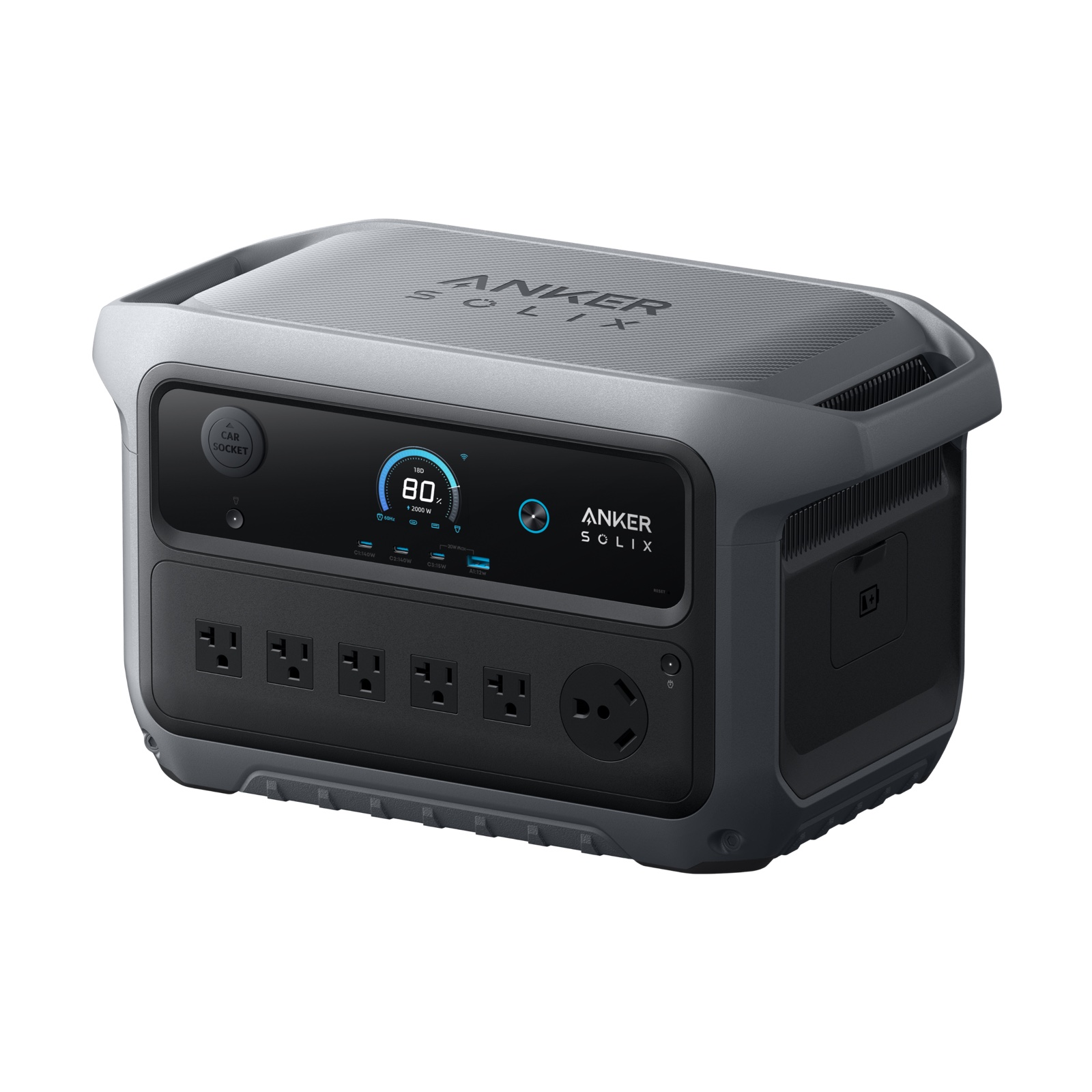
Below, the calculated run times for the Anker SOLIX C2000 Gen 2, a common van-sized unit, across the standard appliance set.
| Appliance | Typical draw | Estimated run time |
|---|---|---|
| Fridge | 120 W | 41 h 27 min |
| CPAP machine | 45 W | 38 h 41 min |
| Router and modem | 15 W | 116 h 3 min |
| Television | 90 W | 19 h 21 min |
| Microwave | 1200 W | 1 h 27 min |
Read the fridge row as your baseline day, then subtract from it. Lights, a laptop, a fan, a water pump and phone charging are each small, but together they are not nothing, and in a van they run every day rather than for one weekend. A unit that covers the fridge exactly and nothing else is undersized.
Driving is the most reliable charging source a van has, because it works at night, in rain and in winter, which is exactly when solar does not. There are two ways to use it and they are far apart.
The vehicle's accessory socket delivers a trickle. It will top a unit up over a long day's driving and it will never fill a large pack. It is fine as a supplement and useless as a plan.
A dedicated alternator charger is separate hardware wired to the vehicle's charging system, and it moves real power. If the van does significant mileage, this is the upgrade that removes the anxiety from the whole setup, and it should be budgeted alongside the power station rather than after it. Check what DC input the unit accepts and at what voltage before choosing the charger, since that pairing is where van builds most often go wrong.
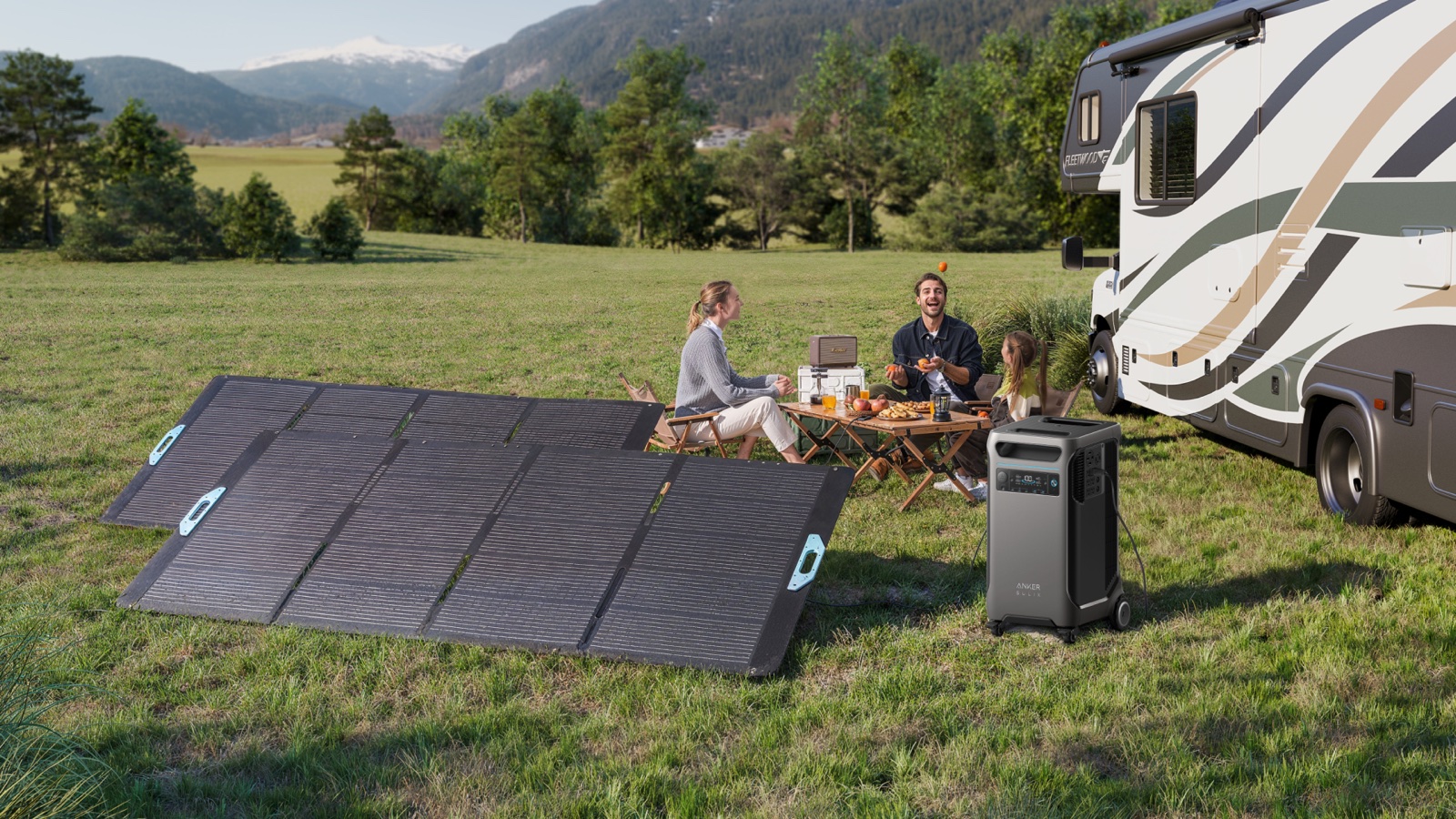


A van roof holds a fixed area of panel, and that area, not the power station, usually sets the ceiling on what you can harvest. Still, the unit's maximum solar input matters in two ways. It caps what you can feed in on a good day, and its voltage window decides which panels can be wired to it at all. Buying panels first and a unit second is how people end up with an array their station cannot accept.
Treat the published maximum as a ceiling rather than a rate. Flat-mounted panels on a roof, which is what nearly every van has, lose a substantial share of their rating compared with panels angled at the sun, and one shaded corner costs more than its area suggests. Size the array assuming average days, not the best one.
In winter at higher latitudes, solar contributes very little for weeks at a time. A van that relies on it alone will be run from the alternator or from campsite hookup in that season, and the system should be designed to accept that rather than fight it.
Measure the cupboard before comparing specifications. A large unit that does not fit under the bed, or that blocks a drawer, becomes a permanent annoyance. Two units with identical capacity can have very different footprints and very different port layouts, and in a fixed installation the side that carries the outlets needs to face out.
Weight matters less in a van than in a tent, but it does not stop mattering. It counts against the payload the vehicle is legally allowed to carry, which is tighter than most owners realise once water, gas, tools and people are added. And the unit still has to be lifted into place once, usually alone, in an awkward space.
Ventilation is the detail that gets forgotten. These units have fans, and a fan boxed into a sealed cupboard is a fan pushing hot air back at itself. Leave an air path, and keep it away from bedding.
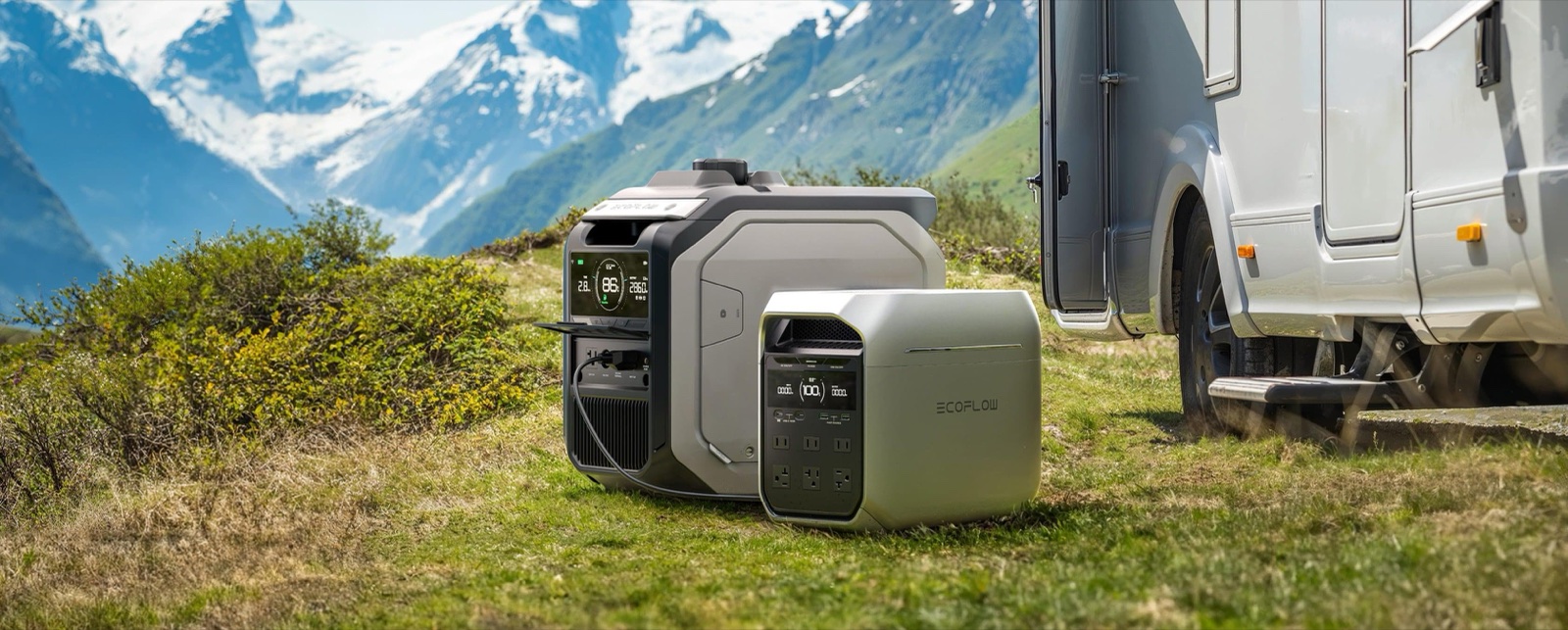
A small van, with room to grow. The EcoFlow DELTA 3 Plus holds 1,024 Wh at 27.6 lb (12.5 kg), and is Expandable to 5,000 Wh. That combination is the point of it: start with a pack that fits a small conversion, and if a season of living in it proves the size wrong, add rather than replace. It accepts up to 1,000 W of solar and its cells are rated for 4,000 cycles to 80%.
6.7/10The mainstream van build. The Anker SOLIX C2000 Gen 2 carries 2,048 Wh with 2,400 W of continuous output, weighs 41.7 lb (18.9 kg), and is Expandable to 4,096 Wh. Cells rated for 4,000 cycles to 80% suit daily cycling, and it is light for its capacity, which matters when it has to come out of the van occasionally. Its comparison against the BLUETTI Elite 200 V2 sets out the trade in detail.
 7.8/10
A full-time motorhome. The BLUETTI Apex 300 holds 2,764.8 Wh, delivers 3,840 W continuous, accepts up to 2,400 W of solar and is rated for 6,000 cycles to 80%, the highest figure in this catalogue. At 83.8 lb (38.0 kg) it is an installation rather than a portable, and that is the right call for somebody living aboard year round.
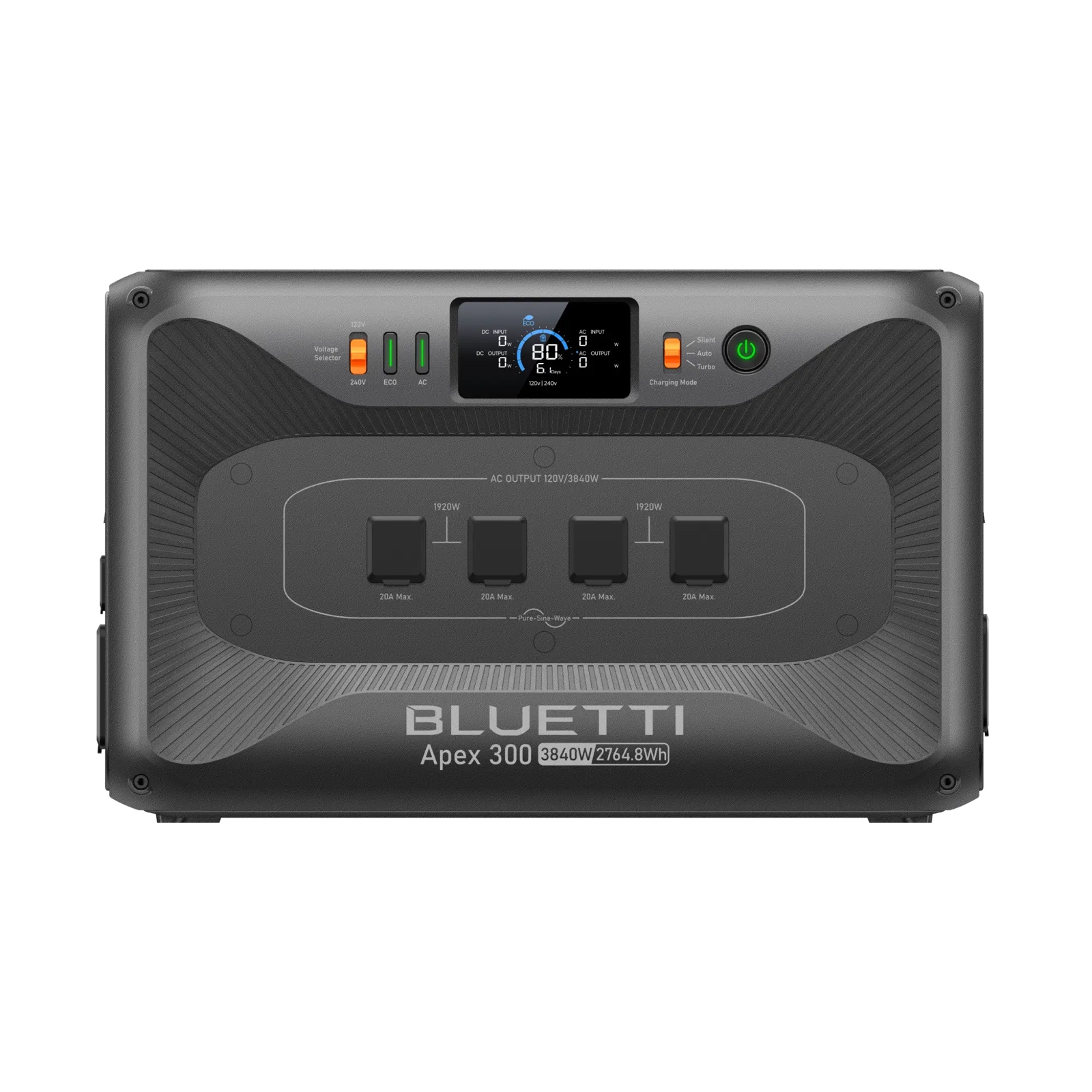
 8.4/10
Take the rating from the fridge actually fitted to the van, not a typical figure, and run it through the run time calculator. Adjust the duty cycle up for summer and down for winter, and you will get two very different answers. Size for the summer one.
If the unit will also travel out of the van for weekends on foot, the weight argument in the camping guide applies and may push you a class smaller. If the van is really a base rather than a vehicle, the off-grid cabin guide covers the solar-only case more directly.
For many builds, yes. It arrives with the inverter, the solar controller, the charger and the protection circuits already matched to the pack, which removes most of the ways a home-built system goes wrong. What it gives up is the ability to mount cells low and spread out, and the freedom to size each component independently.
Close to one per day if the pack is genuinely drained and refilled, fewer if it is topped up before it empties, since a partial discharge is a partial cycle. Compare the rating against that rate to see the realistic service life, and always check the endpoint the maker quotes it to.
A portable unit needs high continuous output and a great deal of energy over a night, so it is a poor match for anything but the largest packs. Check the running wattage against the unit's continuous figure first, then check the energy over the hours you need it, which is usually the wall you hit.
Yes, and use the slower charging mode if the unit offers one. Heat is what ages cells, and fast charging makes heat. Save the fast mode for the times you need to be full again quickly before moving on.
Cold reduces available capacity temporarily, and that returns when the pack warms. The real limit is charging: most units refuse to charge below freezing, which is a protection rather than a fault. In a van that means the pack wants to live inside the heated space, not in an outside locker.