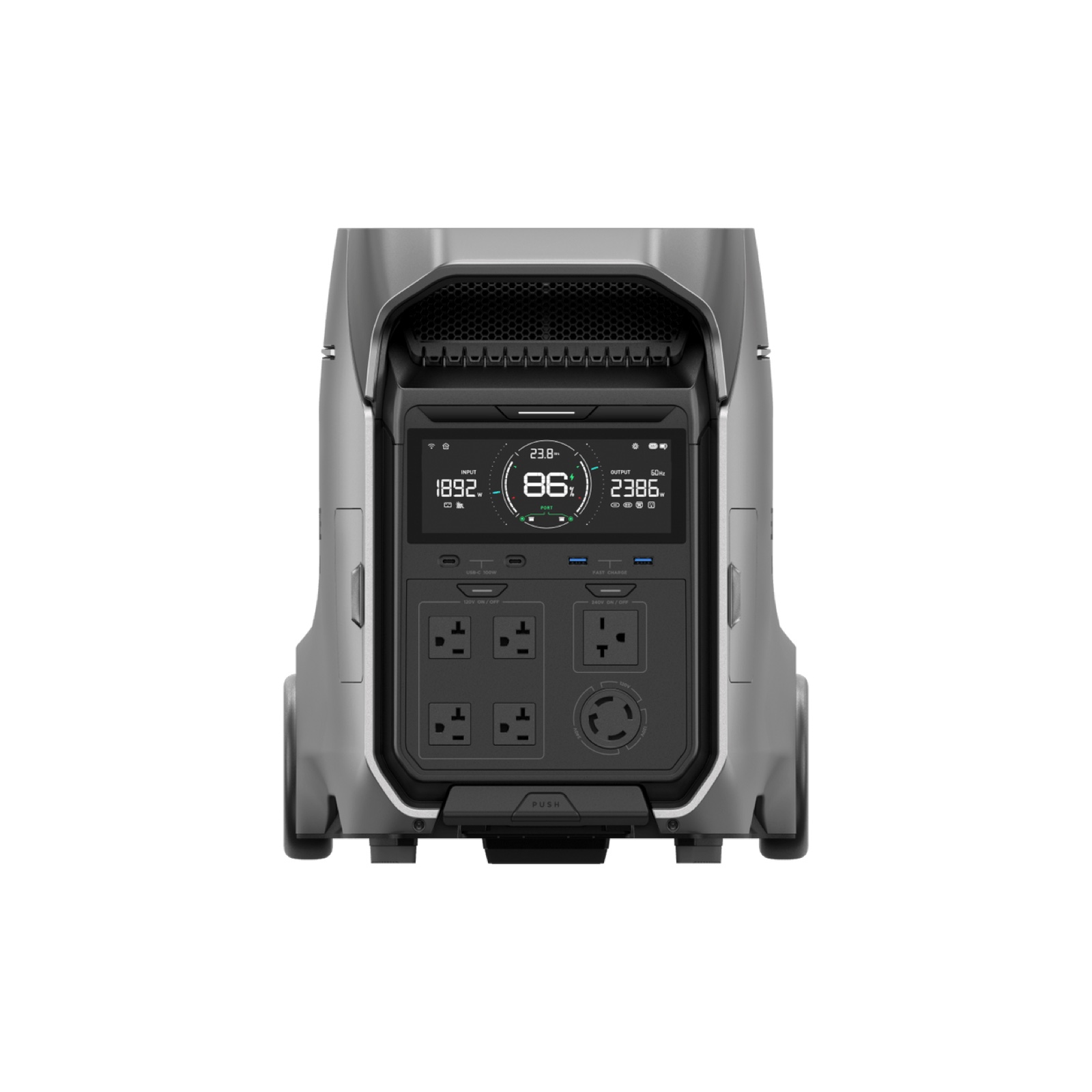
 8.8/10
DELTA Pro 3 EcoFlow DELTA Pro 3
4,096 WhCapacity4,000 WAC output113.5 lb (51.5 kg)Weight10 msUPS switchover
A sump pump draws 700 W to 1,200 W while it runs, but it only runs when the pit fills, which averages out near 15% of the time. The capacity question is therefore modest: a two kilowatt hour station covers many hours of normal cycling. The hard requirement is the start. The motor pulls several times its running wattage for an instant, so surge rating decides whether a station works at all.
PowerStationFacts takes part in the Amazon Services LLC Associates Program. When you buy through a link on this page we may earn a commission, and the price you pay does not change.
This is the appliance where the usual order of questions is wrong. A pump that the station cannot start is a pump that does not run, however large the battery is.
The working figure used here is 900 W while pumping, in a range of 700 W to 1,200 W. An induction motor under load pulls several times that in the instant it starts, which is why a station rated comfortably above the running figure can still shut down on the first cycle. Read the surge specification, not just the continuous one: EcoFlow DELTA Pro 3 is rated 4,000 W continuous and 8,000 W on surge, and Anker SOLIX F3800 is rated 6,000 W and 9,000 W.
One warning that matters more here than anywhere else on this site. EcoFlow X-Boost and BLUETTI Lifting Power increase the load a unit will feed by lowering the output voltage. They are intended for resistive loads. A pump motor fed at reduced voltage draws more current, not less, and can stall or overheat. Never plan a sump pump around one of those modes.
A sump pump is idle most of the time. The pit fills, the float rises, the pump empties it in under a minute and stops. Averaged over a wet day, this site uses a duty cycle of 15%, giving an average draw near 135 W, or about 160 Wh per hour once the inverter loss is counted.
That figure is honest for ordinary rain and dishonest for a storm. In heavy or sustained rainfall, with a high water table, the pump can approach continuous operation, and the average draw approaches the running figure. The arithmetic does not break; the assumption does. Size for the weather you are protecting against, not the average one, and use the run time calculator with the duty cycle pushed up to see the worst case.
Two more things move it: the vertical distance the water has to be lifted, and the length and diameter of the discharge pipe. Both raise the work per cycle.
The tables below are the site's standard loads on two large units. The pump is not among them, so use them for scale, then apply the pump arithmetic: at a 15% duty cycle, a two kilowatt hour unit runs a typical pump for well over half a day, and a four kilowatt hour unit for more than a day. Push the duty cycle to continuous storm conditions and both figures fall by most of their length.
| Appliance | Typical draw | Estimated run time |
|---|---|---|
| Fridge | 120 W | 55 h 57 min |
| CPAP machine | 45 W | 52 h 13 min |
| Router and modem | 15 W | 156 h 40 min |
| Television | 90 W | 26 h 7 min |
| Microwave | 1200 W | 1 h 58 min |
| Appliance | Typical draw | Estimated run time |
|---|---|---|
| Fridge | 120 W | 82 h 54 min |
| CPAP machine | 45 W | 77 h 22 min |
| Router and modem | 15 W | 232 h 6 min |
| Television | 90 W | 38 h 41 min |
| Microwave | 1200 W | 2 h 54 min |
That is the real shape of this problem: a pump backed by a battery is a device with a deadline. Expansion and solar are what move the deadline, which is why the units worth considering here are the ones that accept extra batteries.
8.8/10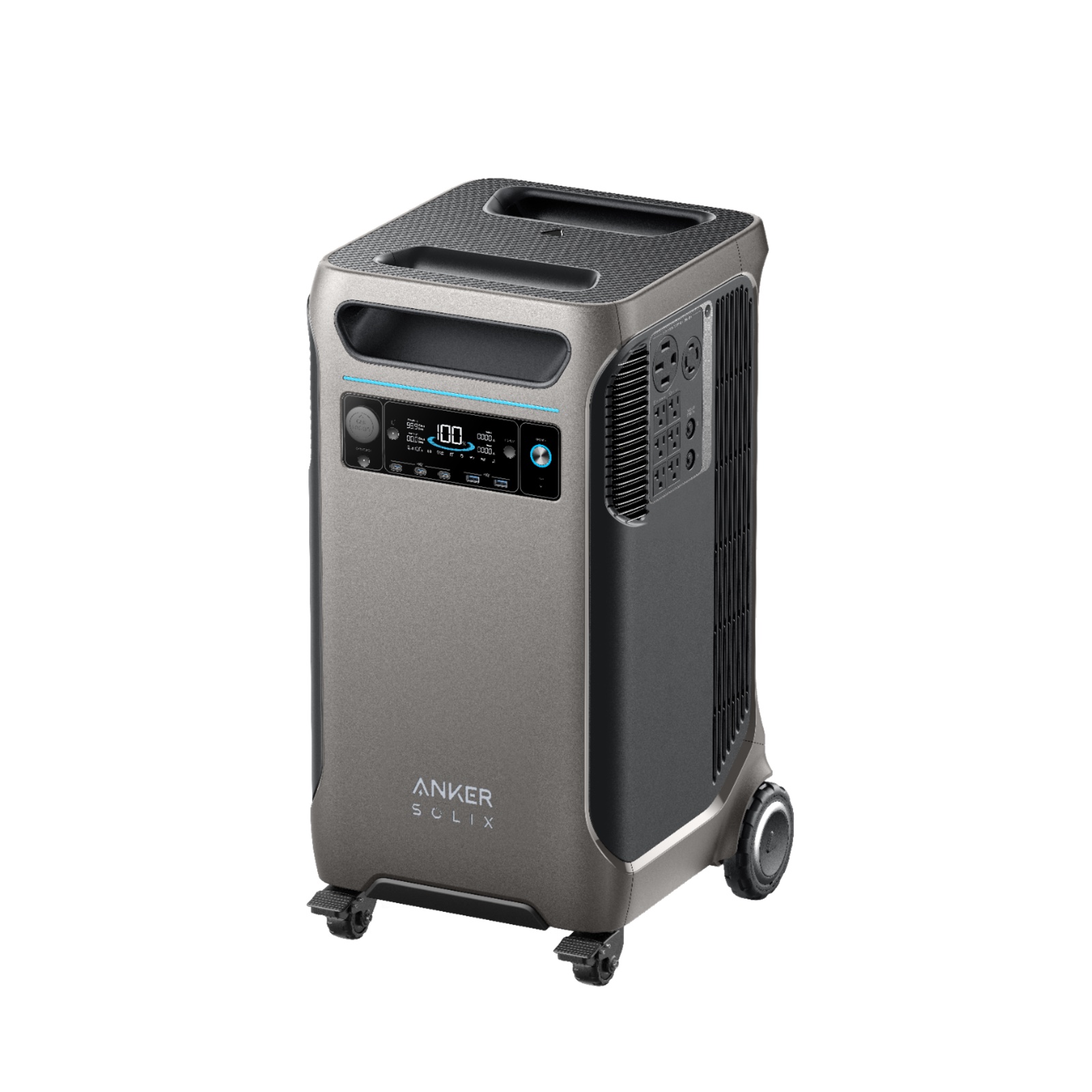
 8.1/10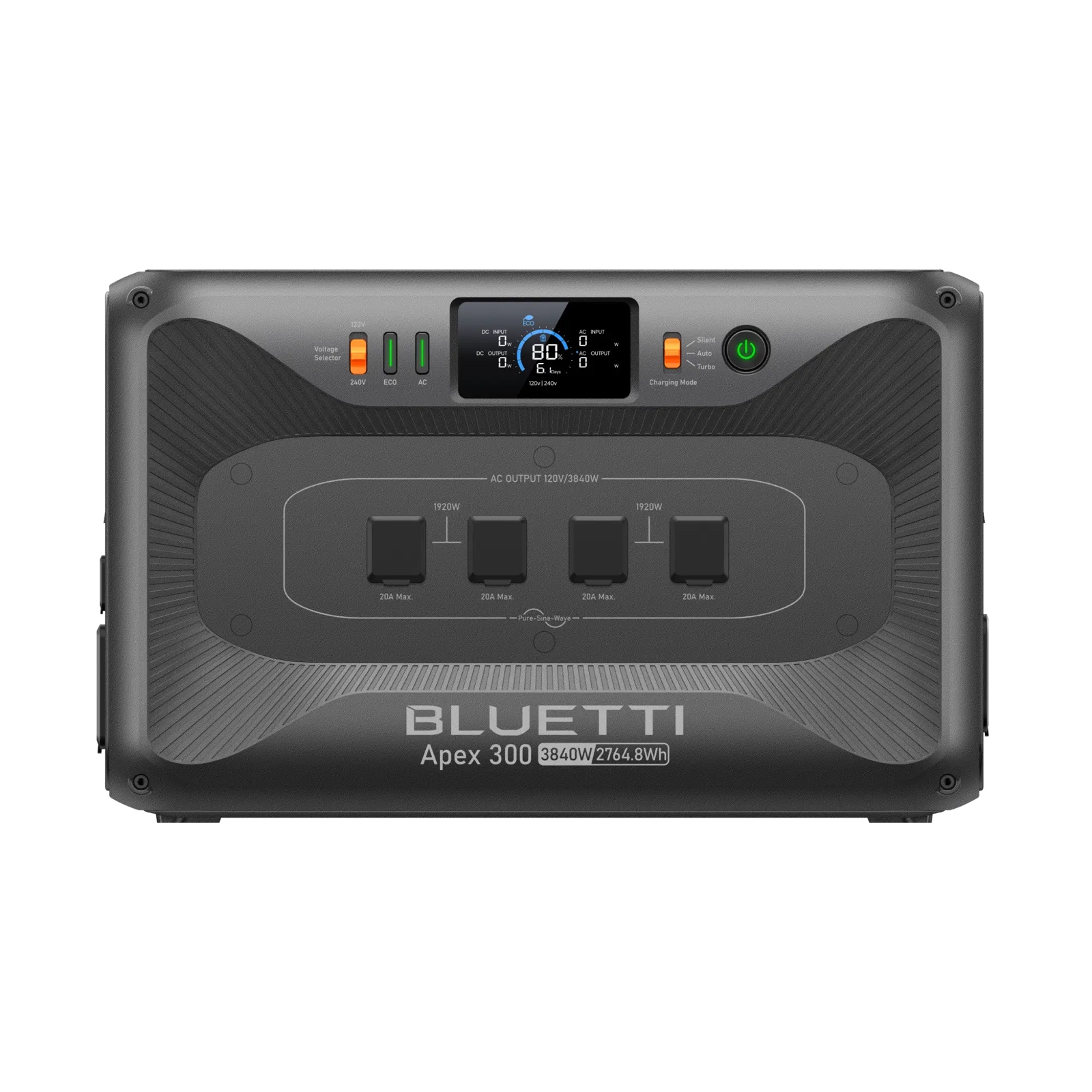
 8.4/10
EcoFlow DELTA Pro 3 is the straightforward choice: 4,000 W of continuous output, 8,000 W of surge, 10 ms switchover so the pump is never left waiting, and Expandable to 12,000 Wh for a storm that outlasts one battery.
Anker SOLIX F3800 carries the most output on this site at 6,000 W, with 9,000 W of surge and Expandable to 26,880 Wh. It weighs 132.3 lb (60.0 kg), so it is a basement fixture rather than something you carry down the stairs when it starts raining. The two are set against each other on F3800 against DELTA Pro 3.
BLUETTI Apex 300 is listed as No break on switchover, meaning the load is fed through the inverter continuously with nothing to change over, and it takes 2,400 W of solar. For a pump that has to keep running after the first day, that input matters as much as the battery behind it.
This site is documentary: it compares published specifications and shows its arithmetic. It is not a substitute for the pump manufacturer's guidance or for the judgement of a qualified electrician or plumber, and water in a basement is not a problem to solve with an estimate from a web page.
Three things to settle with a professional rather than a calculator. Whether your pump may legally and safely be run from a portable inverter at all, since some installations are hard wired and some circuits must not be back fed. Whether a dedicated battery backup pump, a water powered backup or a standby generator is the right answer for your property. And what happens when the battery does empty, because every battery plan needs an end state that is not a flooded basement.
Whatever you choose, test it before a storm rather than during one. Fill the pit, pull the mains, and watch the whole chain work.
Some can. The deciding specification is the surge rating, because an induction motor pulls several times its running wattage as it starts. A unit rated comfortably above the running figure can still trip on that spike, so compare surge against the pump's locked rotor figure and prefer generous headroom.
At the 15% duty cycle used here, a two kilowatt hour unit covers well over half a day of ordinary cycling. In a heavy storm the pump approaches continuous running and the same battery gives a small fraction of that. Size for the storm, not for the average.
No. Those modes feed a larger load by lowering the output voltage, which suits resistive heating and is actively unhelpful for a motor. A motor at reduced voltage draws more current and risks stalling or overheating. Size the station so the pump starts on the genuine surge rating.
Often, yes, and it is worth asking a professional. A purpose built backup pump is wired in, starts itself, and is designed around the failure it exists for. A portable station is more flexible and runs other things too, but it depends on you having set it up correctly before the water arrives.
Only if it has a UPS function, and for this appliance that is close to essential. An outage during a storm is exactly when nobody is standing next to the pump. Check the switchover specification and test it with the pit full before you rely on it.