 8.8/10
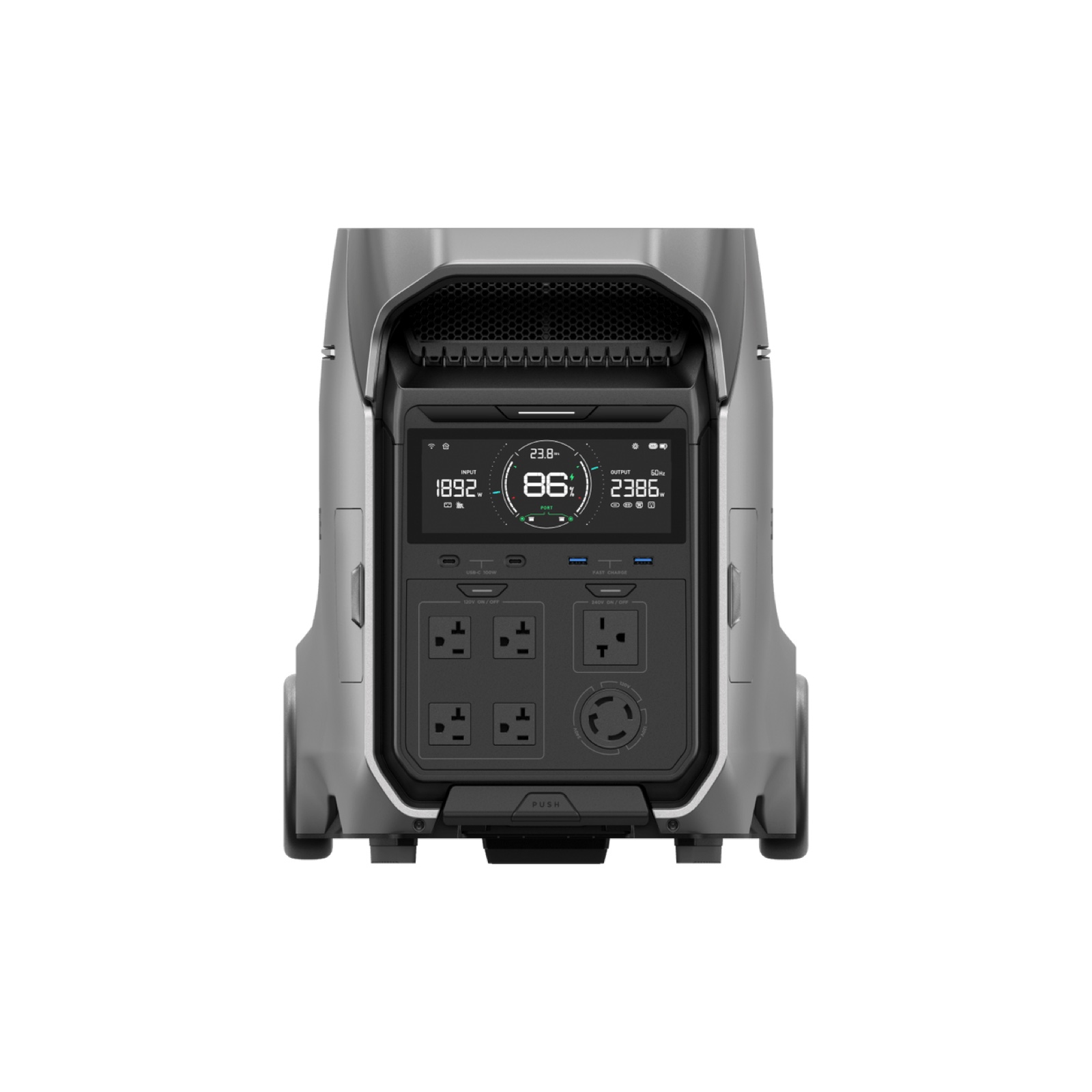
DELTA Pro 3 EcoFlow DELTA Pro 3
4,096 WhCapacity4,000 WAC output113.5 lb (51.5 kg)Weight10 msUPS switchover
A portable air conditioner draws 700 W to 1,400 W while the compressor runs, and the thermostat cycles it, so the average sits near 60% of that. At 1,000 W that is about 600 W continuous, or roughly 700 Wh from the battery each hour. A two kilowatt hour station gives around three hours; the largest units here give most of an evening. No portable battery air conditions a room all night.
PowerStationFacts takes part in the Amazon Services LLC Associates Program. When you buy through a link on this page we may earn a commission, and the price you pay does not change.
Once the room reaches temperature, the compressor stops and the unit coasts on its fan until the temperature drifts back. This site takes 60% as a working duty cycle, giving an average near 600 W against a 1,000 W running figure, and about 700 Wh from the battery for every hour of operation.
That assumption is generous in the conditions where you most want cooling. In a hot room, in full sun, with the exhaust hose warming the space it passes through, the compressor may barely stop at all and the duty cycle approaches continuous. Push the slider up on the run time calculator and watch the hours collapse: that is the honest worst case, and it is the one that applies during a heatwave.
A single hose unit also pulls conditioned air out of the room and draws warm air in from elsewhere to replace it, which makes it work harder for the same result. A dual hose design avoids most of that.
Like a fridge and a pump, an air conditioner has a motor that pulls several times its running wattage for an instant at start. A station whose continuous rating only just covers the running figure can trip on that spike, and with a thermostat cycling, that start happens repeatedly rather than once.
Compare surge ratings properly. EcoFlow DELTA Pro 3 is rated 4,000 W continuous and 8,000 W on surge; Anker SOLIX F3800 is rated 6,000 W and 9,000 W. Do not count X-Boost or Lifting Power to bridge a gap here: those modes lower the output voltage, which is wrong for a compressor motor and can make it stall.
An air conditioner is not one of the standard loads in the tables below. Use them for scale and apply the arithmetic: about 700 Wh per hour of cooling on the assumptions above.
| Appliance | Typical draw | Estimated run time |
|---|---|---|
| Fridge | 120 W | 55 h 57 min |
| CPAP machine | 45 W | 52 h 13 min |
| Router and modem | 15 W | 156 h 40 min |
| Television | 90 W | 26 h 7 min |
| Microwave | 1200 W | 1 h 58 min |
| Appliance | Typical draw | Estimated run time |
|---|---|---|
| Fridge | 120 W | 82 h 54 min |
| CPAP machine | 45 W | 77 h 22 min |
| Router and modem | 15 W | 232 h 6 min |
| Television | 90 W | 38 h 41 min |
| Microwave | 1200 W | 2 h 54 min |
In round terms, a two kilowatt hour station gives roughly three hours, a three kilowatt hour station around four, and the largest single battery here most of an evening. A night of cooling needs an expandable system with several extra batteries, and a day of it needs serious solar input alongside. This and space heating are the two jobs on this site that portable batteries do not really do.
8.8/10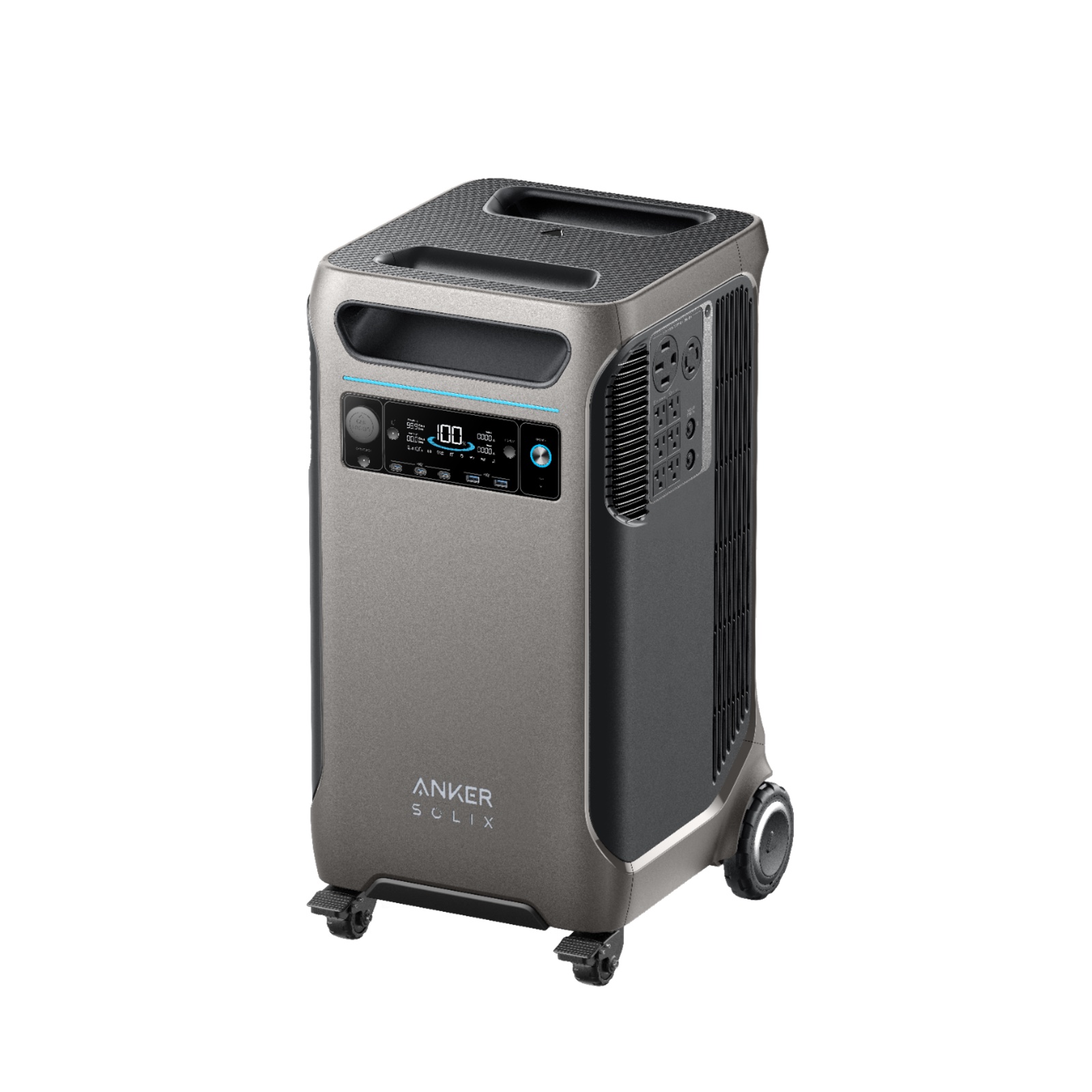
 8.1/10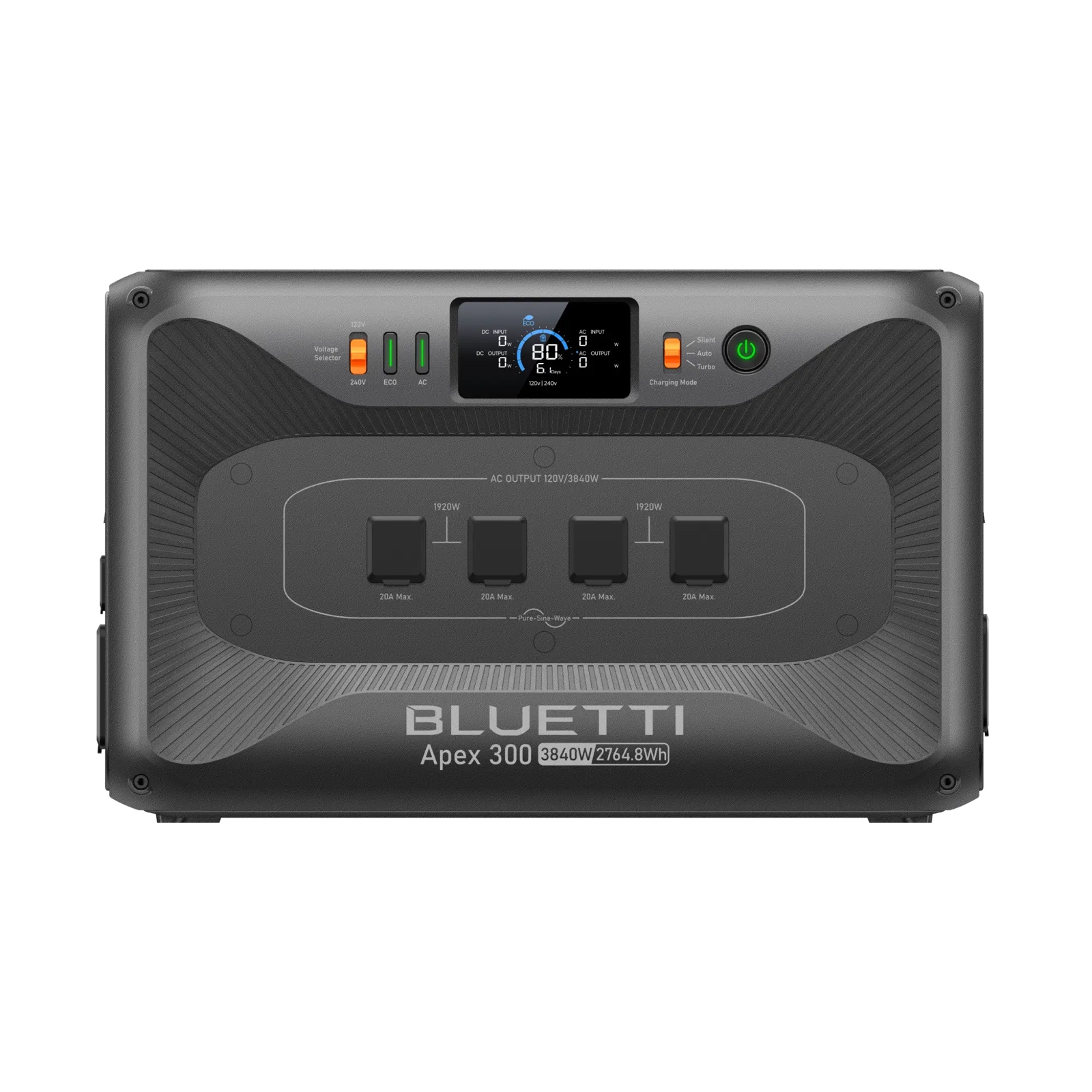
 8.4/10
EcoFlow DELTA Pro 3 is the most complete answer: 4,096 Wh, 8,000 W of surge for the compressor, Expandable to 12,000 Wh, and 2,600 W of solar input, which is the part that turns hours into days when the sun is out, which it usually is when you want cooling.
Anker SOLIX F3800 brings 6,000 W of output and Expandable to 26,880 Wh, so the runtime ceiling is set by how many batteries you buy rather than by the unit. At 132.3 lb (60.0 kg) it stays where you put it.
BLUETTI Apex 300 offers 2,764.8 Wh and 2,400 W of solar input at 83.8 lb (38.0 kg), which makes it the one of the three you might genuinely move between a room and a vehicle.
Before sizing a battery for air conditioning, price the alternatives in watt hours.
The 700 W to 1,400 W range here is a common starting point across small portable units. The plate on your own machine gives the figure that applies, and note that cooling capacity in BTU is not a power rating: two machines with the same cooling figure can draw noticeably different amounts of electricity.
Also check what the machine does after a power interruption. Some restart automatically, some wait, and some impose a delay to protect the compressor, which is a sensible behaviour that can look like a fault when a station has just taken over. If you plan to run one on battery during outages, test that sequence on a day when it does not matter.
Not a single portable battery in this catalogue. At around 700 Wh per hour of cooling, the largest unit here covers most of an evening rather than a night. Overnight cooling means an expandable system with several extra batteries, and substantial solar input to refill it the next day.
Commonly 700 W to 1,400 W while the compressor runs, with the thermostat cycling it so the average is lower. This site uses 1,000 W at a 60% duty cycle. In a genuinely hot room the compressor rarely stops and the average moves towards the full running figure.
Generally yes, because both are more efficient than a single hose portable, which throws conditioned air out through its exhaust and pulls warm air in to replace it. Efficiency is what buys runtime here, so the appliance choice moves the answer more than the battery choice does.
Check the surge rating rather than the continuous one. A compressor pulls several times its running wattage at start, and a thermostat makes that happen repeatedly. Voltage lowering modes such as X-Boost or Lifting Power are not a solution for a motor and should not be used to bridge the gap.
It is the only thing that comes close, because the sun is shining exactly when the machine is wanted. A large panel array feeding an expandable unit can cover much of the daytime draw directly. Evening and night still come out of the battery, and that is where the arithmetic on this page bites.