 4.4/10
RIVER 3 Plus EcoFlow RIVER 3 Plus
286 WhCapacity600 WAC output10.4 lb (4.7 kg)Weight10 msUPS switchover
In an apartment the constraints are physical rather than electrical. There is nowhere to put solar panels, nowhere to store something heavy, and a fan running at night will be heard. Buy for mains recharge speed, a footprint that fits a cupboard, and a weight one person carries up a staircase.
PowerStationFacts takes part in the Amazon Services LLC Associates Program. When you buy through a link on this page we may earn a commission, and the price you pay does not change.
Most buying advice in this category assumes a garage, a car and a roof. An apartment has none of them, and that removes several specifications from the decision entirely while promoting others that usually get ignored.
Solar input, the figure that dominates a van or cabin purchase, is close to irrelevant without a balcony. A window panel produces a token amount through glass, and a unit chosen for a high input ceiling you can never use is money spent on nothing.
What replaces it is recharge speed from a wall socket. In an apartment the grid is the only source, so the useful question is how quickly the unit is ready again once power returns. That figure, quoted from mains alone, is the one this site publishes, and it is the one to compare.
The other promoted specification is physical size. A unit lives in a wardrobe, under a desk or beside a bookcase, and the difference between something that fits there and something that does not is absolute, in a way a capacity difference never is.
These units are fan cooled. The fan is off or barely audible at low load, and it becomes clearly audible when the unit is working hard or charging fast. In a house that is unremarkable. In a one-bedroom apartment with a partition wall, it is the difference between a device you use and one you resent.
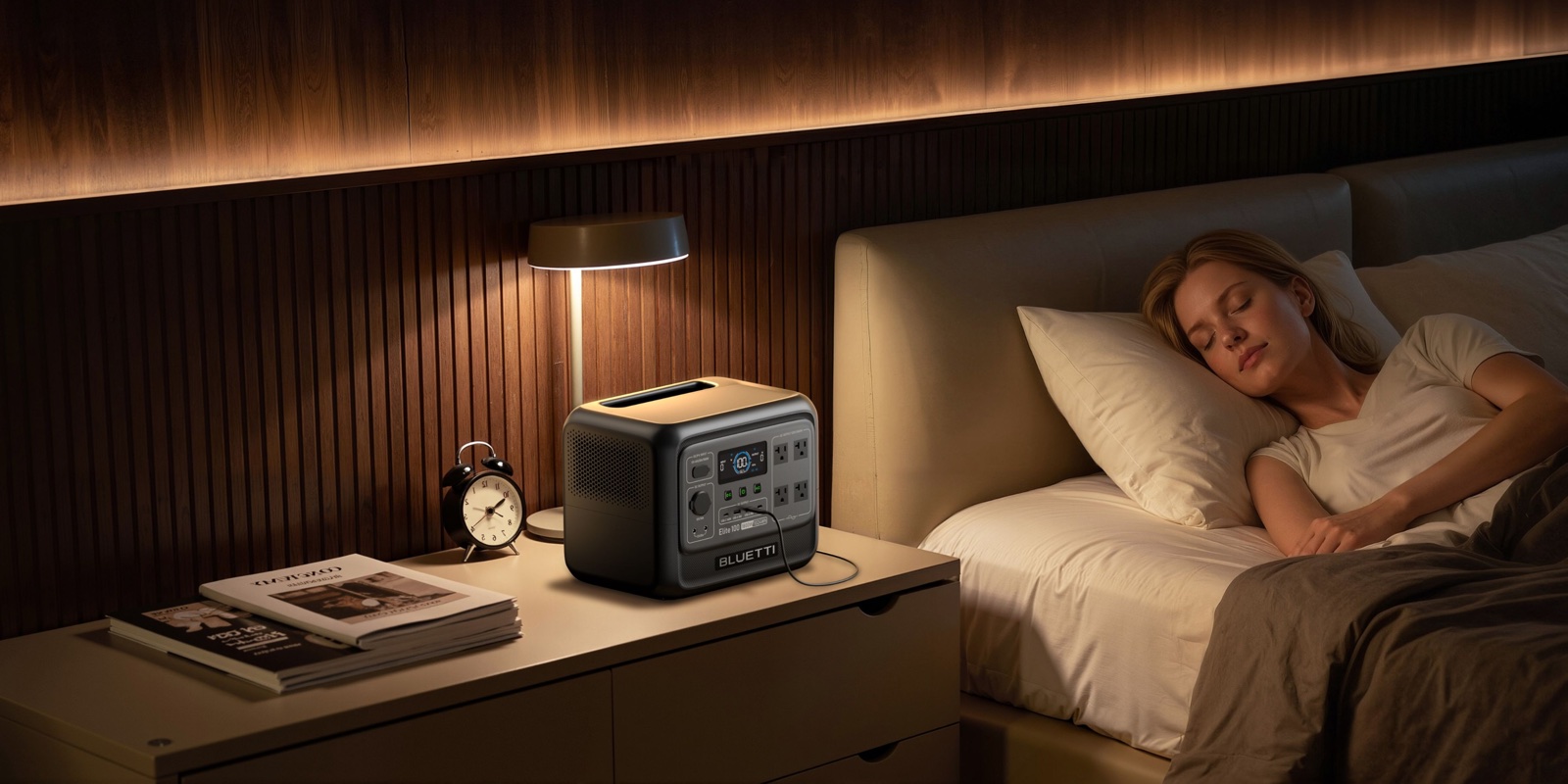
Two rules follow. First, keep the loads small and the fan stays quiet: a router, a laptop, lights, a phone and a CPAP machine together amount to very little, and that is the quietest thing you can ask of any unit. Second, do not fast-charge it in the bedroom overnight. Charge it in the day, in the room furthest from where anyone sleeps, and use the slower charging mode if the unit offers one. That is also better for the cells, since heat is what ages them.
No maker publishes a noise figure, so there is nothing to compare on a specification sheet. What you can compare is what the unit is being asked to do, which is entirely within your control.
Capacity and weight track each other almost exactly, because the cells are the mass. In an apartment that trade is felt twice: once on the day it is delivered and carried up, and again every time it is moved from a cupboard to a room.
There is a real threshold at roughly the weight of a full suitcase. Below it, one adult carries the unit up a flight of stairs without thinking. Above it, the carry becomes a planned event, and the unit stops moving between rooms. For most apartment buyers that argues for staying a class smaller than they first intended, and spending the difference on a unit that recharges quickly rather than one that holds more.

Here are the calculated run times for the BLUETTI Elite 100 V2, a unit at the upper end of what makes sense in an apartment, across the standard appliance set.
| Appliance | Typical draw | Estimated run time |
|---|---|---|
| Fridge | 120 W | 20 h 43 min |
| CPAP machine | 45 W | 19 h 21 min |
| Router and modem | 15 W | 58 h 2 min |
| Television | 90 W | 9 h 40 min |
| Microwave | 1200 W | 0 h 44 min |
The router row is the one to read. Internet, phones, a laptop and lights are tiny loads, and a pack this size carries them for a very long time. Those are also, for most apartment dwellers, the things that genuinely matter during a cut: being able to work, being reachable, and being able to see.
The fridge row is the next question. An apartment fridge is usually smaller than a house one, and its compressor draws for roughly a third of each hour rather than continuously, so a unit at this capacity covers it through a long evening outage without difficulty. Keep the door shut and it goes further still.
The microwave row is the limit. High-draw cooking is measured in minutes, not hours. That is fine for reheating a meal and useless as a cooking plan.
Three uses justify the purchase, and it is worth being clear about which one applies before choosing a size.
Riding out a cut. Usually short in a city, usually a matter of keeping the internet, the lights and the fridge going for an evening. A unit with a fast switchover keeps a desktop computer and a router running without either noticing the cut, which for anyone working from home is the whole point.
A medical device. A CPAP machine is a small, continuous load, which is the easiest thing to ask of a battery and the least noisy. Anybody who depends on one has a reason to own a pack regardless of how rare outages are.
Power where there is no socket. A balcony, a shared roof terrace, a courtyard, a market stall, a photo shoot. This is the use that pushes towards something light rather than something large.
What a power station is not, in an apartment, is a backup for heating or cooking. Those loads are beyond anything at this scale, and the reasoning is set out in more detail in the power cut guide.
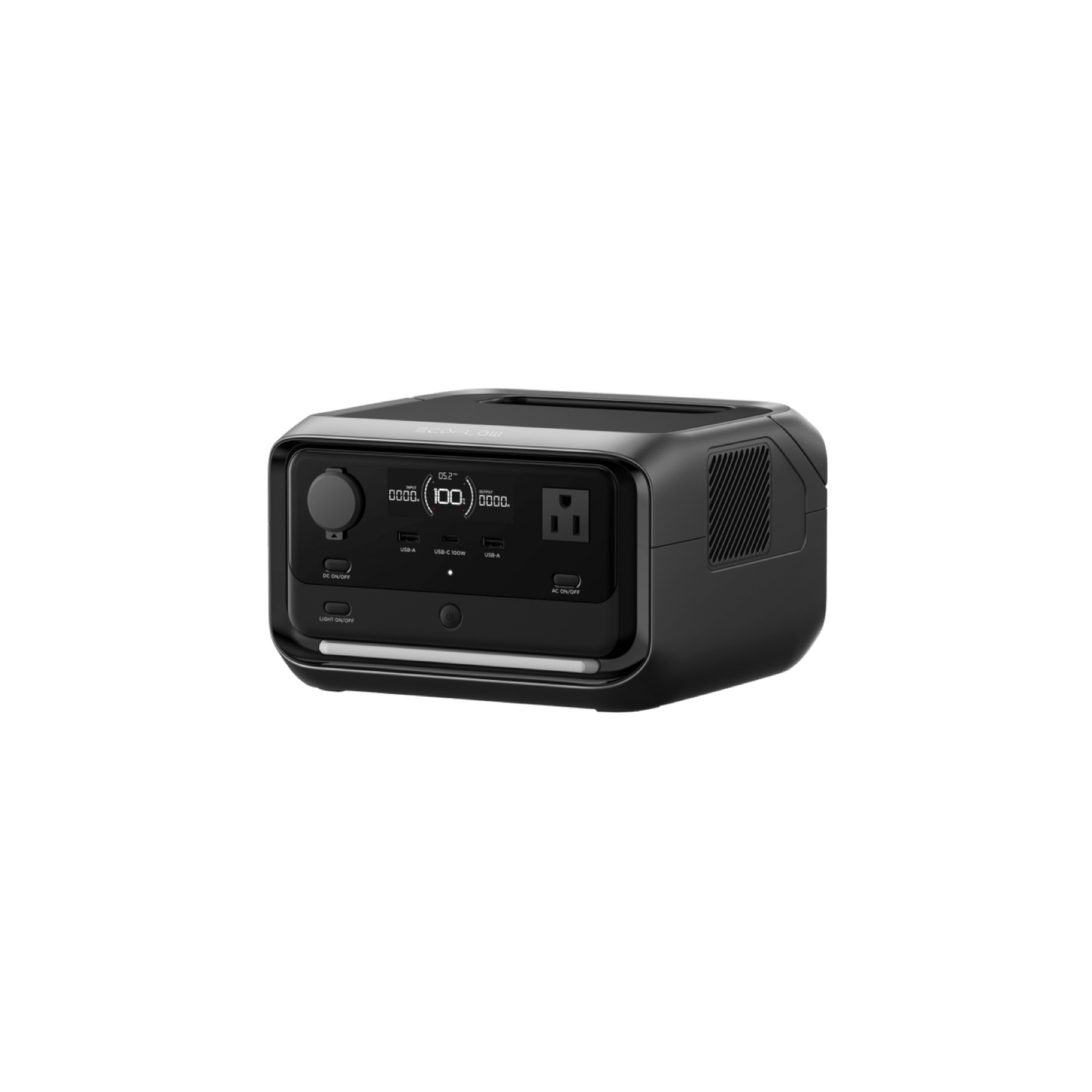
The small one that lives on a shelf. The EcoFlow RIVER 3 Plus weighs 10.4 lb (4.7 kg) and holds 286 Wh, with 600 W of continuous output and a switchover of 10 ms. It will carry a router, a laptop and lights through an evening cut, or a CPAP machine through a night, and it is Expandable to 858 Wh if that turns out to be too little.
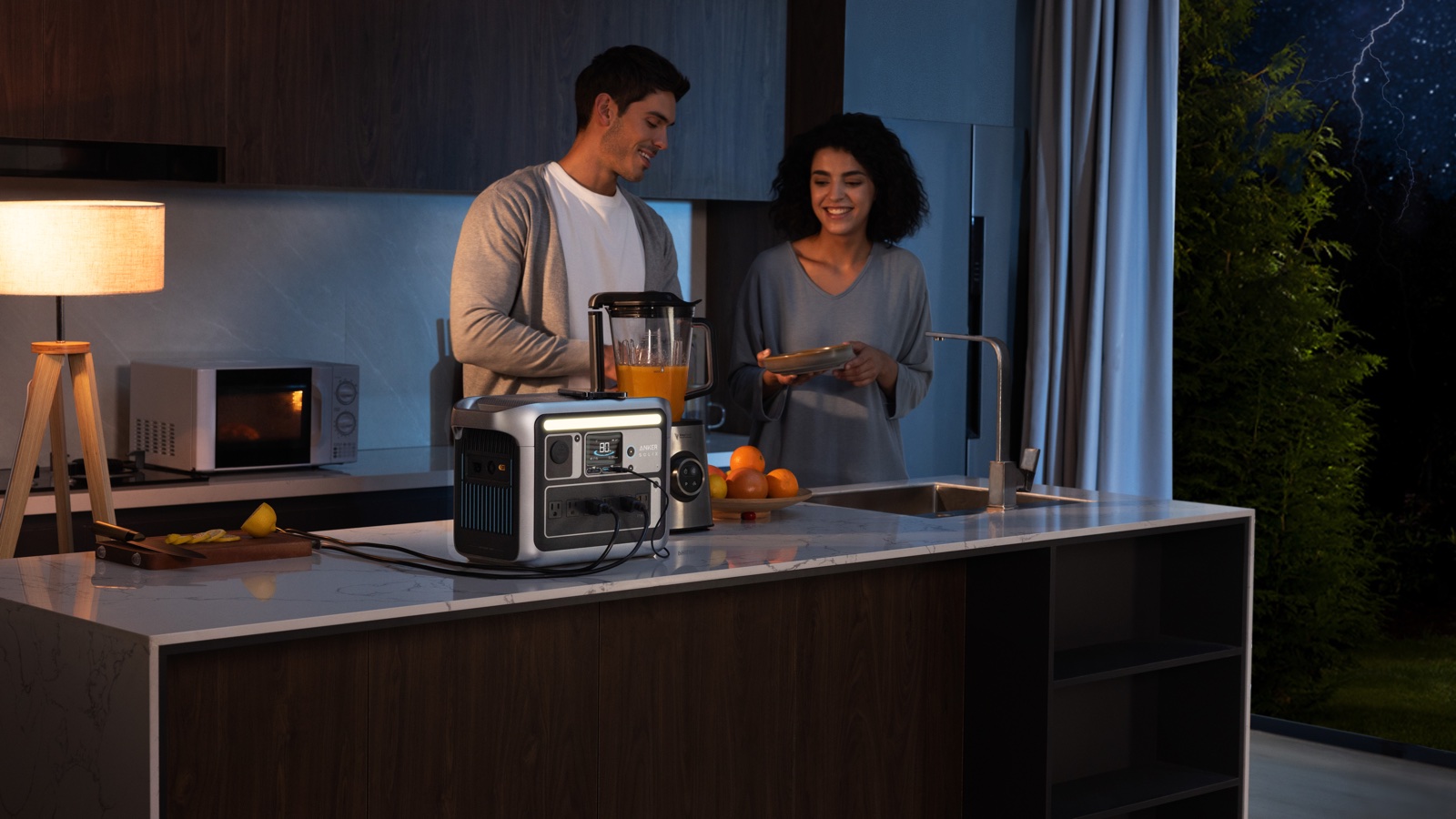
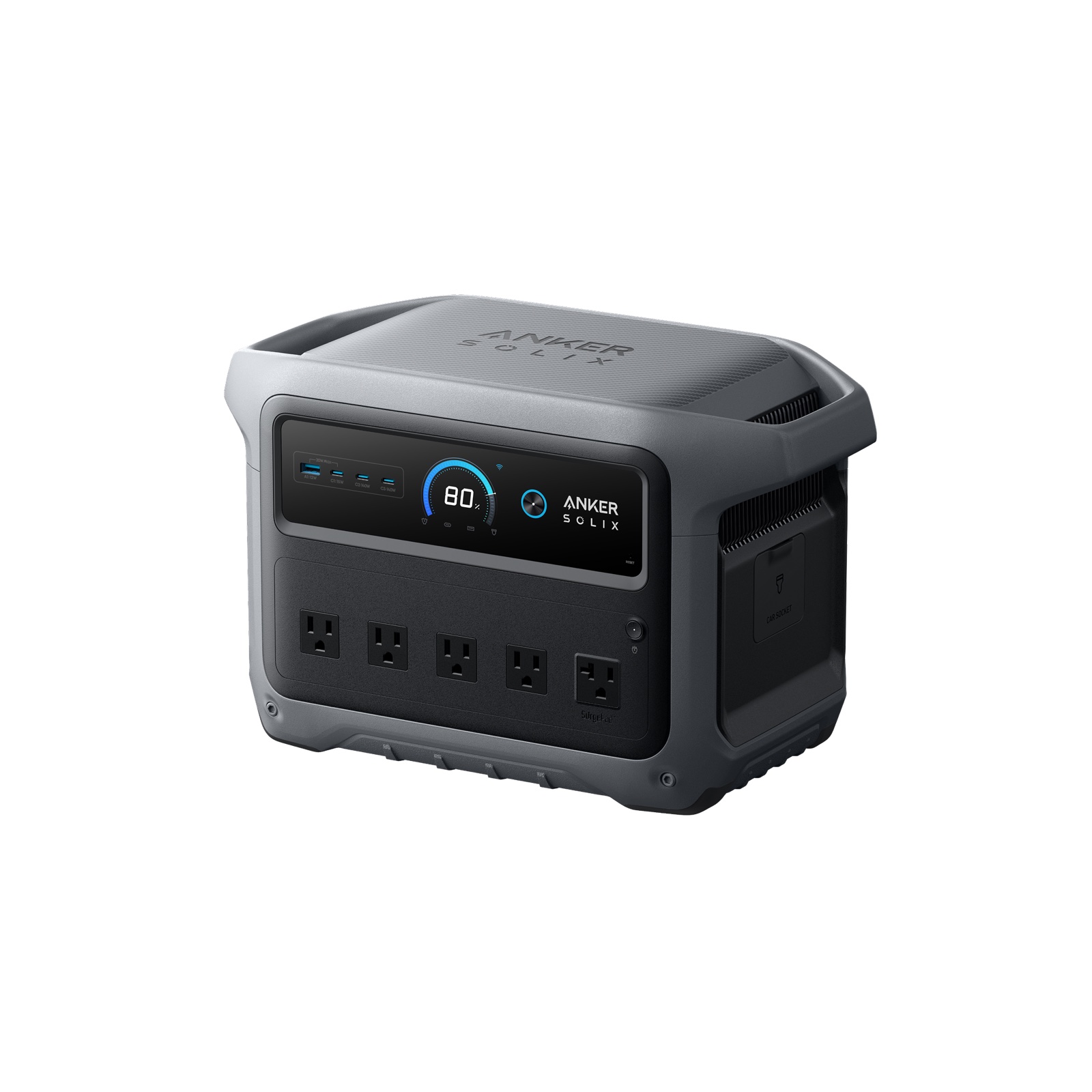
4.4/10The balanced choice. The Anker SOLIX C1000 Gen 2 holds 1,024 Wh at 24.9 lb (11.3 kg), delivers 2,000 W continuous and switches in 10 ms. The specification that earns it a place here is the mains recharge time of 49 minutes, which is what matters when the grid is your only source. It is Not expandable, so size it properly.
 7.0/10
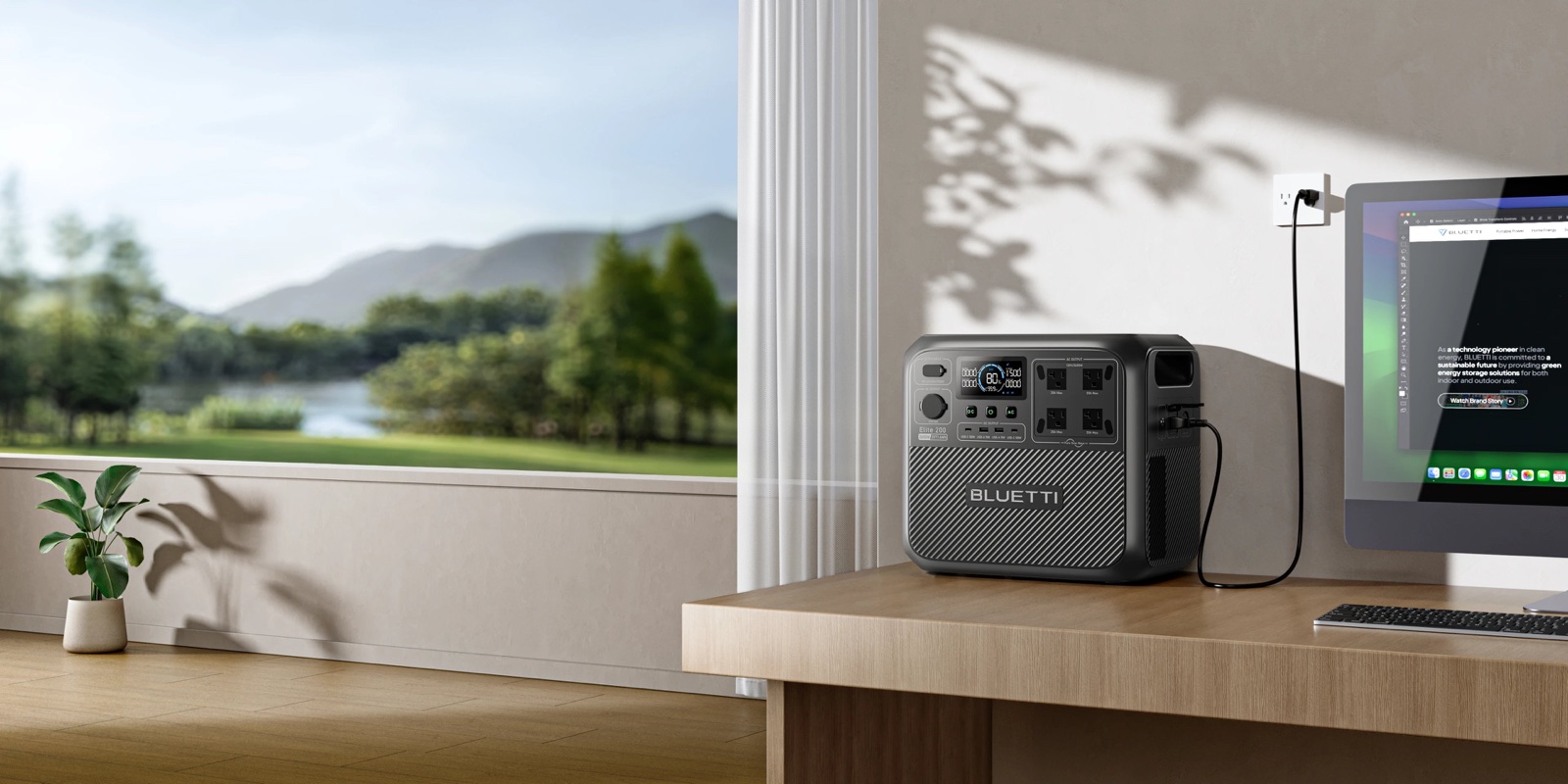
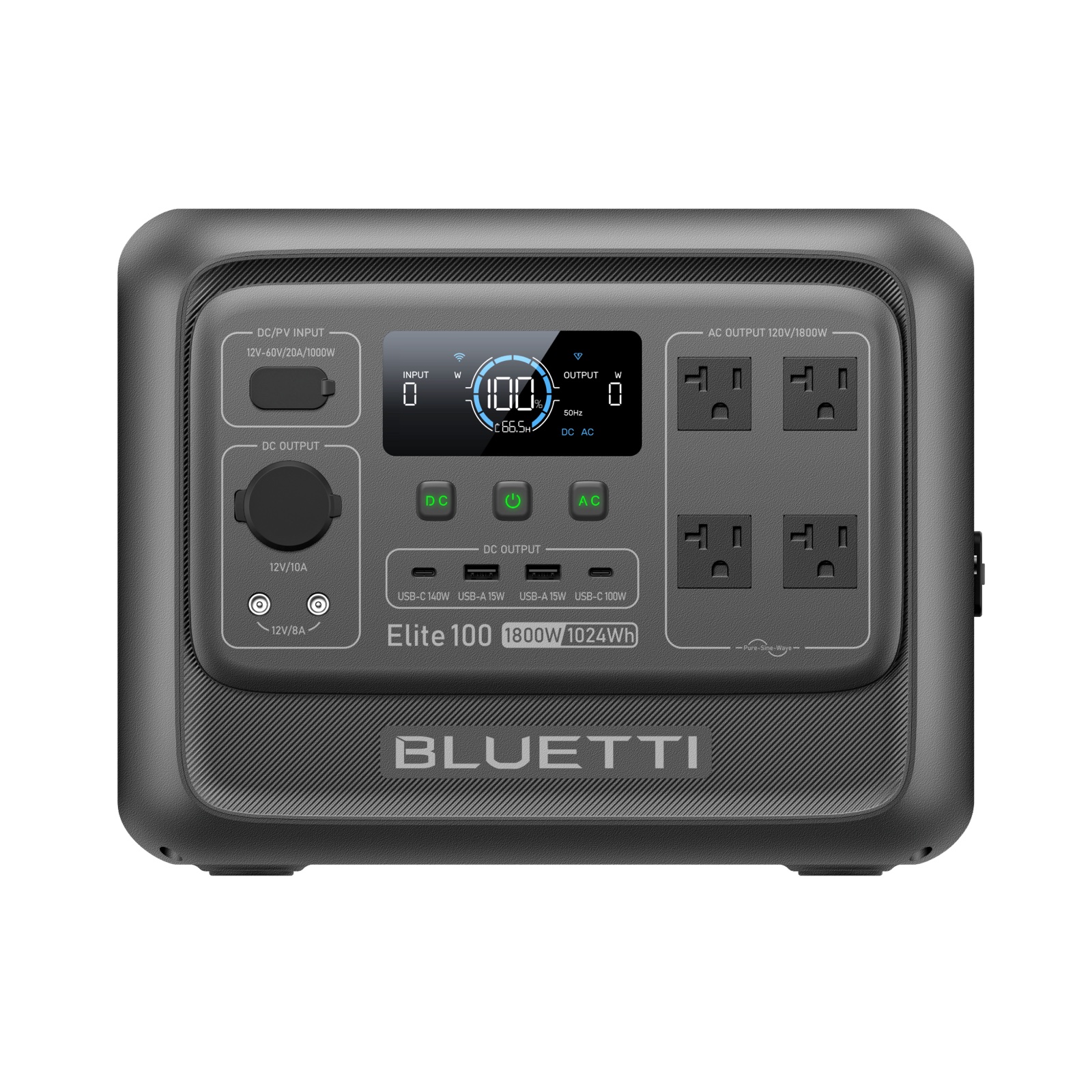
If the fridge has to keep running. The BLUETTI Elite 100 V2 holds 1,024 Wh with 1,800 W continuous and a switchover of 10 ms, at 25.0 lb (11.5 kg). Its cells are rated for 4,000 cycles to 80%, which suits a unit that will spend years mostly sitting still. The comparison against the EcoFlow DELTA 3 covers the alternative at the same size.
 6.8/10
Measure the space it will live in before comparing anything, then list the handful of things you would actually plug in and put them through the run time calculator. Most apartment buyers discover their honest list is small, and that a smaller unit with a fast mains recharge serves them better than a large one they cannot lift.
Storage is the last detail, and it is easy in an apartment for once: keep the unit somewhere heated and dry, which a flat is by default, unlike the unheated garage where most people store one. Cold reduces available capacity and most units refuse to charge below freezing, so the cupboard indoors is exactly right. Exercise it once or twice a year by running the fridge from it for an afternoon, and you will know it works before you need it to.
At low load the fan is off or barely audible, and small loads such as a router, a laptop or a CPAP machine keep it there. It becomes clearly audible when charging fast or running a heavy appliance. Charge it during the day, away from bedrooms, and use the slower charging mode if there is one.
Barely. Glass absorbs a significant share of the light, the angle is rarely useful, and the panel is small by necessity. Treat window solar as a trickle for phones, not as a charging method, and do not pay extra for a high solar input ceiling you have no way to use.
A unit in the kilowatt hour class will, comfortably. A fridge compressor runs for roughly a third of each hour rather than continuously, and a closed fridge holds its temperature for hours on its own. Put your own fridge's plate rating into the calculator to see the figure for your appliance.
Lithium iron phosphate, the chemistry in most current units, is the more thermally stable option and tolerates sitting at a high state of charge. Give the unit air rather than boxing it in, keep the fan clear, and prefer the slower charging mode overnight, which is quieter and gentler on the cells.
If nothing in the flat depends on power, probably not. The cases that justify it regardless of outage frequency are a medical device, working from home where a reboot costs real time, and needing a socket somewhere there is not one. Buy for the use you actually have rather than for a scenario.