 8.8/10
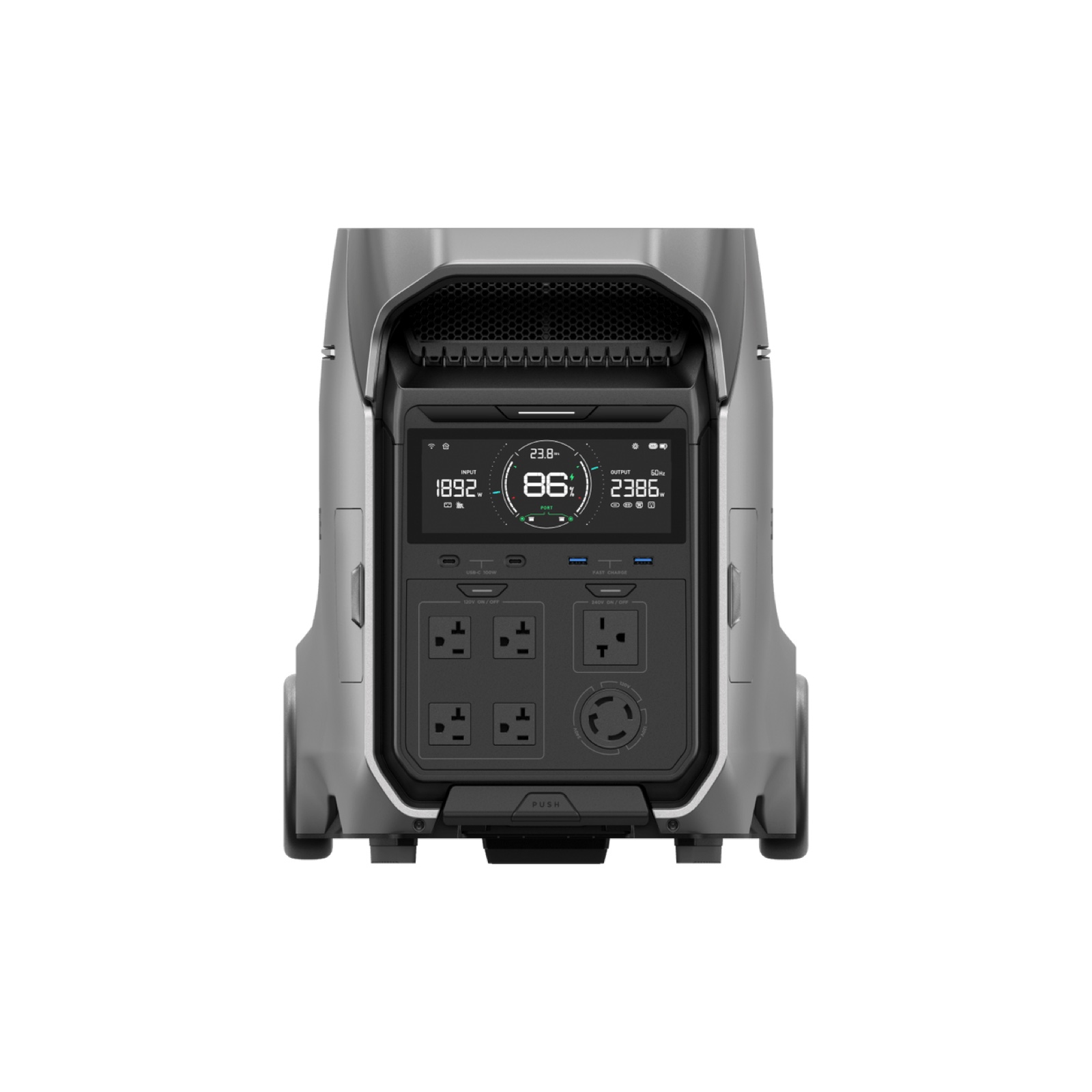
DELTA Pro 3 EcoFlow DELTA Pro 3
4,096 WhCapacity4,000 WAC output113.5 lb (51.5 kg)Weight10 msUPS switchover
A space heater draws 750 W to 1,500 W and draws it continuously, with no cycling to soften the load. At 1,500 W with the inverter at 85%, every hour of heating costs a battery about 1,765 Wh. That means roughly an hour from a two kilowatt hour station and a little over two hours from the largest unit here. No portable battery heats a room overnight.
PowerStationFacts takes part in the Amazon Services LLC Associates Program. When you buy through a link on this page we may earn a commission, and the price you pay does not change.
A resistive heater converts electricity into heat at essentially one to one, which is why its wattage is its whole specification. There is no efficiency to be gained and no duty cycle to hide behind: a 1,500 W heater on full draws 1,500 W for as long as it is on. A thermostat can cycle it, but a thermostat only cycles once the room is warm, and during an outage the room usually is not.
Add the inverter loss this site assumes at 85% and an hour of heating costs about 1,765 Wh. That single line explains everything else on this page. A one kilowatt hour station gives about half an hour. A two kilowatt hour station gives about an hour. The largest units in this catalogue give a little over two hours. Run the figures yourself on the run time calculator and the shape does not change.
On a low setting near 750 W the hours roughly double, and the heater is roughly half as effective at warming the room. Nothing about that trade is free.
A heater is not one of the standard loads in the tables below, so read them for scale: the largest single battery here runs a microwave, a load of a similar order, for well under a working day. A heater asks for that draw continuously.
| Appliance | Typical draw | Estimated run time |
|---|---|---|
| Fridge | 120 W | 41 h 27 min |
| CPAP machine | 45 W | 38 h 41 min |
| Router and modem | 15 W | 116 h 3 min |
| Television | 90 W | 19 h 21 min |
| Microwave | 1200 W | 1 h 27 min |
| Appliance | Typical draw | Estimated run time |
|---|---|---|
| Fridge | 120 W | 82 h 54 min |
| CPAP machine | 45 W | 77 h 22 min |
| Router and modem | 15 W | 232 h 6 min |
| Television | 90 W | 38 h 41 min |
| Microwave | 1200 W | 2 h 54 min |
The only way to move a heater into a different category is expansion. EcoFlow DELTA Pro 3 is Expandable to 12,000 Wh and Anker SOLIX F3800 is Expandable to 26,880 Wh, and a stack of extra batteries turns two hours of heating into something usable. That is a home backup system rather than a portable power station, and it should be costed and planned as one.
Elsewhere on this site, EcoFlow X-Boost and BLUETTI Lifting Power come with a warning, because they feed a larger load by lowering the output voltage and that is wrong for motors and electronics. A resistive heater is the case they were built for: it does not care about voltage, it simply produces less heat.
Understand what that buys you. It lets a station run a heater it could not otherwise power, at reduced output. It does not extend runtime, and it does not deliver the heater's rated heat. You are trading heating power for compatibility, which is sometimes worth it and is never free capacity.
The continuous rating still has to be respected for anything you intend to run at full power. EcoFlow DELTA Pro 3 carries 4,000 W and Anker SOLIX F3800 carries 6,000 W, both comfortably above a domestic heater, which makes capacity rather than output the binding constraint.
8.8/10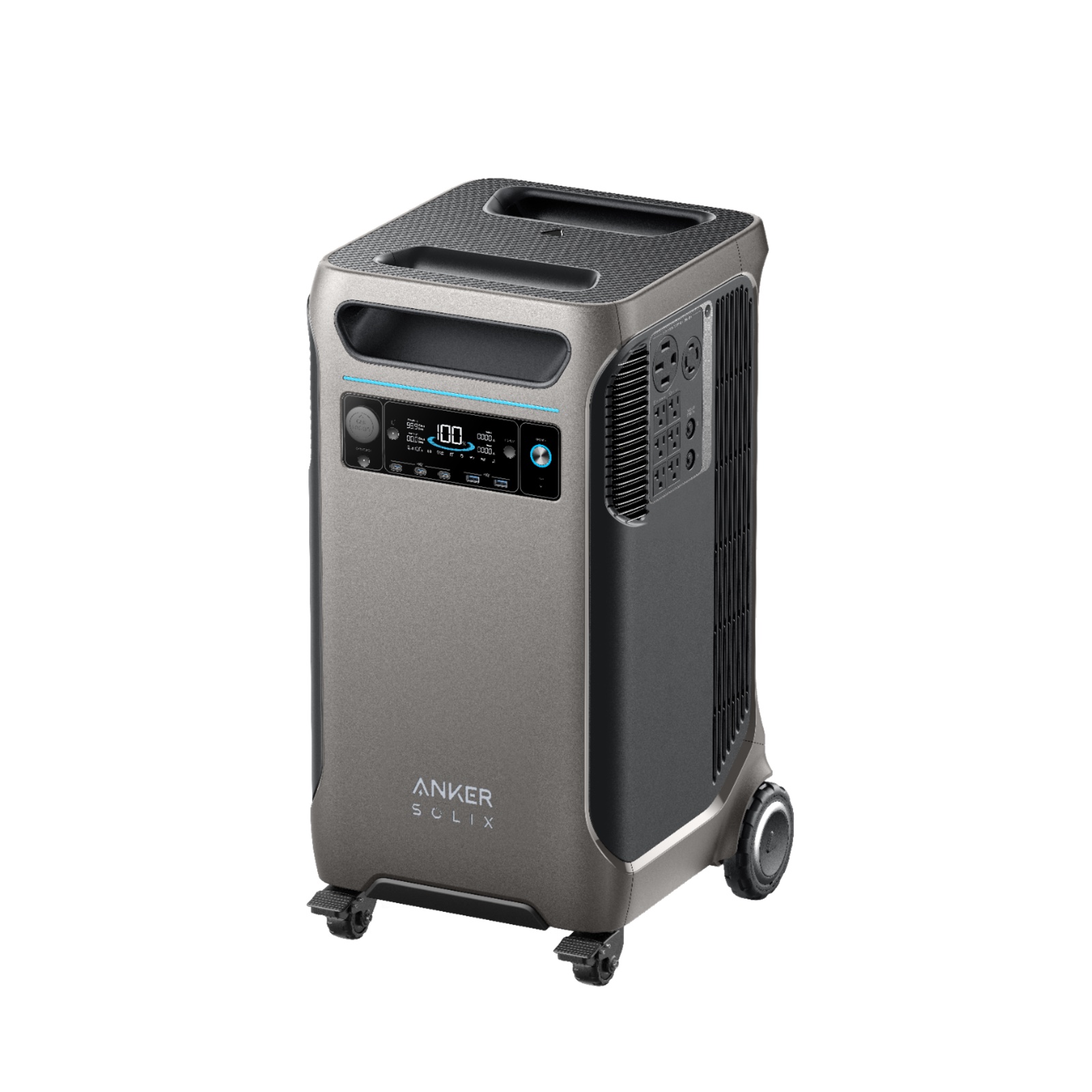
 8.1/10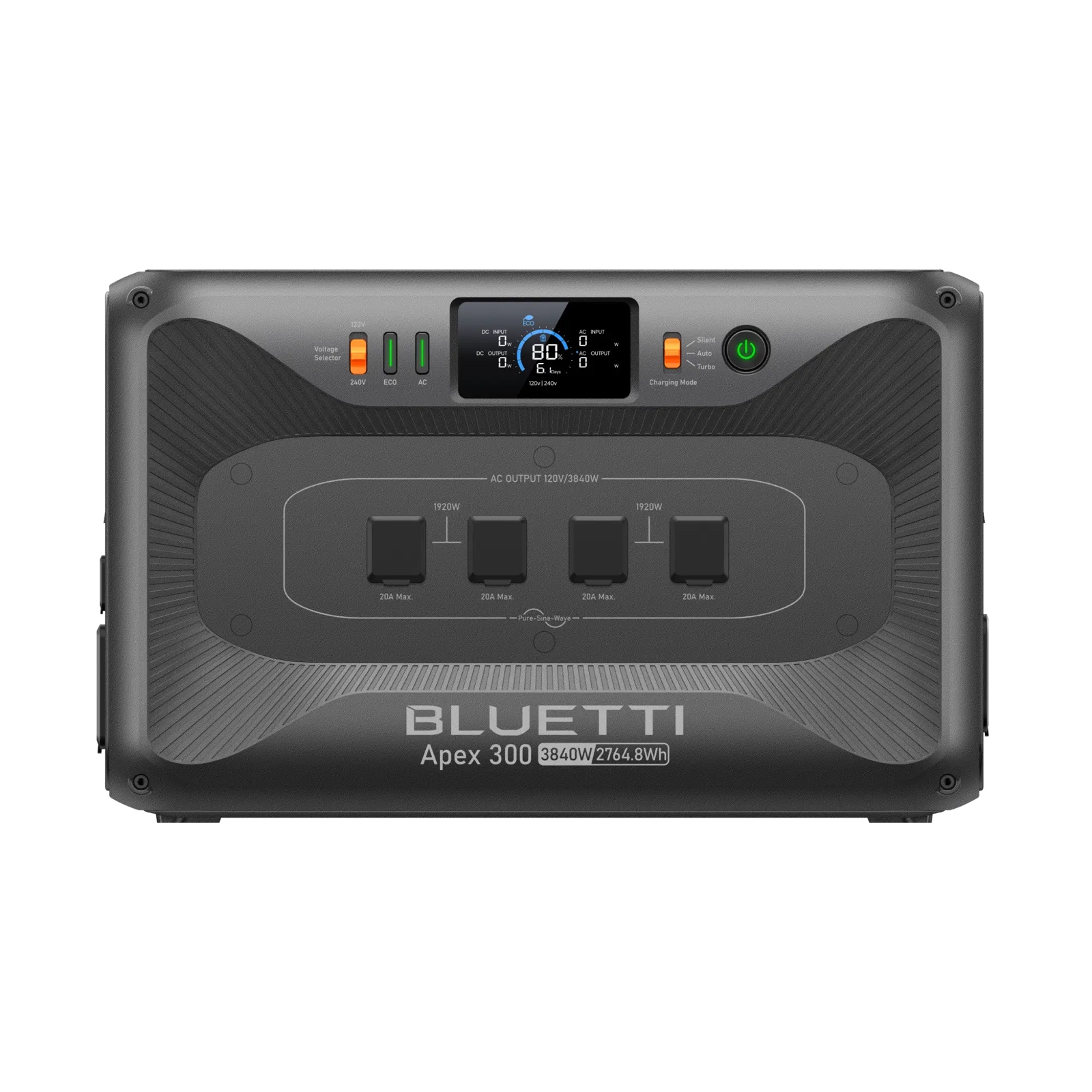
 8.4/10
EcoFlow DELTA Pro 3 is the most sensible of the three for this job: 4,096 Wh, 4,000 W of output, Expandable to 12,000 Wh, and 2,600 W of solar input, which is the only input fast enough to matter against a load this size.
Anker SOLIX F3800 carries the largest continuous output here at 6,000 W and Expandable to 26,880 Wh, at 132.3 lb (60.0 kg). It is a fixed installation in practice.
BLUETTI Apex 300 brings 2,764.8 Wh and 2,400 W of solar input in a lighter package at 83.8 lb (38.0 kg), which is the compromise if the unit also has to be moved occasionally.
Heating a room from a battery is the single worst use of stored energy on this site. Heating a person is a different problem and a far smaller one.
The 750 W to 1,500 W range here is a common starting point. The plate on your own heater is the figure that applies, and if it offers several settings, each is a different appliance for sizing purposes. An oil filled radiator with a thermostat in an already warm room cycles and averages less than its rating; the same radiator in a cold room does not.
Two further corrections work against you in exactly the conditions where heat is wanted. Cold reduces usable battery capacity, and most units refuse to charge below freezing at all. A winter outage is the worst case for the battery and the moment you want the most from it, which is the strongest argument on this page for not relying on one to keep warm.
About an hour from a two kilowatt hour unit and a little over two hours from the largest single battery in this catalogue, because every hour of heating costs roughly 1,765 Wh once inverter losses are counted. Only an expandable system with extra batteries changes that picture.
Proportionally, yes: halving the wattage roughly doubles the hours. It also halves the heat going into the room, so you are choosing between a short period of real warmth and a longer period of taking the edge off. Neither turns a battery into a heating system.
Not in the sense that matters here. Every resistive heater turns electricity into heat at effectively one to one, so a rated watt is a rated watt. An oil filled unit stores heat and releases it more evenly, which can lower the average draw in a room that reaches temperature, but it does not create free hours.
This is the load those modes were designed for, because a resistive element tolerates a lowered voltage and simply produces less heat. It buys compatibility, not runtime: the battery still empties at the same rate for the energy delivered, and the room gets less warm.
A heated blanket for warmth, and the battery for the things with no substitute: therapy equipment, the fridge, lights and communications. Heating a room is the one job where a portable battery is comprehensively out of its depth, and planning around that is more useful than buying a larger one.