 5.3/10
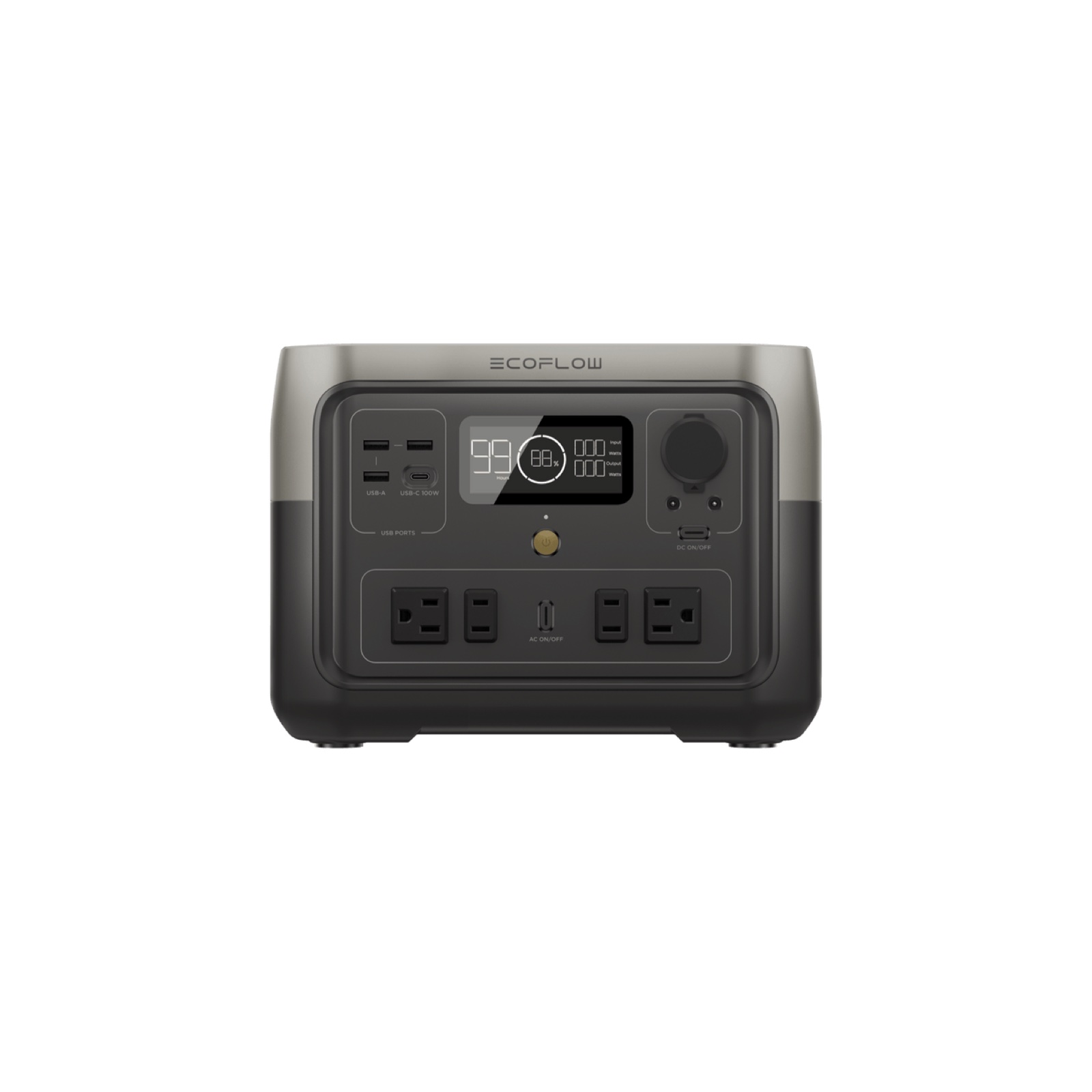
RIVER 2 Max EcoFlow RIVER 2 Max
512 WhCapacity500 WAC output13.4 lb (6.1 kg)Weight30 msUPS switchover
A television draws 50 W to 150 W and draws it continuously while it is on, with no duty cycle to soften the figure. At the 90 W used here, an evening of four hours costs a battery about 425 Wh. A station in the half kilowatt hour class covers that evening; a one kilowatt hour unit covers two or three. What changes the answer is everything else plugged in beside the screen.
PowerStationFacts takes part in the Amazon Services LLC Associates Program. When you buy through a link on this page we may earn a commission, and the price you pay does not change.
A television is a steady load. There is no compressor cycling on and off, so the draw is close to constant for as long as the set is on. This site works from 90 W, inside a range of 50 W to 150 W that covers most current sets: panel size drives it, panel technology drives it, and picture settings drive it more than people expect. A bright room preset on a large screen can sit near the top of that range all evening.
What usually surprises people is the rest of the shelf. A set top box, a streaming stick, a soundbar and a games console are all on while you are watching, and a console under load can draw several times what the screen does. If the plan is a film, you are sizing for one appliance. If the plan is an evening of gaming, you are sizing for something closer to a kitchen appliance. Put both through the run time calculator and compare.
Read the television row. On these assumptions the pattern is easy to hold in your head: roughly four hours of viewing per half kilowatt hour of capacity.
| Appliance | Typical draw | Estimated run time |
|---|---|---|
| Fridge | 120 W | 10 h 22 min |
| CPAP machine | 45 W | 9 h 40 min |
| Router and modem | 15 W | 29 h 1 min |
| Television | 90 W | 4 h 50 min |
| Microwave | 1200 W | 0 h 22 min |
| Appliance | Typical draw | Estimated run time |
|---|---|---|
| Fridge | 120 W | 15 h 33 min |
| CPAP machine | 45 W | 14 h 30 min |
| Router and modem | 15 W | 43 h 31 min |
| Television | 90 W | 7 h 15 min |
| Microwave | 1200 W | 0 h 33 min |
| Appliance | Typical draw | Estimated run time |
|---|---|---|
| Fridge | 120 W | 20 h 43 min |
| CPAP machine | 45 W | 19 h 21 min |
| Router and modem | 15 W | 58 h 2 min |
| Television | 90 W | 9 h 40 min |
| Microwave | 1200 W | 0 h 44 min |
A compact station covers an evening and is light enough to take camping, where a television is a genuine use case rather than an emergency one. A one kilowatt hour unit covers several evenings, or one evening plus the network gear, the lights and the phones, which is the realistic outage scenario.
A television is light enough that the inverter's own consumption starts to matter. An inverter that is switched on draws a few watts to stay ready, whatever is plugged into it, and that is a real percentage of a 90 W load across a long evening.
Two consequences. First, run the small things beside the television from USB rather than from a mains adapter: phones, tablets and a streaming stick draw next to nothing over USB-C and skip the conversion entirely. Second, switch the AC side off when the film ends. Many units let you disable the inverter independently, and some drop it automatically when no load is detected.
A television also has a standby draw of its own. Over a multi day outage, a set left in standby on battery is spending your reserve on a red light.
5.3/10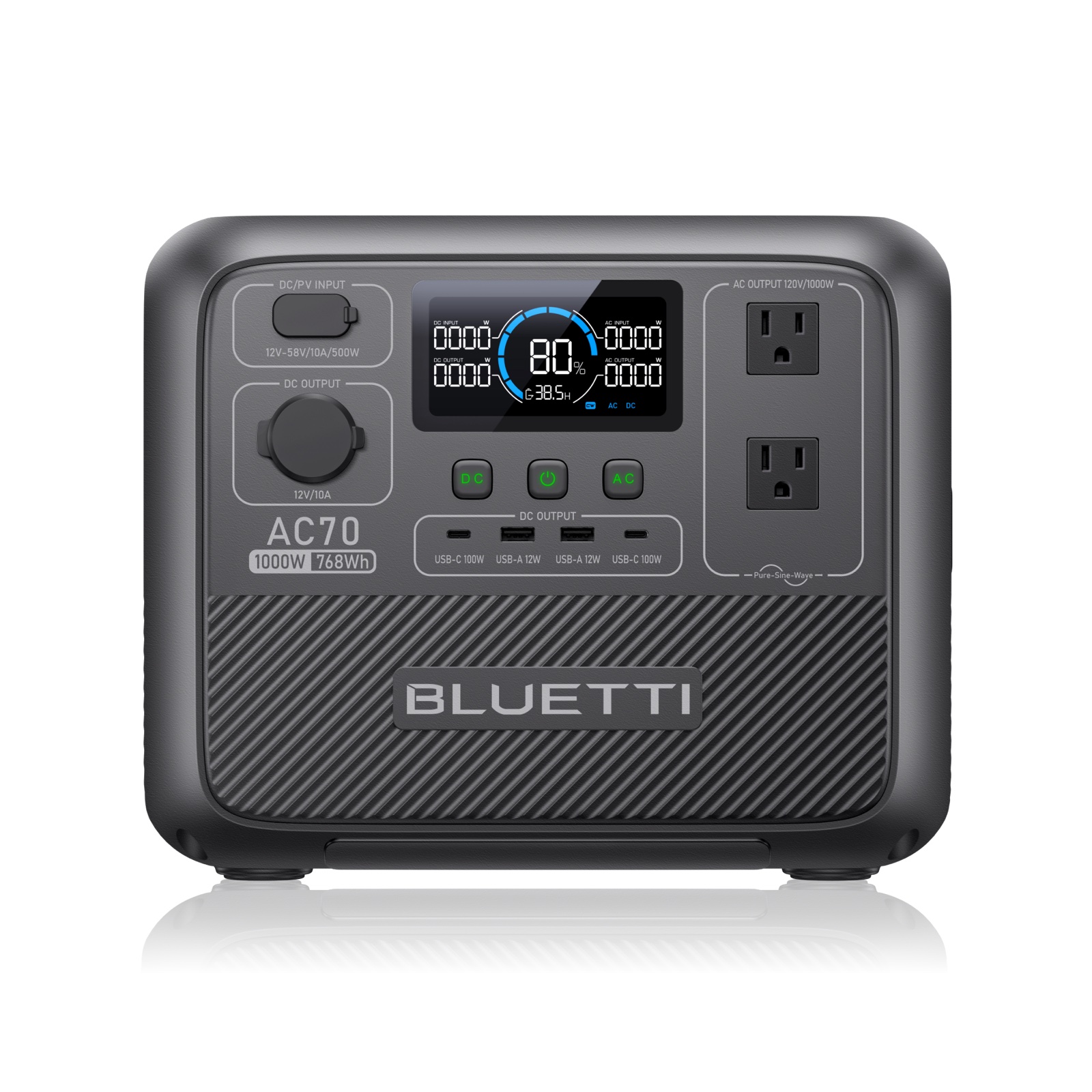
 5.9/10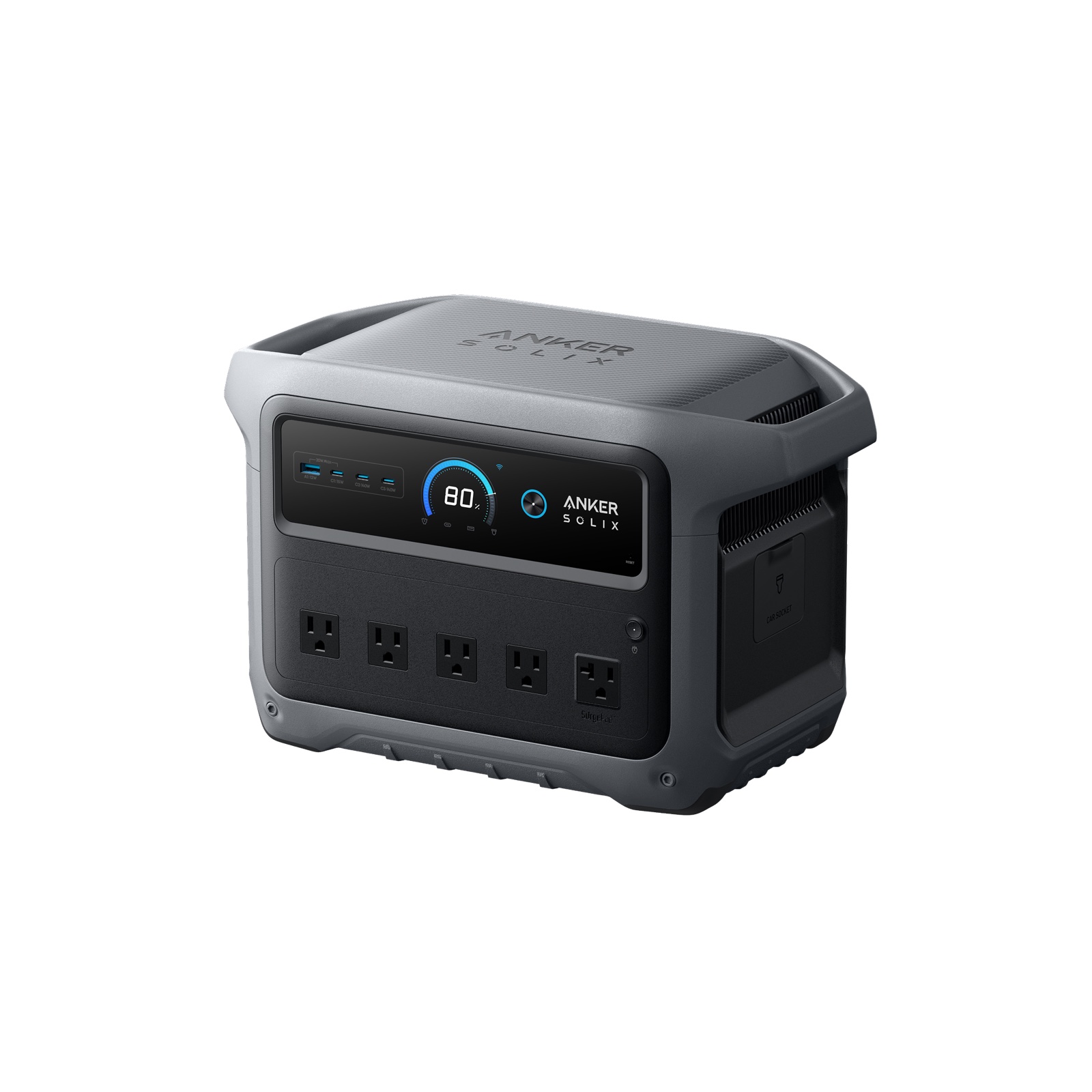
 7.0/10
EcoFlow RIVER 2 Max is the portable answer at 512 Wh and 13.4 lb (6.1 kg), with 500 W of continuous output. That is ample for a screen and a streaming device, and not enough for a console and a soundbar at the same time, so check the numbers before assuming.
BLUETTI AC70 sits in the middle at 768 Wh and 1,000 W, which covers a full home entertainment shelf rather than just the screen, and it recharges from up to 500 W of solar.
Anker SOLIX C1000 Gen 2 is the one to buy if the television is simply one item on an outage list: 1,024 Wh, 2,000 W of output, 10 ms switchover and a wall recharge of 49 minutes. The same unit covers a refrigerator on the nights when that matters more than the film.
The 90 W here is a common starting point, not a measurement of your television. The plate on the back gives a maximum rather than a typical consumption, which makes it a poor guide on its own: a set rated well above its everyday draw will still spend an ordinary evening far below that figure.
Two better sources. The energy label that came with the set quotes a consumption figure measured on a defined test pattern, which is closer to reality than the plate. And a plug in energy meter, left on the socket for an evening, tells you what your set, at your brightness setting, with your box and soundbar attached, actually costs. That is the number worth putting into the calculator.
On the 90 W figure used here, roughly four hours per half kilowatt hour of capacity, so a compact unit covers an evening and a one kilowatt hour unit covers several. A larger or brighter screen shortens that, and a games console on the same station shortens it a great deal more.
It depends on what is on screen, which is the awkward part. An OLED panel draws according to picture content, so bright scenes cost more than dark ones and the average moves with what you watch. Treat any single wattage as an approximation and measure your own set if the margin is tight.
A projector is usually a heavier and steadier load than a television, particularly a lamp based one, and it keeps its fan running after shutdown. Use the figure from its own label rather than the television figure here, and allow for the cool down period at the end.
Rarely on a household set, which expects mains power. Small portable and camping televisions often run on 12 V, and those do benefit from the station's car socket because they skip the inverter and its idle draw. Check the set's own supply before assuming either way.
Keep the essentials separate from the entertainment. A television is comfort; the router and modem keep you informed and cost almost nothing to run, and a refrigerator is protecting food. If one battery has to cover all three, run the television last and on the lowest brightness you can live with.