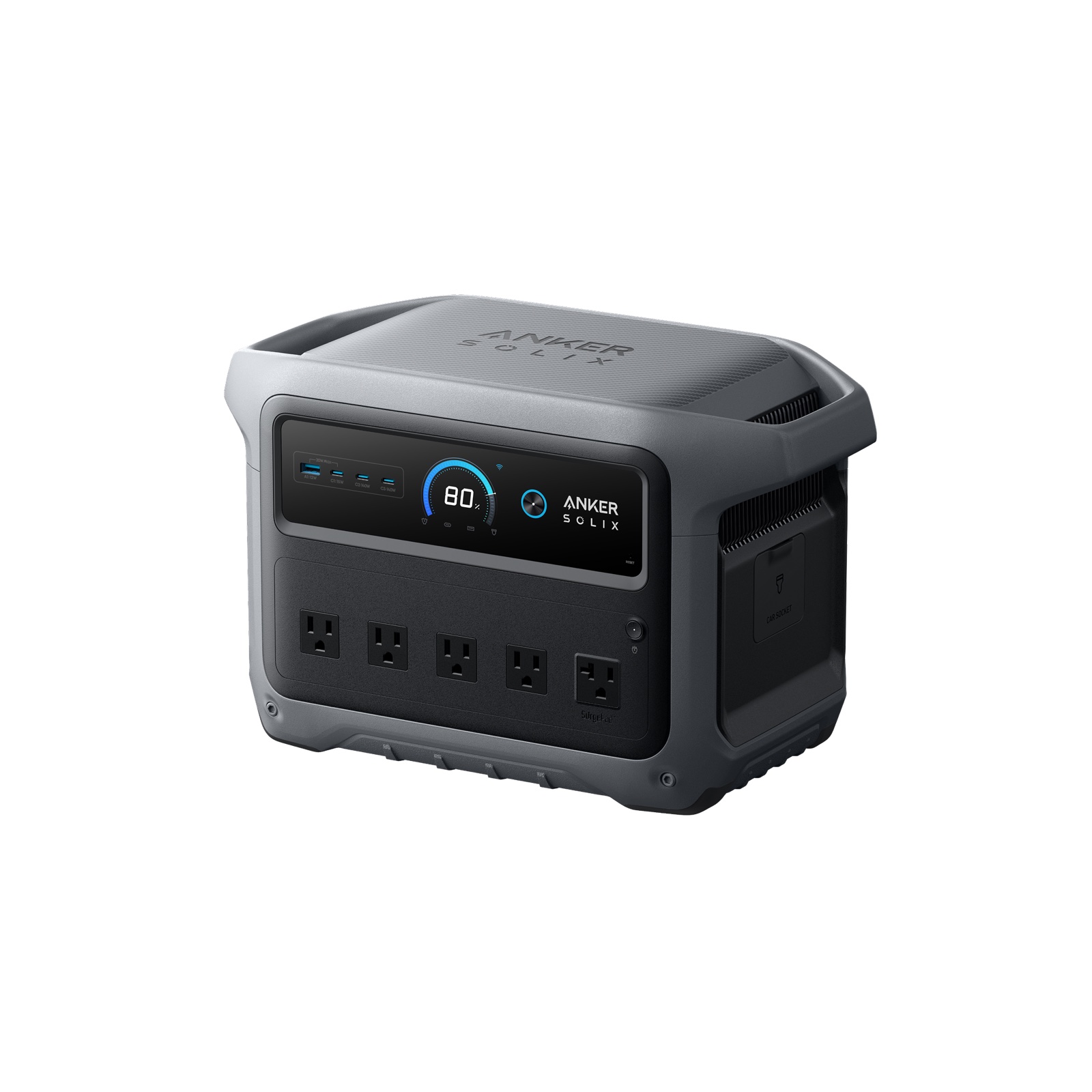
 7.0/10
C1000 Gen 2 Anker SOLIX C1000 Gen 2
1,024 WhCapacity2,000 WAC output24.9 lb (11.3 kg)Weight10 msUPS switchover
On a job site the limiting figure is output, not capacity. A motor tool draws several times its running load for the instant it starts, so the unit has to survive the spike before energy matters at all. Compare continuous output and a conventional surge rating, then check the day's total against the pack.
PowerStationFacts takes part in the Amazon Services LLC Associates Program. When you buy through a link on this page we may earn a commission, and the price you pay does not change.
A circular saw, a compressor, a mitre saw or a pump all have one thing in common: the current they draw at the instant the motor spins up is several times what they draw once it is turning. A unit sized on running wattage alone will trip on the first trigger pull, which is the commonest way people conclude a power station is no good for trade work.
So the reading order is fixed. Continuous output first, because it decides whether the tool runs at all. Surge rating second, because it decides whether the tool can start. Capacity last, because it only tells you how long the day lasts once the first two are satisfied.
Brushless cordless tools change this picture completely. If the site runs on batteries and the power station exists to charge them, the loads are small, continuous and easy, and a mid-sized unit will keep a charger fleet running all day. Corded tools are the demanding case, and they are the one this guide is sized around.
This is the single most expensive misreading in the category, and on a job site it is the one that matters most.
A conventional surge rating is a brief tolerance for the start-up current of a motor. It is measured for exactly the event described above, and it is the figure a tradesperson should read.
Lifting Power from BLUETTI and X-Boost from EcoFlow are not that. They run an appliance above the unit's rated output by lowering the voltage supplied to it. On a resistive load, where less voltage simply means heat arrives more slowly, that is a genuine extension: a site kettle, a heater in a cabin, a hotplate. On a motor it is actively wrong. An undervolted motor draws more current, runs hotter and can stall, and stalling a saw under load is not a failure mode worth exploring.
Both figures appear in the same table row on most specification sheets, which is why they get compared as if they were the same measurement. They are not. This site labels which kind each unit publishes, and the reasoning is set out on the method page.
Corded tools are intermittent in a way that flatters the battery. A saw cuts for seconds at a time. A drill runs in bursts. Even a busy hour of second-fix work is mostly not drawing current at all. That is why a pack that looks far too small on paper often gets through a day of intermittent work.
The loads that empty a power station on site are the continuous ones: a compressor that cycles all day, a site heater, a dehumidifier running in a drying room, or lighting on a long winter afternoon. If any of those is on your list, size for it directly and treat the tools as the small part.
The table below gives the calculated run times for the EcoFlow DELTA 3 Max Plus across this site's standard appliance set. Those are household appliances rather than tools, but they are a useful yardstick: read the microwave row as a stand-in for a heavy continuous draw, and the router row as a stand-in for site lighting and charging.
| Appliance | Typical draw | Estimated run time |
|---|---|---|
| Fridge | 120 W | 41 h 27 min |
| CPAP machine | 45 W | 38 h 41 min |
| Router and modem | 15 W | 116 h 3 min |
| Television | 90 W | 19 h 21 min |
| Microwave | 1200 W | 1 h 27 min |
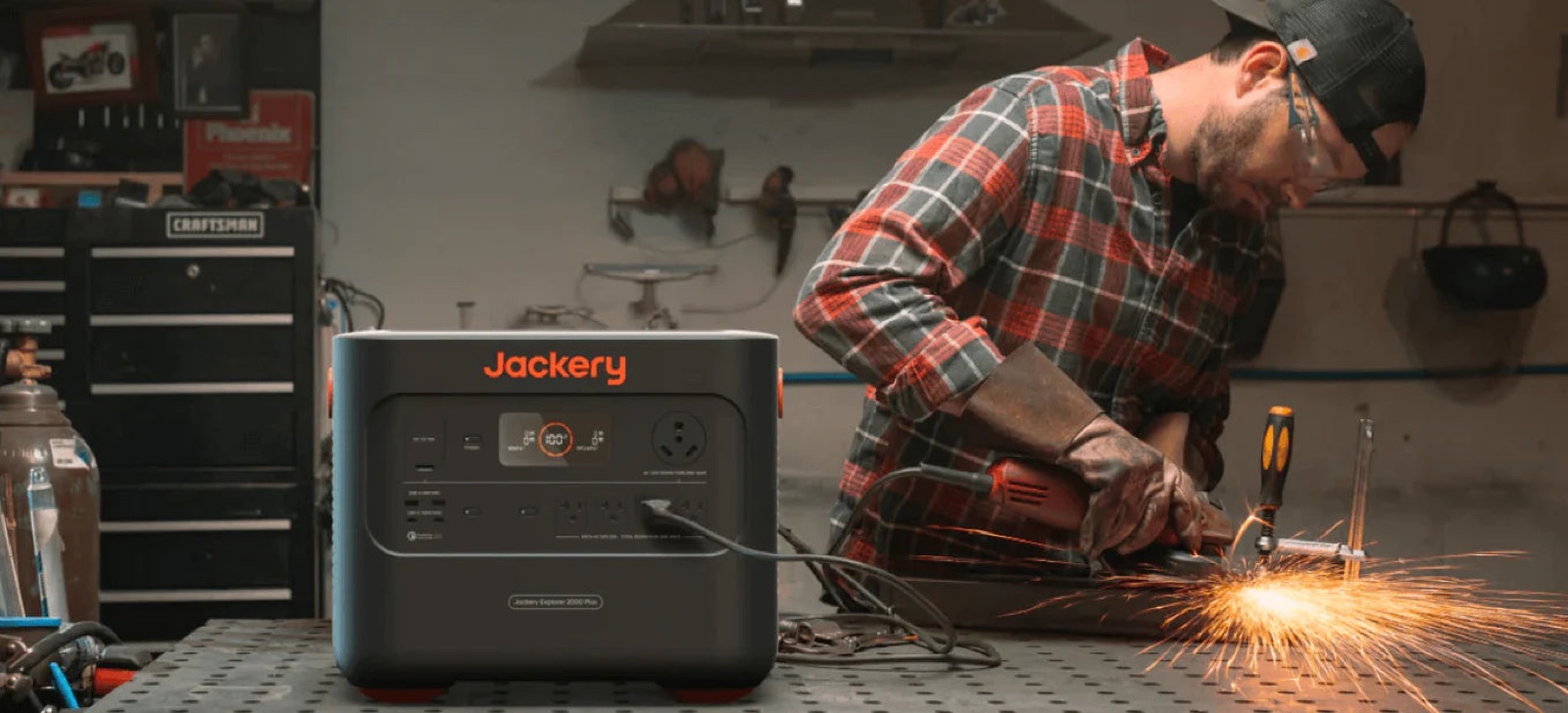
A battery unit wins on three counts, and they are not marginal. It is silent, which matters on a site with neighbours, in a residential street, or inside a building where a generator is simply not an option. It emits nothing, so it can work indoors. And it needs no fuel, no oil and no starting ritual on a cold morning.
A generator wins on one count that can outweigh all three: it runs as long as you keep feeding it. A battery has a fixed day in it, and when the day is over the only way to continue is to swap in a second unit or wait for a charge. On a site with no supply at all, running full days of corded work, that is decisive.
The practical middle ground is common. A power station handles the first-fix week, the indoor work and the noise-restricted hours, and it gets refilled overnight from the supply in the van or at the yard. A unit that refills quickly from a wall socket is worth more here than one with a large solar ceiling.
No maker in this catalogue publishes an ingress rating for a power station, and none of these units is built to be rained on. On a site that means the unit lives in the van, under a bench or inside a bagged enclosure, and comes out for the job. Plan the cable run rather than the unit's position.
Dust is the more insidious problem. These units are fan cooled, and a fan on a site pulls in plaster dust, brick dust and sawdust, which settles on the electronics and reduces cooling. Keeping the unit off the floor, away from the cut line and out of the worst of the dust does more for its life than any figure you can compare.
Handles and wheels deserve a look too. A unit that gets carried into a property every morning and out every evening is handled far more than a domestic one, and the difference between a moulded handle and a telescopic one with wheels is felt daily rather than theoretically.
One person, cordless tools, charging on site. The Anker SOLIX C1000 Gen 2 delivers 2,000 W continuous with a conventional surge rating of 3,000 W, holds 1,024 Wh and weighs 24.9 lb (11.3 kg). That is enough headroom for most single corded tools and plenty for a rack of battery chargers, in something one person carries in with the tool bags. It refills in 49 minutes from a socket.
7.0/10A small team with corded tools. The EcoFlow DELTA 3 Max Plus delivers 3,000 W continuous with a conventional surge of 6,000 W, which is the specification that lets a saw start without argument. It holds 2,048 Wh, is Expandable to 10,000 Wh, and refills in 1.1 hours. Ignore its separate boost figure when the load has a motor.
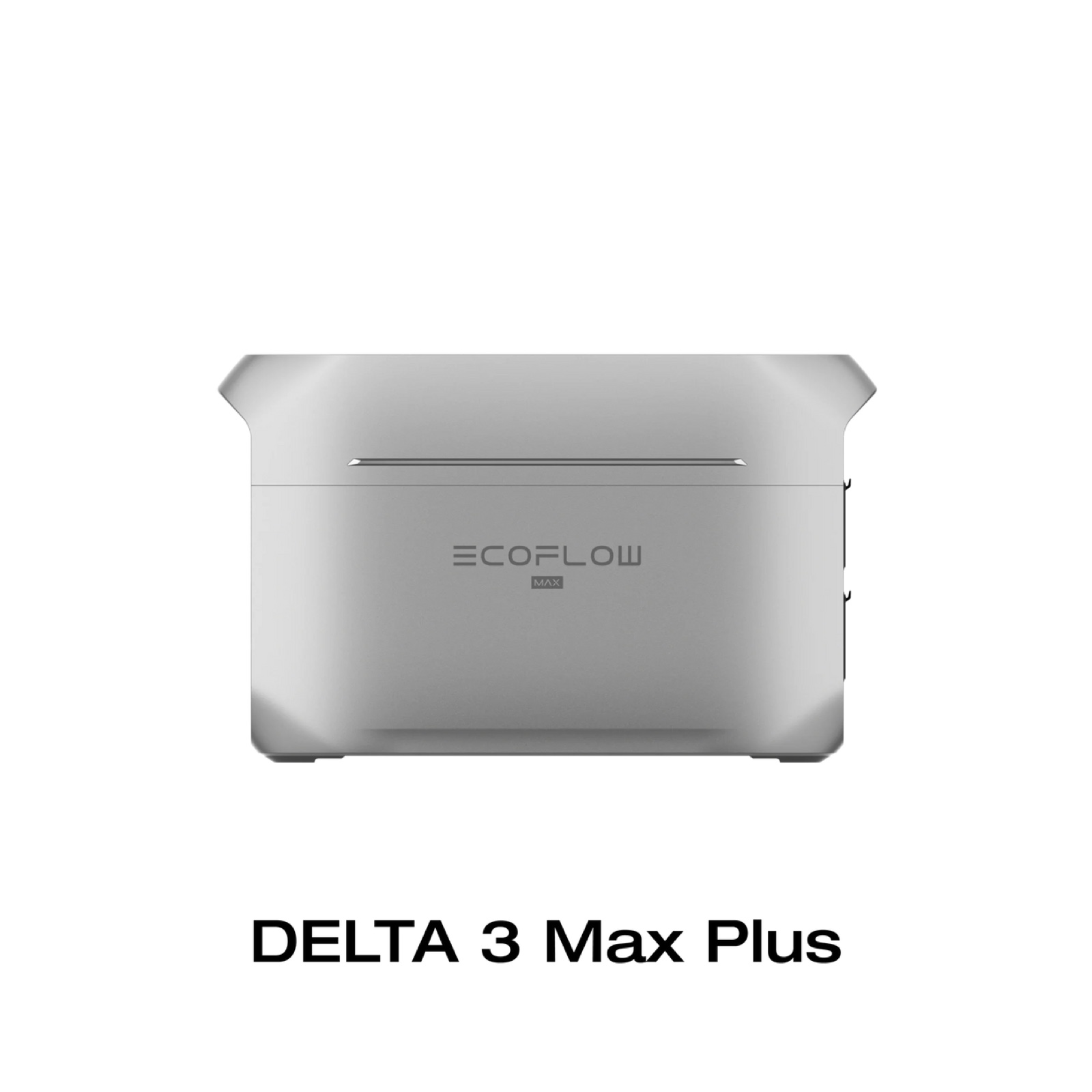
 7.7/10
Heavy tools, or a site with no supply. The Anker SOLIX F3800 delivers 6,000 W continuous with a surge of 9,000 W, and holds 3,840 Wh. It is Expandable to 26,880 Wh, which is how a full day of heavy work becomes possible. At 132.3 lb (60.0 kg) it is wheeled into position and left there.
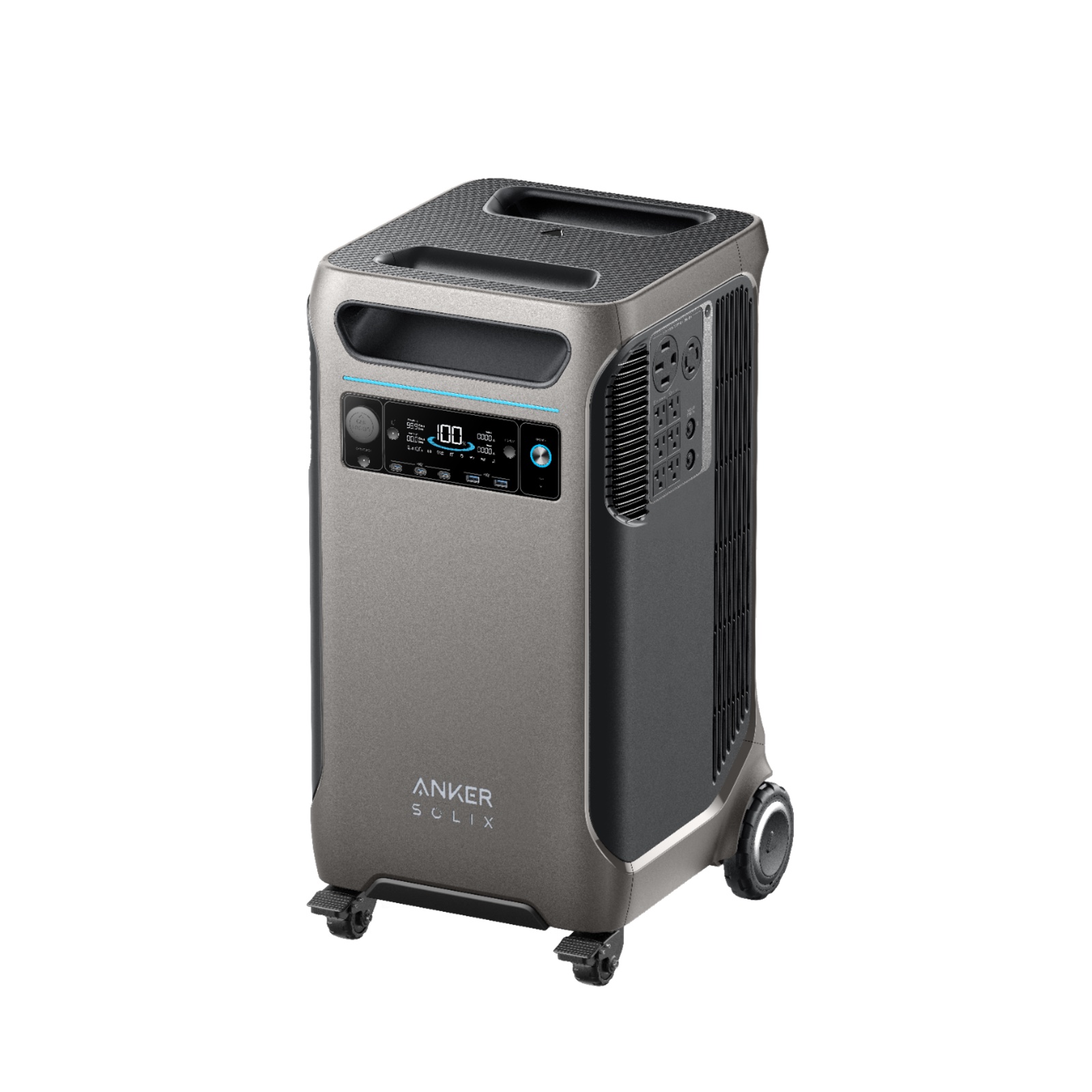 8.1/10
Read the plate on the two or three most demanding tools you own, then work out the day with the run time calculator, which shows the inverter loss and the share of time an appliance actually draws rather than burying both. For intermittent tools, that share is the figure to adjust hardest.
If the same unit is expected to go camping at weekends, the weight argument in the camping guide pulls in the opposite direction from everything above, and one of the two uses will have to give. If the site is a remote build with no supply at all, the solar reasoning in the off-grid cabin guide applies more directly than this page does.
Compare the saw's plate rating against the unit's continuous output, and its start-up spike against a conventional surge rating. Most mid-sized units in this catalogue will start a handheld saw; the ones that fail are being asked to start it on a voltage-lowering boost mode, which is not what that figure is for.
A small compressor, yes, with the same two checks: continuous output for the running load and a conventional surge rating for the motor start. The thing to watch is that a compressor cycles repeatedly through the day, so it is a continuous load in disguise and it will move the energy calculation more than the tools do.
It is silent, emission free and usable indoors, which a generator is not. A generator runs indefinitely on fuel, which a battery cannot. For noise-restricted hours, interior work and occupied properties the battery wins outright. For full days of corded work with no supply to recharge from, it does not.
No maker here publishes a weather rating, so treat these units as indoor equipment that visits a site. Keep it out of rain and dust, off the floor and away from the cut line. Theft is the other reason it goes back in the van at the end of the day.
Compare the published mains recharge time, which is the figure this site quotes, and be wary of faster numbers elsewhere that combine mains and solar input at once. If the unit is refilled every night at the yard, that specification matters more to you than solar input does.