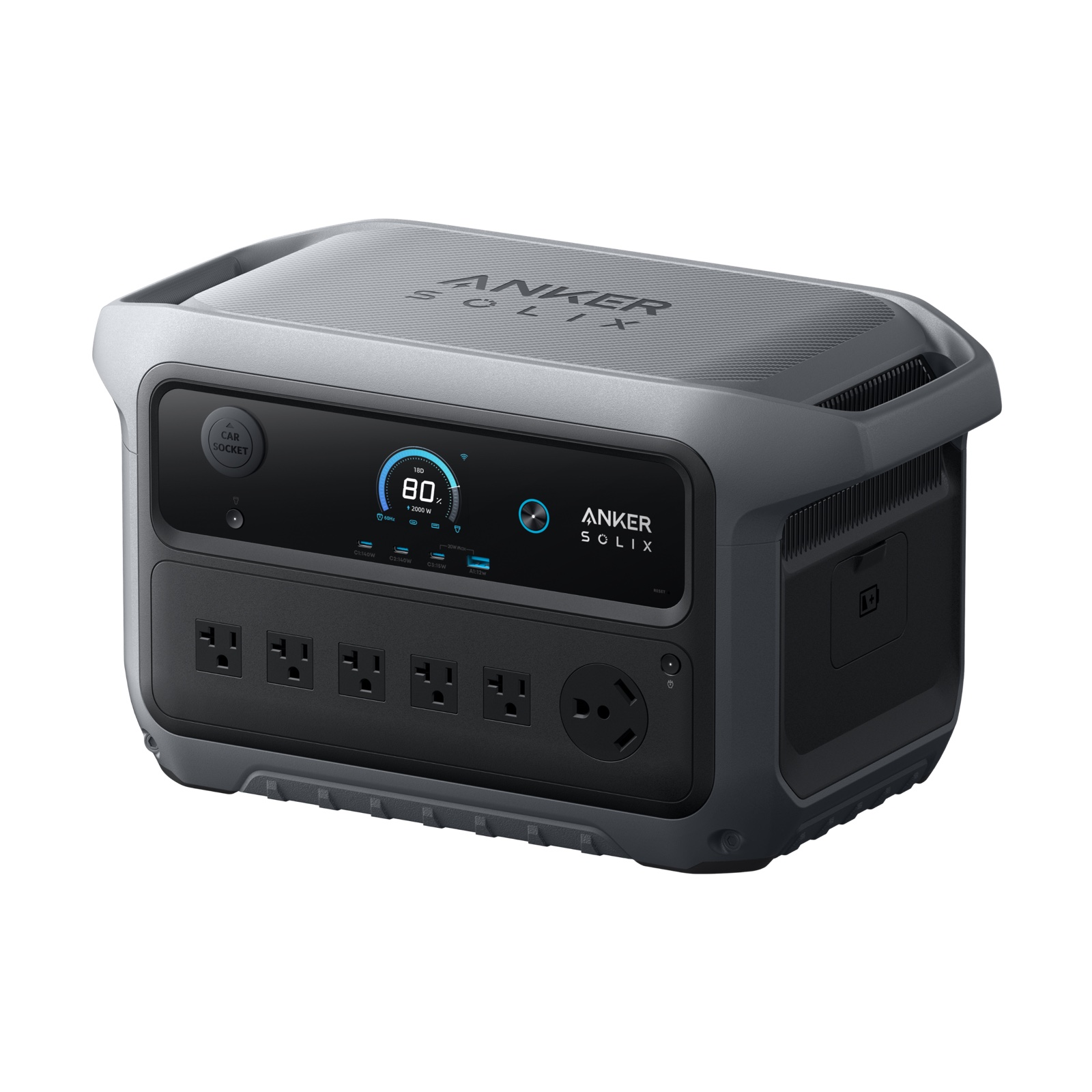
 7.8/10
C2000 Gen 2 Anker SOLIX C2000 Gen 2
2,048 WhCapacity2,400 WAC output41.7 lb (18.9 kg)Weight10 msUPS switchover
A portable induction hob draws 1,200 W to 2,000 W on a high setting and holds it for as long as you cook. At 1,600 W with the inverter at 85%, an hour costs a battery about 1,880 Wh, so even a two kilowatt hour station gives roughly an hour of cooking. That is still enough for several meals, because cooking is measured in minutes. Output rating comes first: the hob will not start on an undersized inverter.
PowerStationFacts takes part in the Amazon Services LLC Associates Program. When you buy through a link on this page we may earn a commission, and the price you pay does not change.
Before any question about hours, the station has to supply the draw. This site uses 1,600 W as a standing figure, in a range of 1,200 W to 2,000 W depending on the hob and the setting, and that is a genuine continuous demand rather than a momentary peak.
A station rated below that will refuse, cut out, or trip as soon as the hob asks for its full power. Anker SOLIX C2000 Gen 2 carries 2,400 W and BLUETTI Elite 200 V2 carries 2,600 W, both with meaningful room above a domestic hob. Anything in the one kilowatt output class is marginal at best and only usable on reduced settings.
A note on the voltage lowering modes. EcoFlow X-Boost and BLUETTI Lifting Power are built for resistive heating elements, and an induction hob is not one: it is a switching power supply driving a coil, with control electronics that expect a proper supply voltage. Some hobs will simply refuse. Treat those modes as irrelevant here and buy the continuous rating.
Hours are the wrong unit for cooking. Boiling a pan of water takes a few minutes at full power; simmering afterwards runs at a fraction of it; a full meal is a sequence of short bursts rather than a continuous hour.
Work in watt hours per dish instead. At 1,600 W, ten minutes of full power costs about 267 Wh at the appliance, or 314 Wh from the battery. Twenty minutes of simmering at a third of that costs roughly the same again. On that basis a two kilowatt hour station covers several meals, not the single hour that the headline arithmetic suggests. Put your own hob and your own timings through the run time calculator.
Induction helps here in a way that resistive cooking does not: most of the energy goes into the pan rather than the air around it, so the same meal takes less out of the battery than it would on a hotplate. A lid on the pan is worth more than most specifications on this page.
A hob is not one of the standard loads below, but the microwave row sits in the same power class and is the right proxy: read those minutes as cooking time at full power.
| Appliance | Typical draw | Estimated run time |
|---|---|---|
| Fridge | 120 W | 41 h 58 min |
| CPAP machine | 45 W | 39 h 10 min |
| Router and modem | 15 W | 117 h 30 min |
| Television | 90 W | 19 h 35 min |
| Microwave | 1200 W | 1 h 28 min |
| Appliance | Typical draw | Estimated run time |
|---|---|---|
| Fridge | 120 W | 82 h 54 min |
| CPAP machine | 45 W | 77 h 22 min |
| Router and modem | 15 W | 232 h 6 min |
| Television | 90 W | 38 h 41 min |
| Microwave | 1200 W | 2 h 54 min |
The pattern is clear. A mid sized unit is a cooking appliance for a weekend, provided cooking is what it is for. Ask the same battery to also run a fridge through an outage and the hob is what has to give way, because a single meal costs more than half a day of refrigeration.
7.8/10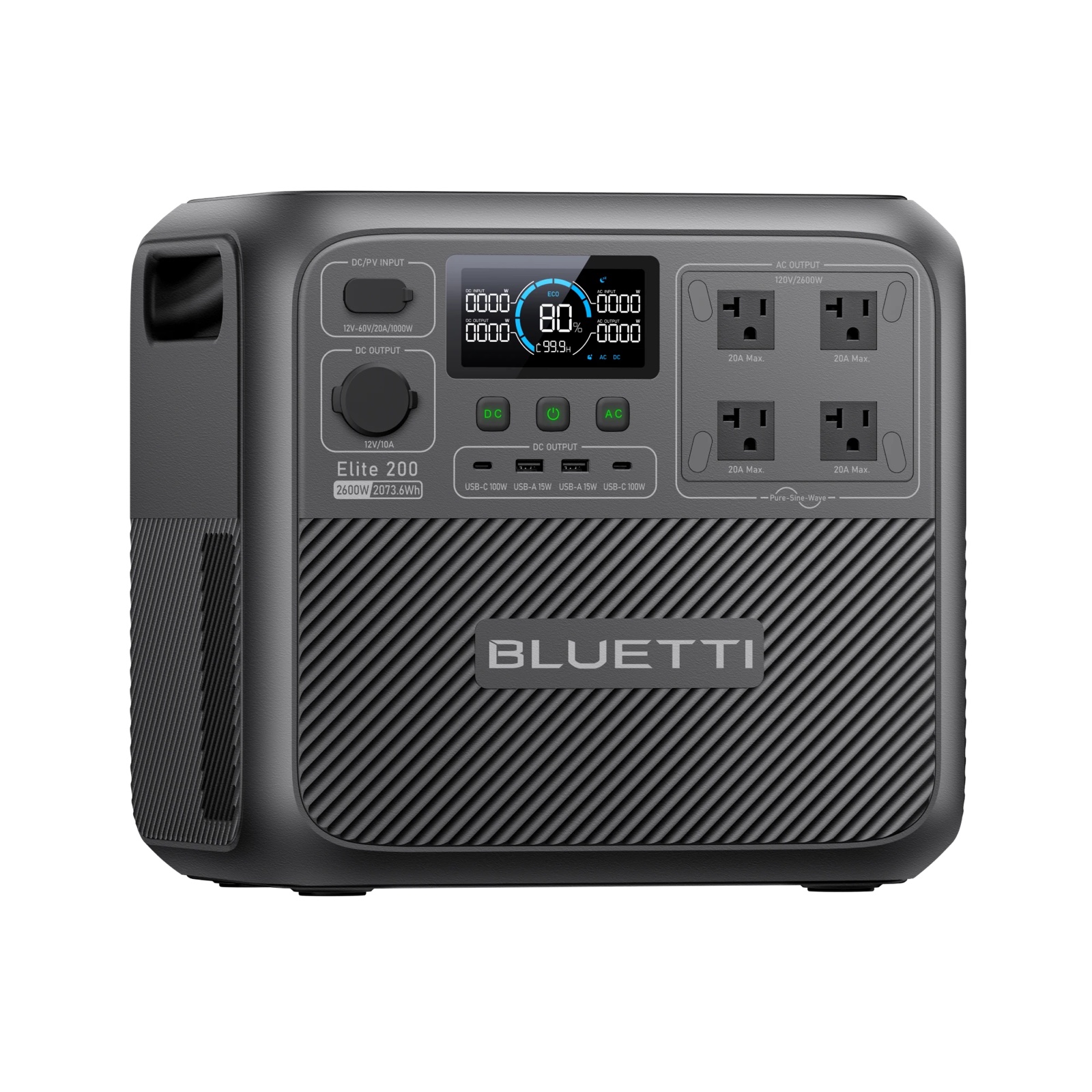
 7.7/10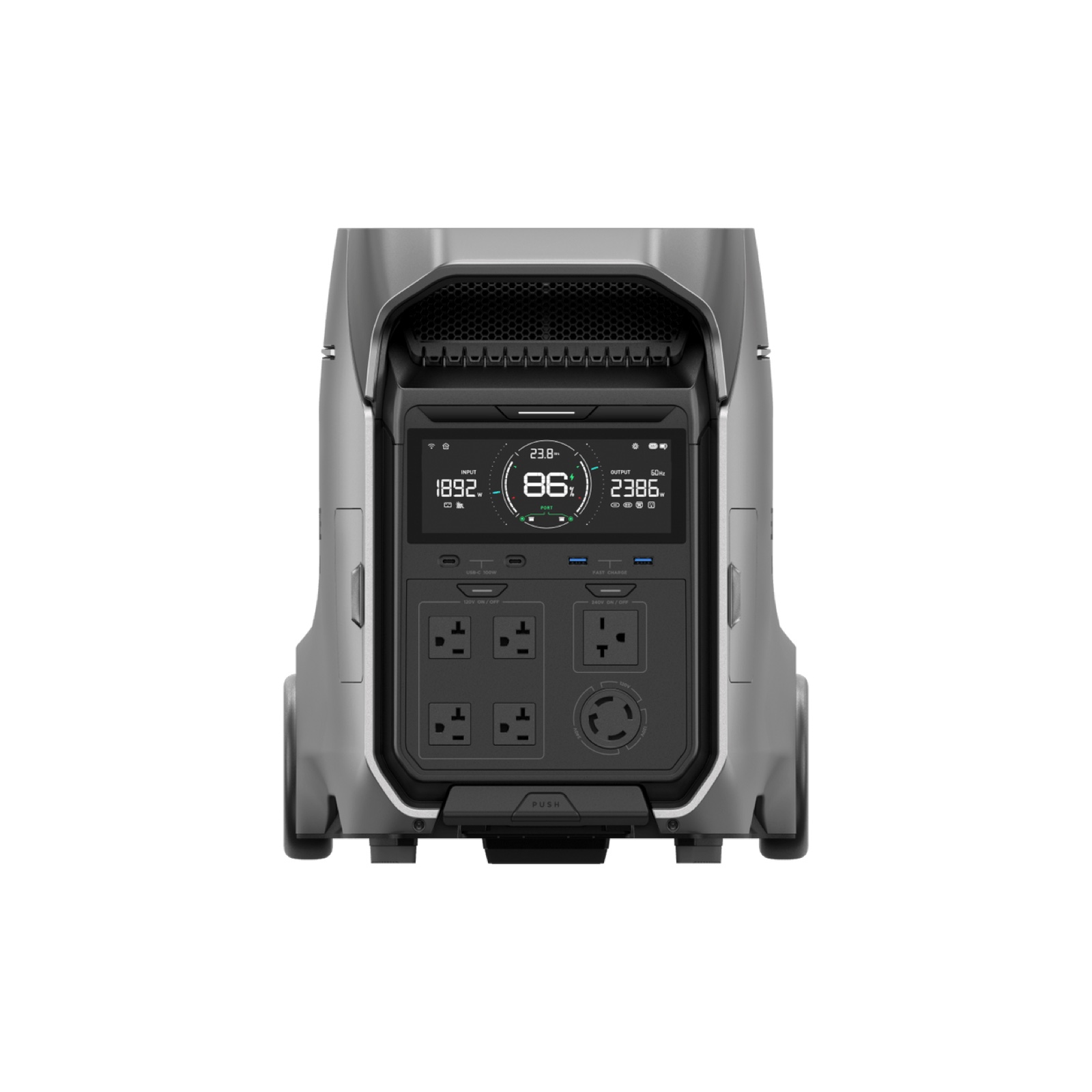
 8.8/10
Anker SOLIX C2000 Gen 2 is the practical van and cabin choice: 2,400 W of output against 2,048 Wh, Expandable to 4,096 Wh, and 41.7 lb (18.9 kg), which one person can still shift.
BLUETTI Elite 200 V2 pairs 2,600 W with cells rated 6,000 cycles to 80%, which is the specification that matters when a battery is being emptied and refilled around a cooking routine rather than sitting on standby.
EcoFlow DELTA Pro 3 is the answer when cooking is not the only job: 4,000 W of output, 4,096 Wh, Expandable to 12,000 Wh and 2,600 W of solar input, which is the combination that makes off grid cooking sustainable rather than rationed.
Electric cooking from a battery is convenient, silent, flame free and safe to use where an open flame is not. Those are real advantages in a van, a cabin or a room where ventilation is limited.
It is also, per meal, the most expensive way to use stored energy short of space heating. A gas burner and a cylinder cook for days at a fraction of the outlay, which is why most long term off grid setups keep gas for cooking and use the battery for everything that cannot be done any other way.
The sensible division: use the hob when the battery is charged and the sun is out, use gas when it is neither, and never let a cooking session eat the reserve you were keeping for the fridge or for therapy equipment.
At 1,600 W and an inverter at 85%, about an hour per two kilowatt hours of capacity when the hob is at full power. Real cooking uses short bursts and lower settings, so the same battery usually covers several meals rather than a single hour of continuous use.
Enough continuous AC output to cover the hob's rated draw with headroom, which for most portable hobs means a station in the two kilowatt output class or above. Below that you are limited to reduced power settings, and a hob that cannot reach its rated power takes longer and saves nothing.
Do not plan on it. Those modes lower the output voltage to feed a larger load, which suits a plain resistive element. An induction hob has control electronics and a switching supply that expect a normal voltage, and some will simply refuse to run. Check the hob maker's own guidance before trying.
Yes, meaningfully. Induction heats the pan directly, so less energy is lost to the air and the surface around it, and the same dish takes fewer watt hours. A lid and a correctly sized pan add more savings than any difference between two power stations.
On a unit with enough continuous output, yes, but watch the total. The hob dominates the draw while it is on, and the fridge compressor may start during it. Keep enough headroom that both can coexist, and remember that one meal costs more battery than half a day of refrigeration.