 7.8/10
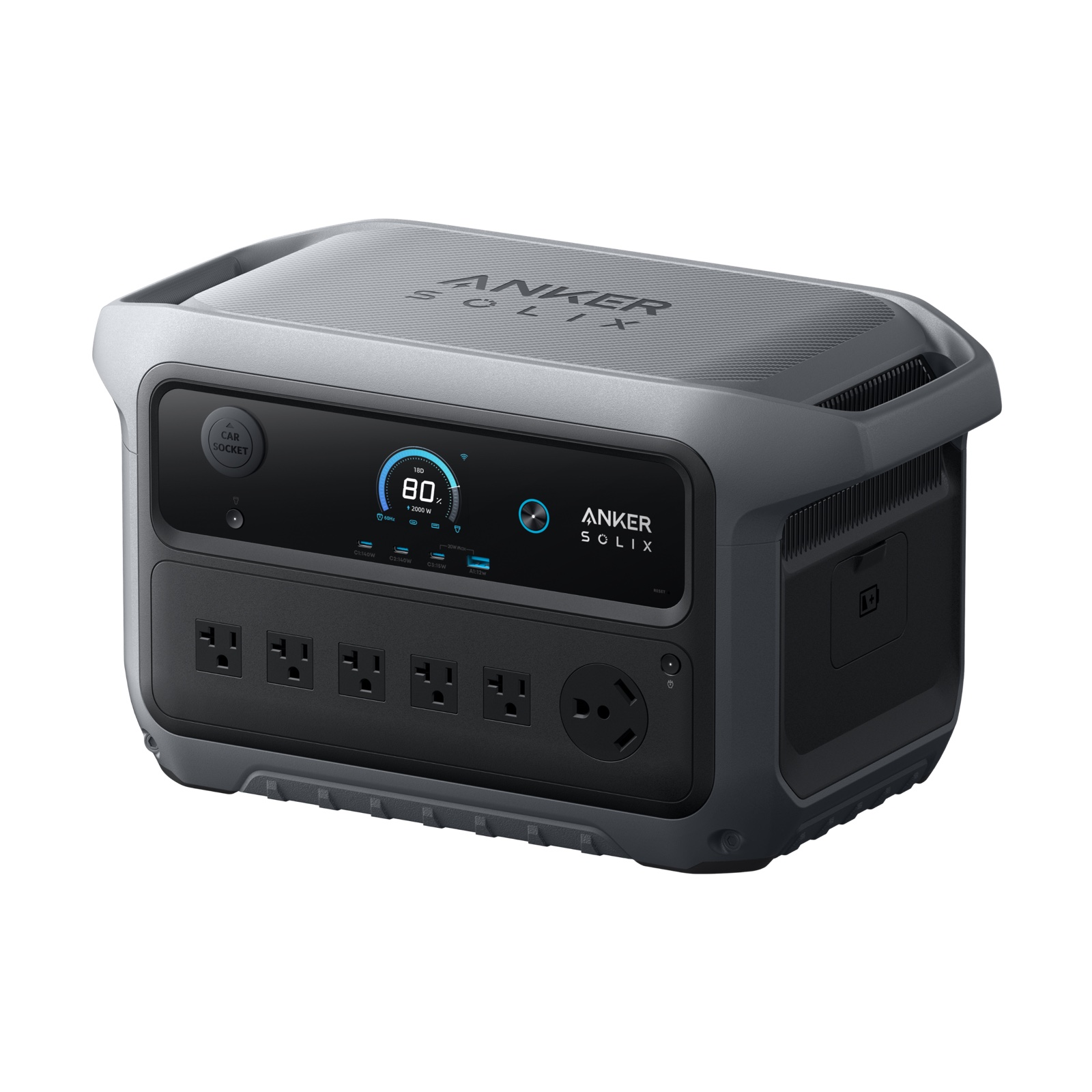
C2000 Gen 2 Anker SOLIX C2000 Gen 2
2,048 WhCapacity2,400 WAC output41.7 lb (18.9 kg)Weight10 msUPS switchover
A microwave pulls 900 W to 1,800 W from the socket while cooking, so you need a station with real continuous output, not just capacity. The saving grace is time: cooking happens in minutes. At 1,200 W, five minutes costs a battery around 120 Wh, so a one kilowatt hour station heats several meals. The trap is the number on the front of the oven, which is not the draw.
PowerStationFacts takes part in the Amazon Services LLC Associates Program. When you buy through a link on this page we may earn a commission, and the price you pay does not change.
A microwave badged at 1,000 W is telling you how much cooking power it delivers into the food. What it takes from the socket to do that is considerably more, because the magnetron and its transformer are not perfectly efficient. The gap is large enough to break a sizing calculation: a station chosen against the badge can be undersized against the appliance.
This site works from 1,200 W of draw as a standing figure, in a range of 900 W to 1,800 W. The plate on the back of your own oven gives its input rating, and that is the figure to size against. Where a plate quotes amps, multiply by the mains voltage.
There is no duty cycle here in the sense used elsewhere on this site. A microwave at full power draws continuously for the length of the programme. Lower power settings do cycle the magnetron on and off, which lowers the average, but the station still has to supply the full draw during the on periods.
The first test is whether the station will run the oven at all. Its continuous AC rating has to exceed the oven's input draw with headroom to spare, and the transformer in an older microwave asks for a short spike above that at start. Anker SOLIX C2000 Gen 2 is rated 2,400 W continuous and 4,000 W on surge, which is the kind of margin worth having.
Do not solve a shortfall with a voltage lowering mode. EcoFlow X-Boost and BLUETTI Lifting Power feed a larger load by dropping the output voltage, which is designed for resistive heating elements. A microwave is a transformer driven appliance, not a resistive one, and running it underfed makes it cook slowly while the electronics take the strain.
Only once output is settled does capacity matter, and then it matters less than you would think. At 1,200 W with the inverter at 85%, a minute of cooking costs about 24 Wh. Five minutes costs around 120 Wh. A one kilowatt hour station therefore holds several meals, and a two kilowatt hour station holds a camp weekend of them. Check yours on the run time calculator.
The microwave row on each table below is the continuous case: the oven running flat out until the battery is empty. Nobody cooks that way, which is why the useful reading is to divide those figures into portions of a few minutes each.
| Appliance | Typical draw | Estimated run time |
|---|---|---|
| Fridge | 120 W | 41 h 58 min |
| CPAP machine | 45 W | 39 h 10 min |
| Router and modem | 15 W | 117 h 30 min |
| Television | 90 W | 19 h 35 min |
| Microwave | 1200 W | 1 h 28 min |
| Appliance | Typical draw | Estimated run time |
|---|---|---|
| Fridge | 120 W | 82 h 54 min |
| CPAP machine | 45 W | 77 h 22 min |
| Router and modem | 15 W | 232 h 6 min |
| Television | 90 W | 38 h 41 min |
| Microwave | 1200 W | 2 h 54 min |
Read like that, a two kilowatt hour unit is a week of reheating for one person, or a few days of cooking for a family, and the large unit stops being a constraint on the microwave and starts being a constraint on everything else you asked it to run at the same time.
7.8/10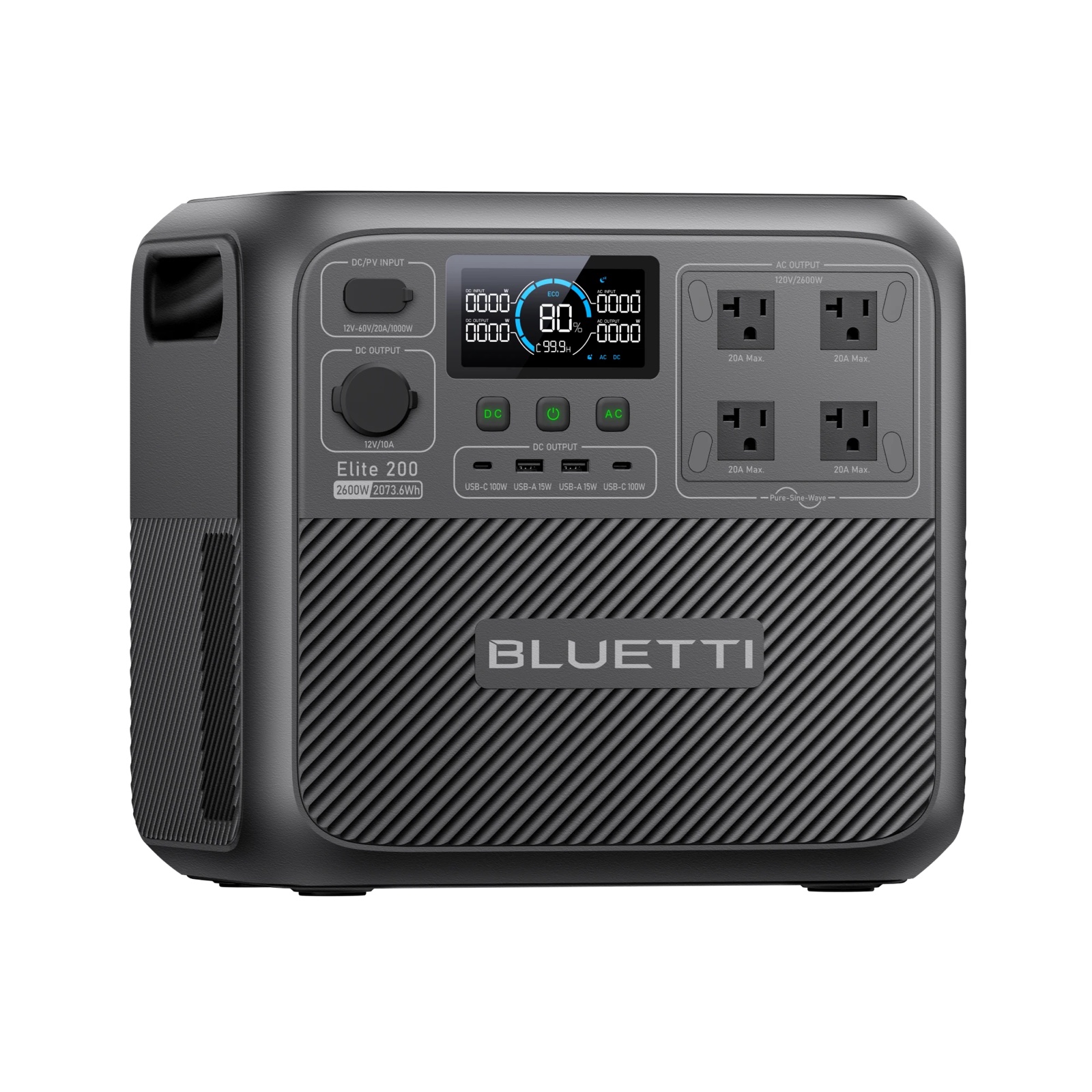
 7.7/10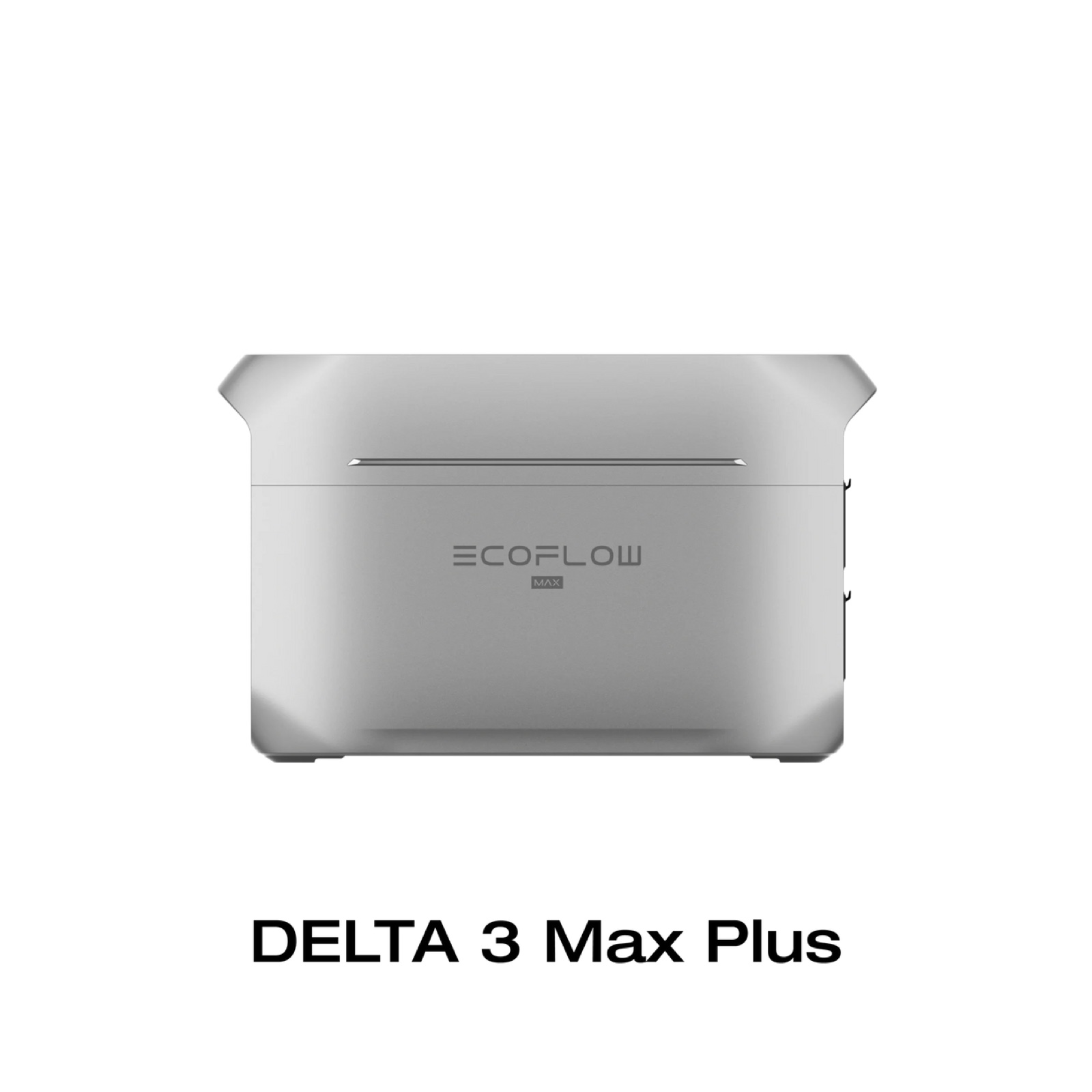
 7.7/10
Anker SOLIX C2000 Gen 2 has the output for a full size oven at 2,400 W, the capacity at 2,048 Wh, and a wall recharge of 1.5 hours for topping up between meals.
BLUETTI Elite 200 V2 offers 2,600 W of continuous output and 2,073.6 Wh, with cells rated 6,000 cycles to 80%, which suits a unit that will be cycled hard by kitchen appliances. The two are compared directly on C2000 Gen 2 against Elite 200 V2.
EcoFlow DELTA 3 Max Plus carries 3,000 W, which leaves room for the microwave and something else at once, plus Expandable to 10,000 Wh and 10 ms switchover.
Cooking with a battery is expensive in watt hours and cheap in time. That combination makes a microwave a reasonable thing to run from a station and a poor thing to build a plan around.
Two comparisons put it in context. A microwave for five minutes costs less than an hour of refrigeration on the same battery, which is why reheating during an outage is rarely the thing that empties a station. But a space heater or an induction hob asks for that same draw for an hour at a time, and no unit in this catalogue survives that for long.
If you are packing for a trip rather than an outage, the microwave is usually the appliance to leave behind: gas cooking is far cheaper per meal, and the battery is better spent on things that have no alternative.
Almost certainly not. The badge on the oven states cooking output, and the draw at the socket is meaningfully higher, so the station is being asked for more than its rating before any start-up spike. Size against the input figure on the appliance plate, with headroom.
At the 1,200 W figure used here and an inverter at 85%, roughly 24 Wh per minute of cooking. A one kilowatt hour station holds something over half an hour of continuous cooking, which in practice is several meals reheated. Your own oven's input rating will move that.
It is not the right tool. Voltage lowering modes are designed for resistive heating loads. A microwave is transformer driven, and underfeeding it means slower cooking and stress on the electronics rather than a free upgrade in capability. Buy the continuous output instead.
Yes, in a helpful direction. An inverter microwave modulates power electronically rather than switching the magnetron on and off, so the draw is steadier and the start-up spike is gentler. It is still a heavy continuous load and still needs to be sized on its input rating.
Not usually. A lower setting on a conventional oven cycles the magnetron rather than reducing its draw, so the same energy goes into the food over a longer time and the inverter idles through the gaps. Cooking at full power for less time is generally the cheaper option.